

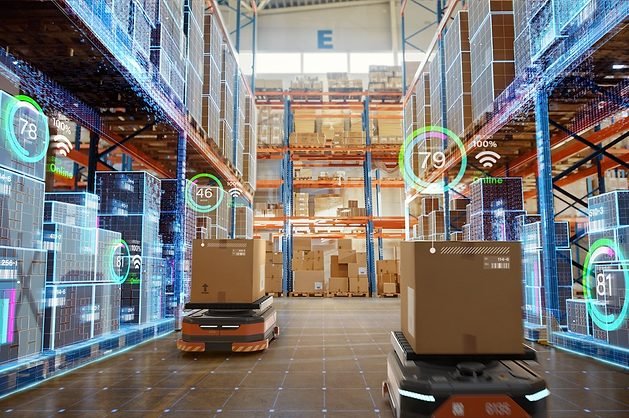
For years, automation in supermarket logistics was framed as an efficiency upgrade — a way to move cases faster, reduce labour dependency and cut operational costs. In 2026, that narrative has shifted. Highly automated distribution centres (DCs) are no longer tactical investments; they have become strategic assets that influence competitiveness, resilience and long-term profitability.
Recent developments, including Blackstone-backed automated distribution projects supporting major supermarket groups such as Ahold, underline a fundamental change in how retailers view supply chains. Logistics is no longer a backstage function. It is a core pillar of retail strategy.
From Cost Centre to Competitive Advantage
Traditionally, distribution centres were judged on cost per case and throughput. Automation promised incremental improvements: faster picking, fewer errors, and better space utilisation.
Today, the role of the DC has expanded dramatically.
Automated distribution centres now enable retailers to:
-
Respond rapidly to demand fluctuations
-
Support omnichannel fulfilment
-
Reduce exposure to labour shortages
-
Improve inventory accuracy in real time
-
Absorb shocks from supply disruptions
In a volatile global environment, this flexibility is worth as much as cost savings.
Why Investors Are Paying Attention
The involvement of major investment firms such as Blackstone in automated DC infrastructure is telling. Institutional capital does not move into logistics technology without long-term conviction.
For investors, automated distribution offers:
-
Predictable returns through long-term retailer contracts
-
Asset-backed infrastructure with high barriers to entry
-
Exposure to grocery, one of the most defensive retail sectors
This shift also reflects a broader trend: logistics assets are increasingly valued as infrastructure rather than operational overheads.
For retailers, partnering with financial backers allows access to advanced technology without overburdening balance sheets — a crucial advantage in a low-margin industry.
Labour Reality Accelerates Automation
One of the strongest drivers behind automation is labour.
Supermarket distribution has long relied on physically demanding, repetitive work with high turnover rates. In many regions, warehouses struggle to recruit and retain staff, while wage inflation continues to rise.
Automation does not eliminate labour, but it changes its nature. Fewer workers are required, but roles become more technical, focusing on:
-
System supervision
-
Maintenance
-
Exception handling
-
Data analysis
This shift improves productivity per employee and reduces operational vulnerability during labour shortages or industrial action.
Supporting Omnichannel at Scale
E-commerce and click-and-collect have added complexity to grocery logistics.
Manual DCs designed for pallet and case distribution struggle to efficiently handle single-item picking and rapid order cycles. Automated systems, by contrast, can integrate store replenishment and online fulfilment within the same facility.
This allows retailers to:
-
Pool inventory across channels
-
Reduce duplication of stock
-
Improve availability accuracy
-
Lower last-mile costs
In 2026, supermarkets that lack automated logistics risk falling behind in omnichannel service levels, even if their stores perform well.
Data Is the Hidden Asset
Beyond robotics and conveyors, the real power of automated distribution lies in data.
Every movement within an automated DC is tracked, analysed and optimised. This provides retailers with unprecedented visibility into:
-
Demand patterns
-
Stock rotation
-
Supplier performance
-
Waste and shrink causes
When integrated with store-level and loyalty data, distribution becomes predictive rather than reactive.
As discussed in wider industry forums, including NRF 2026, agentic AI will increasingly sit on top of these systems, making autonomous decisions about replenishment, routing and allocation.
Supplier Implications: Higher Standards, Less Tolerance
Automation also reshapes the relationship between retailers and suppliers.
Automated DCs require:
-
Consistent packaging specifications
-
Accurate labelling and barcoding
-
Reliable delivery windows
-
High order accuracy
Suppliers that fail to meet these standards create friction in highly optimised systems and are quickly flagged.
While this raises entry barriers, it also rewards disciplined producers with long-term volume stability. For exporters and manufacturers, particularly in emerging markets, integration into automated supply chains demands investment — but offers scale and predictability in return.
The Risk of Over-Automation
Despite its advantages, automation is not without risk.
High capital costs, technological complexity and system dependency mean failures can be disruptive. Cybersecurity, software reliability and contingency planning become critical.
Retailers must also avoid designing inflexible systems that struggle to adapt to changing formats, assortments or consumer behaviour. The most successful automated DCs are modular, scalable and continuously upgraded.
In this context, partnerships with experienced technology providers and financial backers become as important as the hardware itself.
Europe vs the US: Different Paths, Same Destination
In Europe, automation is often driven by labour regulation, sustainability targets and space constraints. Compact, high-density systems dominate.
In the US, scale and speed are the priorities. Larger facilities focus on volume throughput and multi-channel integration.
Despite these differences, both regions are converging on the same conclusion: manual distribution models are no longer fit for the future.
Strategic Implications for Retail Leaders
The strategic question facing supermarket executives is no longer whether to automate, but how deeply and how fast.
Retailers that invest early gain:
-
Structural cost advantages
-
Greater resilience to disruption
-
Faster innovation cycles
-
Stronger negotiating power with suppliers
Those that delay risk becoming dependent on third-party logistics providers, losing control over a critical part of the value chain.
Conclusion: Logistics as the New Battleground
Automation has transformed distribution centres from operational necessities into strategic weapons.
In an era of thin margins, volatile supply and rising consumer expectations, supermarkets cannot afford inefficiency at the core of their operations. Automated DCs provide not just speed and savings, but control — over inventory, data and risk.
As capital flows into logistics infrastructure and technology accelerates, one reality becomes clear: the next phase of supermarket competition will not be won on the shop floor alone, but deep inside the warehouse.