
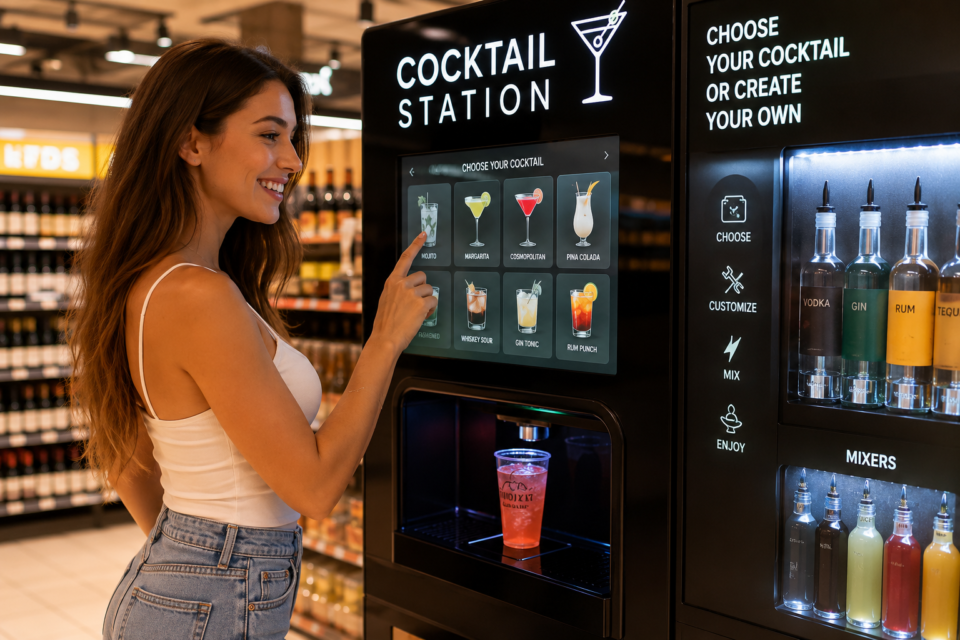
Imagine walking into a supermarket, heading to a cocktail machine, and creating your favorite drink in less than a minute. Instead of buying four or five full bottles of alcohol, mixers, and syrups just to make a few cocktails at home, customers could simply choose a recipe—or even create their own custom blend—and leave with a perfectly mixed drink.
It is a simple idea that could change the way people buy cocktails.
How It Would Work
The machine would contain a selection of spirits such as vodka, gin, rum, tequila, whiskey, and liqueurs, along with mixers like tonic water, cola, fruit juices, soda, and flavored syrups.
Customers could:
- Choose from classic cocktails such as a Mojito, Margarita, Piña Colada, Cosmopolitan, or Old Fashioned.
- Adjust the sweetness, alcohol strength, or ice level.
- Create their own unique recipe by selecting ingredients and proportions.
- Save or name their favorite combinations for future purchases.
The machine would prepare the drink automatically, seal it in a recyclable container, and print the ingredient list and alcohol content.
Why This Makes Sense
One of the biggest frustrations with making cocktails at home is the cost. A single recipe may require several bottles of alcohol and specialty ingredients, many of which are rarely used again.
For example, making one Espresso Martini might require vodka, coffee liqueur, espresso, and simple syrup. Buying everything separately can cost far more than the cocktail itself.
A cocktail machine solves this problem by allowing customers to buy exactly one drink—or several different drinks—without wasting money or ingredients.
Benefits for Customers
The concept offers several advantages:
- Lower cost than purchasing multiple bottles.
- Less waste from unused alcohol and mixers.
- Access to a wide variety of cocktails.
- Personalized recipes.
- Quick and convenient shopping.
- Consistent quality every time.
It would also encourage people to experiment with new flavors without committing to expensive bottles they may never finish.
Benefits for Supermarkets
Supermarkets could attract new customers by offering a unique service that few competitors have.
The machines could:
- Increase customer traffic.
- Generate high profit margins.
- Promote seasonal cocktails.
- Offer alcohol-free mocktails alongside alcoholic drinks.
- Build customer loyalty through digital recipe libraries and rewards programs.
The machine could also recommend cocktails based on holidays, weather, or food purchases.
Technology and Safety
Modern dispensing technology already exists for coffee, soft drinks, and beer. A cocktail machine would use precise automated dispensers to ensure every drink has the correct measurements.
To comply with alcohol laws, customers would verify their age before purchasing, using ID scanning or staff approval where required. The machine would also provide nutritional information and responsible drinking messages.
Environmental Benefits
Instead of producing millions of small bottles and encouraging consumers to purchase ingredients they may never finish, cocktail machines could reduce packaging waste.
Reusable or recyclable containers would make the system more environmentally friendly while reducing food and alcohol waste.
Challenges
There are challenges to overcome, including alcohol regulations, machine maintenance, hygiene standards, and preventing underage purchases. However, these are similar to issues already managed by self-checkouts and automated alcohol dispensers in other settings.
A New Way to Enjoy Cocktails
Cocktail vending machines could transform supermarkets by making premium cocktails more affordable, customizable, and convenient. Rather than filling shopping carts with expensive bottles that may sit unused for months, customers could purchase exactly what they want, when they want it.
As automation becomes more common in retail, a self-service cocktail machine could become as familiar as today’s coffee machines or fresh orange juice dispensers. It is an innovative idea that combines convenience, personalization, and sustainability, making it an attractive option for both consumers and supermarkets.