
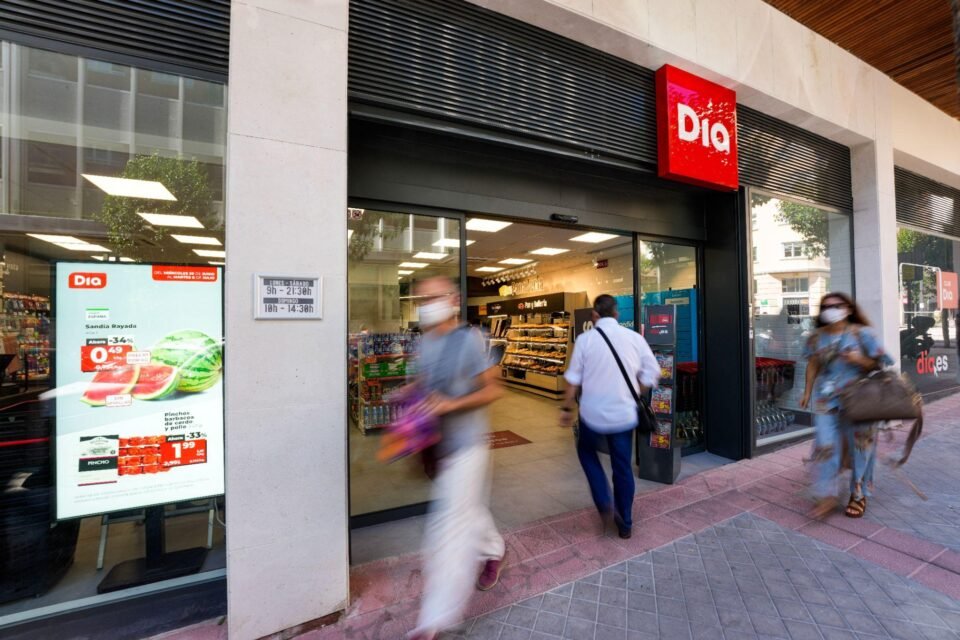
DIA has long occupied a difficult but important position in European retail. As a discount-focused supermarket chain operating primarily in Spain and other Southern European markets, it has traditionally served price-sensitive consumers seeking basic grocery essentials at competitive rates. For years, this positioning allowed DIA to grow rapidly by targeting everyday affordability in markets where economic pressure made value a central concern.
However, the modern grocery landscape is far less forgiving than it once was. Discount retailing has become one of the most intensely contested segments of the industry, with international players, regional chains, and private-label-heavy supermarkets all competing for the same cost-conscious customer base. In this environment, DIA’s challenge is no longer simply to offer low prices, but to remain relevant, efficient, and trusted in a market that is evolving quickly.
The company’s historical strength has been its proximity model. DIA stores are typically smaller-format outlets located in neighborhoods, designed for quick and frequent shopping trips. This format aligns closely with urban lifestyles where consumers prefer to purchase essentials regularly rather than stock up in large weekly trips. The model has proven resilient, particularly in densely populated areas where convenience and accessibility are critical.
Yet proximity alone is no longer a sufficient advantage. Consumers now expect a combination of affordability, product quality, availability, and increasingly, digital convenience. Discount retailers are no longer operating in isolation; they are competing directly with full-service supermarkets, online platforms, and hybrid retail models that integrate multiple shopping channels.
DIA’s transformation over recent years reflects this shifting reality. The company has undertaken efforts to simplify operations, streamline its store network, and strengthen its core value proposition. At the heart of this strategy is a renewed focus on efficiency—reducing complexity in product assortment, improving supply chain performance, and sharpening pricing strategy.
Private-label products play a central role in this model. Like many discount retailers, DIA relies heavily on in-house brands to maintain cost control and price competitiveness. These products are designed to deliver essential quality at accessible prices, allowing the company to differentiate itself in a market where brand loyalty is often secondary to affordability.
Operational efficiency is a defining requirement in discount retail. Margins are thin, competition is intense, and small improvements in logistics or inventory management can have significant impacts on profitability. DIA’s efforts have therefore focused heavily on optimizing distribution networks, reducing waste, and improving store-level execution.
The company has also faced the challenge of rebuilding consumer trust and consistency in certain markets. Discount retailing depends not only on price competitiveness but also on reliability. Shoppers expect products to be available, stores to be organized, and pricing to be transparent. Any inconsistency can quickly drive customers toward competitors.
Technology is playing an increasingly important role in supporting these objectives. While DIA does not position itself as a technology-driven retailer in the same way as some global giants, it has been gradually adopting digital tools to improve forecasting, inventory control, and logistics coordination. These systems help reduce stock imbalances, improve product availability, and enhance operational responsiveness.
E-commerce and digital channels present both an opportunity and a challenge. Online grocery shopping requires infrastructure and investment that can be difficult for discount retailers operating on tight margins. However, consumer expectations are shifting rapidly, and even value-focused shoppers now expect digital convenience. DIA’s approach has been cautious but steadily evolving, as it seeks to integrate online services without undermining its core cost structure.
Competition remains one of the most significant pressures facing the company. Across Europe, discount leaders and full-range supermarkets alike are fighting aggressively for price-sensitive consumers. International chains bring scale and purchasing power, while local competitors often benefit from strong brand loyalty and regional knowledge. In this environment, differentiation is difficult, and execution becomes critical.
One of DIA’s key strategic challenges is balancing scale with simplicity. The company must maintain enough operational reach to compete effectively while avoiding the complexity that can erode efficiency. This balance is particularly important in logistics, where cost control and distribution efficiency directly influence profitability.
Store modernization is another area of focus. Many DIA locations are being adapted to improve layout clarity, product visibility, and customer flow. While discount retail traditionally prioritizes function over aesthetics, modern consumers still expect a minimum standard of shopping experience. Cleanliness, organization, and ease of navigation have become increasingly important even in value-oriented formats.
Supply chain performance is central to DIA’s long-term viability. Efficient replenishment systems are essential for maintaining low prices while ensuring consistent product availability. The company continues to refine its sourcing strategies, often working closely with suppliers to secure stable pricing and reduce volatility in input costs.
Sustainability is also becoming a growing consideration across the discount retail segment. Although price remains the primary driver of customer decisions, environmental awareness is increasing, particularly in urban markets. DIA has been gradually incorporating sustainability measures into its operations, focusing on packaging reduction, waste management, and energy efficiency in stores and distribution centers.
The broader retail environment continues to evolve in ways that challenge traditional discount models. Consumers are increasingly fluid in their shopping behavior, moving between discount stores, premium supermarkets, and online platforms depending on context and need. This shift means that DIA must compete not only on price, but also on convenience and overall shopping experience.
Despite these challenges, discount retail remains a structurally important segment of the grocery industry. Economic uncertainty, inflationary pressure, and shifting household budgets continue to support demand for affordable grocery options. DIA’s future depends on its ability to remain a strong player within this segment while adapting to new expectations around service and digital integration.
Looking forward, the company’s evolution is likely to focus on three key areas: operational efficiency, digital capability, and store modernization. These pillars will determine whether DIA can maintain relevance in a market where competition is increasingly global and consumer expectations are constantly rising.
DIA’s story is ultimately one of adaptation under pressure. It is a retailer navigating a complex transition from traditional discount operations toward a more integrated, flexible model of grocery retailing. While the path forward is challenging, the underlying demand for value ensures that the company still has a meaningful role to play in the European retail landscape.
In a sector defined by constant change, DIA’s task is not to reinvent discount retailing, but to refine it—making it leaner, more reliable, and more aligned with the expectations of today’s consumers.