

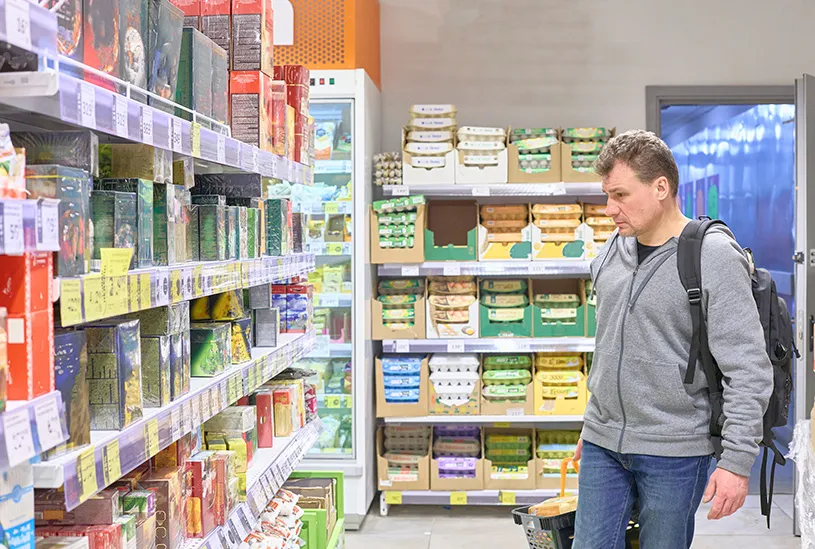
Retail theft has become one of the most pressing operational challenges facing supermarkets across Europe and the Middle East. Rising living costs, organised retail crime, and opportunistic shoplifting have all contributed to higher shrinkage rates. For grocery retailers operating on thin margins, even small increases in loss can significantly impact profitability.
The response cannot rely solely on more staff or heavier security presence. Modern supermarkets must turn to intelligent retail technology — solutions that deter theft while preserving a positive shopping experience.
Below is a comprehensive overview of technologies supermarkets can realistically implement today.
1. AI-Powered CCTV and Behavioural Analytics
Traditional CCTV is reactive. AI-powered video analytics transforms it into a proactive tool.
Modern systems use computer vision to detect suspicious behaviour patterns such as:
-
Concealment gestures
-
Repeated loitering in high-value aisles
-
Unusual product handling
-
Coordinated group movements
Rather than reviewing footage after an incident, store managers receive real-time alerts. AI can flag incidents at self-checkouts, identify barcode switching, or detect when items are placed in bags without scanning.
Benefits:
-
Real-time intervention
-
Reduced need for constant manual monitoring
-
Evidence documentation
Crucially, these systems focus on behaviour, not profiling, which reduces legal and ethical risks.
2. Smart Self-Checkout Monitoring
Self-checkout has improved efficiency but increased vulnerability.
Technology upgrades now include:
-
Weight verification with AI correction
-
Computer vision cameras that recognise scanned vs. unscanned items
-
Randomised secondary verification prompts
-
Integrated staff alert systems
Advanced systems compare what the camera sees with what is scanned, reducing “missed scan” losses and deliberate non-scanning.
Retailers can reduce shrinkage significantly without removing self-checkouts — preserving convenience while improving control.
3. RFID (Radio Frequency Identification)
RFID tagging is increasingly viable beyond apparel and electronics.
For high-risk grocery categories — such as:
-
Alcohol
-
Premium meat
-
Cosmetics
-
Baby formula
RFID tags enable:
-
Real-time stock visibility
-
Automated exit detection
-
Faster inventory reconciliation
When integrated with exit gate sensors, unpaid items trigger alerts discreetly.
Although implementation costs exist, targeted RFID in high-theft categories often delivers rapid return on investment.
4. Electronic Shelf Labels with Data Integration
Electronic shelf labels (ESLs) are not just pricing tools. When integrated with analytics platforms, they provide:
-
Real-time stock tracking
-
Dynamic pricing adjustments
-
Identification of unusual stock depletion patterns
If a product’s stock drops faster than sales data indicates, the system can flag potential theft in that category.
This proactive data insight reduces shrinkage before it escalates.
5. Smart Exit Gates and Controlled Entry Systems
Modern entry and exit gates serve both psychological and operational functions.
Controlled-flow systems:
-
Reduce “grab-and-run” theft
-
Direct customers past staffed areas
-
Create clear exit points
Some systems integrate with POS data so gates only open after a valid transaction.
Unlike traditional barriers, newer models are designed to remain welcoming rather than intimidating.
6. AI-Driven Inventory Intelligence
Shrinkage is not only theft — it includes internal errors, waste and process failure.
AI-powered inventory platforms analyse:
-
Sales velocity
-
Delivery discrepancies
-
Waste patterns
-
Return anomalies
Machine learning models can identify unusual patterns that may indicate internal theft or procedural weaknesses.
Data visibility reduces both external and internal loss.
7. Body-Worn Cameras for Staff
In higher-risk urban environments, body-worn cameras for security staff can:
-
Deter aggressive behaviour
-
Provide incident documentation
-
Protect employees
The presence of visible recording devices often reduces escalation and supports legal proceedings if required.
8. Smart Product Locking Systems
For extremely high-risk items, transparent locking cases are evolving.
Modern versions:
-
Unlock via mobile staff devices
-
Track access logs
-
Reduce friction compared with traditional locked cabinets
The goal is balance: protecting products without creating a hostile shopping experience.
9. Data Sharing and Crime Mapping Platforms
Supermarkets can join regional retail crime networks that share:
-
Suspect images
-
Theft patterns
-
Organised retail crime alerts
Shared intelligence helps stores anticipate coordinated theft rather than react to isolated incidents.
When integrated with in-store facial recognition systems (where legally permitted), known offenders can trigger alerts upon entry.
Legal compliance is essential, and privacy regulations must be respected.
10. Improved Store Layout and Design Technology
Technology is not always digital. Data-driven store design also reduces theft.
Heat mapping tools analyse:
-
Foot traffic flow
-
Blind spots
-
High-risk zones
Based on insights, retailers can:
-
Reposition high-value products
-
Improve lighting
-
Adjust shelf heights
-
Increase line-of-sight visibility
Environmental design can reduce theft opportunity without overt security measures.
The Balance Between Security and Experience
Supermarkets must tread carefully. Over-securitisation can damage brand perception and alienate honest customers.
The most successful retailers focus on:
-
Invisible technology
-
Data-driven prevention
-
Targeted protection for high-risk items
-
Staff training supported by tech
The objective is not to create fortress stores — but intelligent environments.
The Financial Imperative
Shrinkage directly affects profitability. In grocery retail, where margins are often between 2% and 5%, even a 0.5% increase in theft can erode earnings significantly.
Investment in retail technology should be viewed as margin protection rather than cost addition.
Most advanced systems deliver:
-
Reduction in shrinkage
-
Improved inventory accuracy
-
Enhanced operational efficiency
-
Better staff safety
When integrated properly, technology pays for itself.
The Future: Predictive Loss Prevention
The next phase of supermarket security will be predictive rather than reactive.
AI systems will increasingly:
-
Forecast theft risk by time of day
-
Identify high-risk store layouts
-
Adjust staffing automatically
-
Analyse regional economic indicators
Loss prevention will move from physical security toward data science.
Retail theft is unlikely to disappear. Economic pressures and organised crime ensure it remains a structural challenge.
However, supermarkets are no longer powerless.
By combining AI surveillance, smart checkout systems, RFID, predictive analytics and intelligent store design, retailers can significantly reduce shrinkage without damaging customer trust.
The supermarket of 2026 must be not only competitive on price — but intelligent in protection.
Technology is no longer optional. It is essential infrastructure for sustainable retail.