
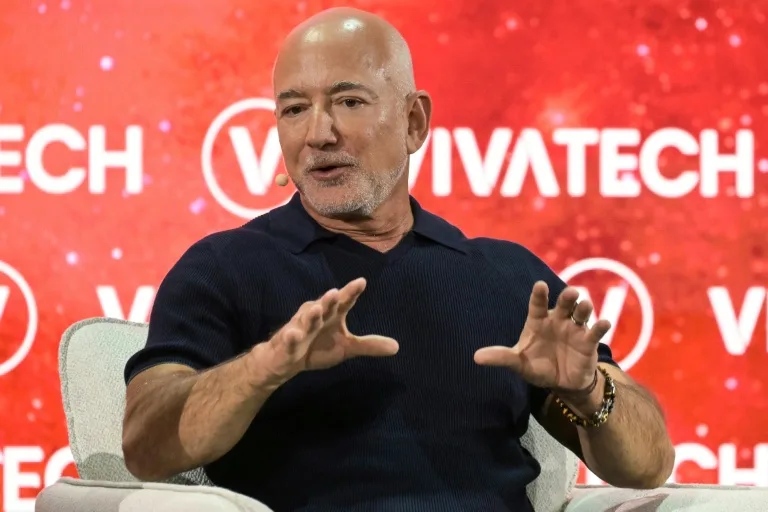
Amazon founder Jeff Bezos is joining a consortium investing in Liverpool Football Club in a deal that values the English club at approximately £5.5 billion.
The consortium, known as 1892 Holdings, has agreed to acquire around 30% of Liverpool from Fenway Sports Group (FSG) for approximately £1.65 billion.
Bezos is investing through K5 Sports, where he is the lead investor. He is not buying the stake through Amazon.
FSG will remain Liverpool’s majority owner and will continue to control the club’s operations.
Bezos enters global sports
The investment gives Bezos a significant interest in one of the world’s best-known sporting brands.
Liverpool has a global following that extends well beyond Britain, with supporters across Europe, Asia, the Middle East, Africa, North America and other major markets.
For Bezos, the investment provides exposure to a global entertainment and commercial business with millions of highly engaged customers — in this case, football supporters.
The deal also brings together two very different types of global brands.
Amazon has built its business around e-commerce, technology, cloud computing, entertainment and digital services. Liverpool has built its international presence through football, media, merchandising, sponsorship and its worldwide fan base.
FSG remains in control
Despite the size of the transaction, Liverpool will not be changing hands.
FSG will retain majority ownership and operational control of the club. British-Indian businessman Amit Bhatia, who is leading the consortium, will become Liverpool’s vice-chairman and join the club’s expanded board.
Bezos himself will not take a seat on the board.
The structure allows FSG to bring in substantial new investment while maintaining control of one of its most valuable assets.
From £300 million to £5.5 billion
The deal also highlights the extraordinary increase in Liverpool’s value since FSG bought the club.
FSG acquired Liverpool in 2010 for approximately £300 million.
The new transaction values the club at about £5.5 billion, demonstrating how dramatically the economics of elite football have changed over the past 16 years.
Liverpool is no longer simply a football club. It is a global commercial operation with broadcasting rights, sponsorship agreements, merchandising, hospitality, digital content and an enormous international audience.
Why Bezos matters
The most interesting aspect of the investment may be what Bezos brings beyond capital.
His experience in technology, e-commerce and digital entertainment could prove valuable as sports organisations increasingly look for new ways to monetise their global audiences.
Football clubs are becoming media businesses as much as sporting organisations. Supporters consume matches through television and streaming services, follow clubs through social media and buy merchandise online.
Liverpool already has a substantial digital and commercial operation.
Bezos’ involvement adds another layer to that international business strategy.
A new model for sports investment
The Liverpool deal reflects a wider trend in which technology entrepreneurs, private investors and global business groups are taking positions in major sports organisations.
The attraction is clear.
A successful sports club provides something that many conventional businesses struggle to create: a huge international audience with a strong emotional connection to a brand.
For investors such as Bezos, that audience can potentially support businesses ranging from media and streaming to retail, advertising, technology and merchandise.
The £1.65 billion transaction therefore represents more than a minority investment in a football club.
It is another example of how global sport is becoming an increasingly valuable commercial platform — and why technology billionaires are increasingly interested in owning a piece of it.
