

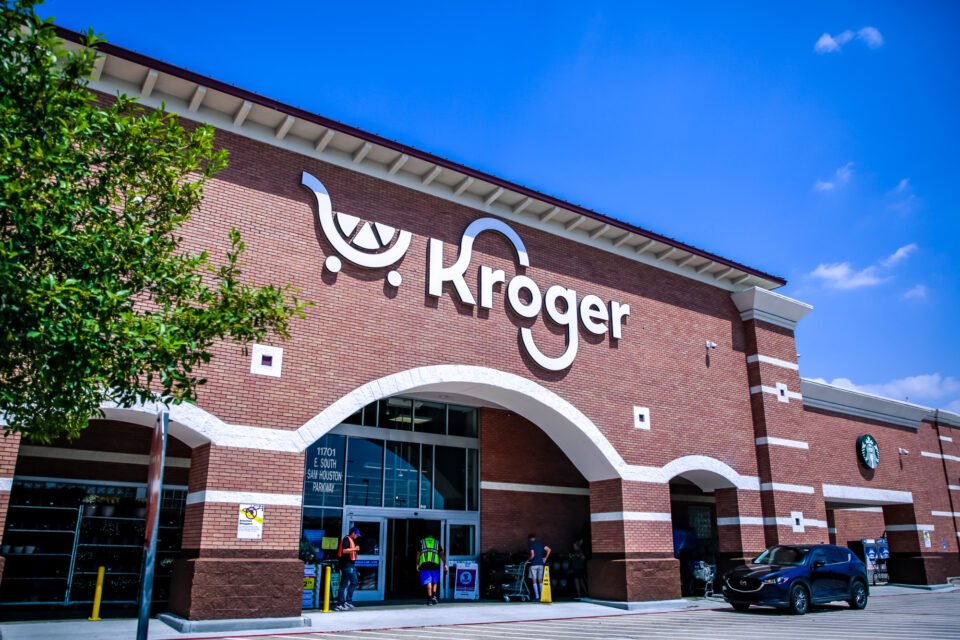
Goodbye, Houston. Goodbye, Spring.
When Kroger shutters stores, it is not just a matter of turning off the lights. It is the fading of a familiar sign from neighbourhood streets — a retailer that for generations formed part of the everyday rhythm of American grocery shopping.
The announcement that Kroger will close stores in Texas as part of a wider 60-store reduction across the United States is more than a regional adjustment. It is a signal of how unforgiving the modern grocery landscape has become.
For decades, Kroger has been woven into the fabric of US retail — a dependable anchor in suburban shopping centres, a reference point for price competition, a barometer for middle-America consumption. When a company of that scale retreats, even selectively, the industry should pause.
Retail today is a battlefield shaped by razor-thin margins, aggressive discounters, private-label expansion, labour costs and relentless investment demands in technology and logistics. Survival is no longer about sentiment. It is about scale, efficiency and capital strength.
This is the uncomfortable conversation regulators often avoid.
The Federal Trade Commission has taken a firm stance on consolidation within the grocery sector. The intention — protecting competition and consumers — is understandable. But what happens when blocking scale leaves legacy retailers structurally weakened? What happens when the alternative to merging is gradual contraction?
Sometimes the path to preserving jobs, supplier relationships and community presence is not fragmentation, but combination. A merger is not automatically the enemy of competition; in certain cases, it is the mechanism that allows a traditional operator to survive in a market increasingly dominated by giants and ultra-low-cost disruptors.
When stores close, communities lose more than a checkout line. Employees lose stability. Local suppliers lose shelf space. Shoppers lose choice.
Kroger has been part of the American grocery landscape for well over a century. It has adapted repeatedly — through economic downturns, digital disruption and evolving consumer habits. The current wave of closures may be strategic, but it is also emblematic of deeper structural pressures.
The hope across the industry is that this is not the beginning of a longer retreat.
Regulators must recognise that retail is not static. It is an ecosystem. Sometimes protecting competition means allowing companies the room to build resilience — even if that resilience comes through consolidation.
If the aim is to maintain strong national players capable of investing in innovation, price competitiveness and domestic supply chains, then survival strategies cannot be viewed solely through a theoretical lens.
Because once the lights go out, they rarely come back on.