
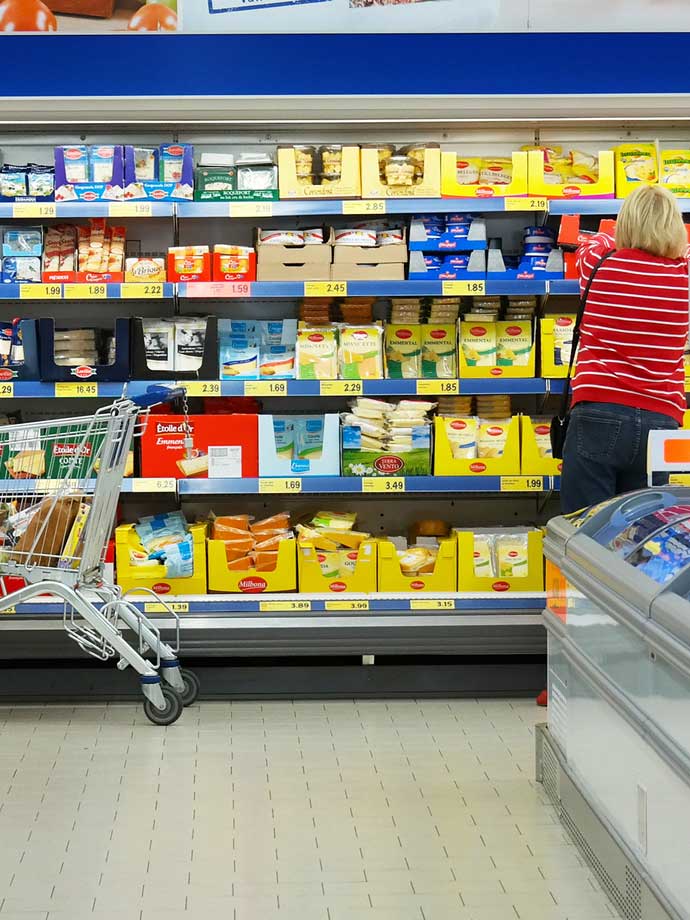
The UK grocery market has reached a symbolic turning point. Lidl has officially overtaken Morrisons to become the fifth-largest supermarket chain in Britain, confirming what many industry observers have anticipated for years: discount retail is no longer an alternative model — it is now part of the mainstream grocery landscape.
According to recent market data, Lidl achieved an 8.6% market share in the UK grocery sector, surpassing Morrisons, which fell to 8.3%. Lidl’s sales increased by 8.8% over the latest 12-week period, while Morrisons managed growth of only 1.3%. The achievement marks a historic milestone for the German retailer, which entered the UK market in 1994 with a limited-store, low-cost strategy that many traditional retailers initially underestimated.
This development is not simply about rankings. It reflects a profound change in consumer behavior. British shoppers have become increasingly value-conscious after years of inflationary pressure, rising energy costs, and economic uncertainty. Consumers are no longer willing to pay premium prices for basic grocery products when discounters can offer comparable quality at lower prices.
Lidl’s success has been built on operational simplicity, aggressive expansion, efficient supply chains, and a strong private-label strategy. The retailer now operates around 1,000 stores across the UK and plans to continue expanding with significant investment in new locations and logistics infrastructure.
However, Lidl’s rise is also a reflection of weaknesses among traditional supermarket operators. Morrisons, once considered one of the dominant “Big Four” UK grocers, has struggled in recent years with debt pressure, changing customer expectations, and increased competition from both Aldi and Lidl. Meanwhile, Tesco and Sainsbury’s have been forced to respond with loyalty schemes, price matching, and more aggressive promotions to defend market share.
The most remarkable aspect of Lidl’s growth is how it has transformed its public image. The company is no longer viewed purely as a discount chain for budget-conscious shoppers. Today, Lidl attracts middle-income consumers, families, and even premium shoppers who combine value-seeking with selective spending. Fresh bakery concepts, upgraded store formats, and improved product quality have helped reposition the brand in the minds of British consumers.
The rise of Lidl also highlights a larger structural shift in European retail. Efficiency, speed, and affordability increasingly define supermarket success. Large hypermarket formats with excessive product duplication are gradually losing relevance as shoppers prioritize convenience and controlled spending.
For the grocery industry, Lidl’s move into fifth place sends a clear message: the future belongs to retailers that understand modern consumer priorities and adapt quickly to changing economic realities.
The battle for market share in the UK is far from over. Aldi continues to grow rapidly, Tesco remains dominant, and online grocery competition is intensifying. Yet Lidl’s achievement represents more than a statistical victory — it is evidence that the balance of power in British food retail is evolving faster than many expected.
For suppliers, manufacturers, and retailers across Europe, Lidl’s success story will now be studied not as a temporary trend, but as a blueprint for long-term market disruption.