
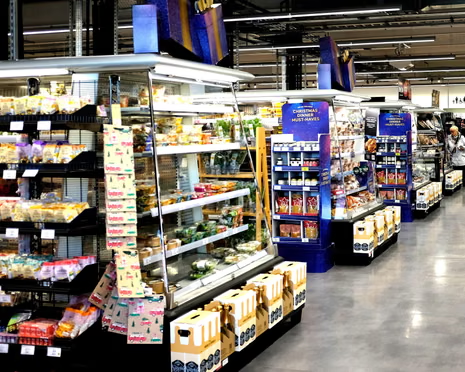
LONDON — Marks & Spencer (M&S) has unveiled a major £30 million price-cut initiative aimed at helping customers manage rising household expenses while maintaining access to quality food products. The retailer announced that more than 65 everyday grocery essentials will see significant price reductions as part of a broader effort to support consumers facing continued cost-of-living challenges.
The programme represents one of the largest food-price investments made by the company in recent years and reflects increasing competition among UK supermarkets seeking to attract budget-conscious shoppers. The cuts will apply to a range of staple products that many households purchase regularly, including eggs, butter, ketchup, frozen foods, salmon, and other everyday grocery items.
Supporting Customers During Economic Uncertainty
The announcement comes at a time when many families continue to feel the effects of inflation, higher utility bills, mortgage costs, and increased living expenses. Although inflation rates have moderated compared with previous peaks, consumers remain highly sensitive to food prices and are increasingly seeking value when shopping.
M&S executives said the investment is designed to provide meaningful savings across essential categories rather than focusing solely on promotional offers or limited-time discounts. By lowering prices on frequently purchased items, the retailer hopes to make a tangible difference to household budgets while encouraging customers to continue choosing premium-quality products.
Industry analysts note that food retailers have faced growing pressure to balance affordability with rising operating costs. Supermarkets have been forced to navigate higher supply chain expenses, wage increases, transportation costs, and fluctuating commodity prices while remaining competitive in a crowded marketplace.
A Strategic Investment in Food Retail
The £30 million commitment highlights M&S’s determination to strengthen its position within the UK’s highly competitive grocery sector. Traditionally known for premium food products and quality-focused offerings, the retailer has increasingly sought to challenge perceptions that quality must come at a significantly higher cost.
By reducing prices on core food items, M&S aims to demonstrate that customers can access premium products without paying substantially more than they would at rival supermarkets. The initiative also aligns with the company’s broader strategy of expanding its food business and attracting a wider customer base.
Retail experts suggest that shoppers are becoming increasingly selective in their purchasing decisions, often comparing prices across multiple retailers before making purchases. As a result, supermarkets are investing heavily in value-focused programmes to retain customer loyalty and increase store visits.
Products Included in the Price Reductions
The programme covers a variety of everyday food categories that are commonly found in weekly shopping baskets. Staples such as eggs and butter, which have experienced notable price fluctuations in recent years, are among the products receiving reductions. Other affected categories include frozen foods, sauces, and selected seafood products such as salmon.
These items play an important role in household meal planning and are purchased regularly by millions of consumers. By targeting essential products rather than luxury goods, M&S hopes to maximize the impact of the investment for families across the country.
The retailer has indicated that customers will begin seeing the lower prices across stores and online, making the savings accessible regardless of how shoppers choose to purchase their groceries.
Growing Competition Among UK Supermarkets
M&S’s announcement is the latest example of intensifying competition within the UK grocery market. Retailers across the sector have introduced various initiatives aimed at attracting shoppers seeking value amid ongoing economic pressures.
The battle for market share has encouraged supermarkets to invest heavily in pricing strategies, loyalty programmes, and promotional campaigns. As consumers become more price-conscious, businesses are increasingly focused on demonstrating affordability while maintaining product quality.
For M&S, the challenge is particularly significant because the company has historically been associated with premium products. The new investment signals an effort to reshape consumer perceptions and reinforce the idea that quality and value can coexist.
Consumer Response Expected to Be Positive
Initial reactions from shoppers are expected to be favourable, particularly among customers who regularly purchase food essentials. Price reductions on frequently bought items often have a greater impact on consumer confidence than discounts on occasional purchases.
Retail analysts believe that shoppers are likely to welcome measures that provide immediate and visible savings at checkout. In an environment where many households continue to monitor spending carefully, reductions on staple foods can play a meaningful role in easing financial pressures.
The move may also encourage new customers to consider M&S for a larger share of their grocery shopping, potentially increasing foot traffic and strengthening the company’s food division over the longer term.
Looking Ahead
As economic conditions continue to evolve, retailers are expected to remain focused on delivering value to customers. M&S’s £30 million investment demonstrates the growing importance of affordability in the modern grocery market and highlights the lengths to which supermarkets are willing to go to support consumers and remain competitive.
Whether the programme leads to increased customer loyalty and stronger sales performance remains to be seen, but the announcement marks a significant commitment by Marks & Spencer to address one of the most pressing concerns facing households today: the cost of putting food on the table.
For shoppers across the UK, the price cuts could provide welcome relief and reinforce the message that quality groceries do not necessarily have to come with a premium price tag.