

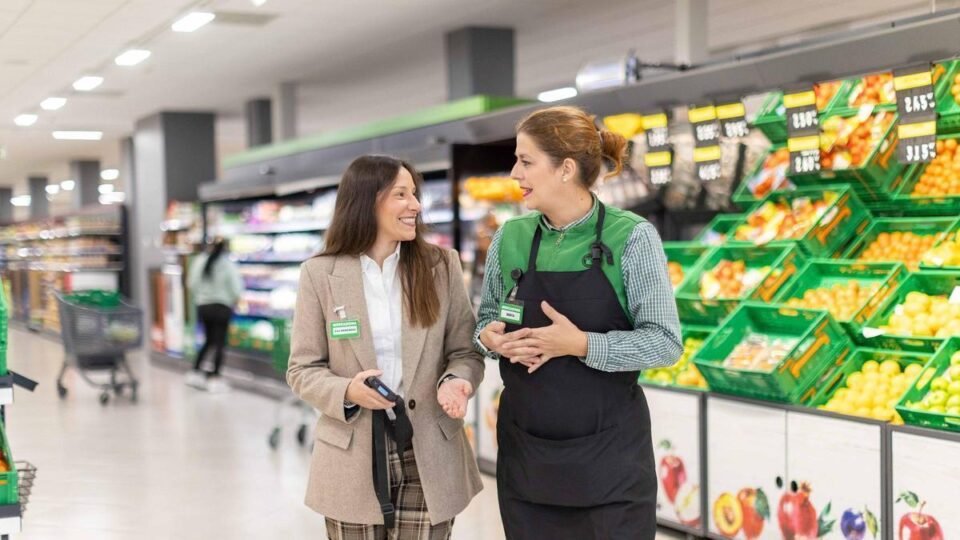
Spain’s leading supermarket operator is once again demonstrating that expansion in food retail is not solely about square metres and turnover, but about people. The announcement of more than 30 stable positions for a new store in Tudela reflects a deeper strategy rooted in long-term regional development, employment security, and operational excellence.
Recruitment on this scale is rarely incidental. In today’s competitive grocery landscape, workforce investment signals confidence in local demand. Spain’s mid-sized cities are increasingly becoming battlegrounds for supermarket chains seeking sustainable growth beyond saturated metropolitan hubs. By targeting Tudela, the retailer appears to be capitalising on population stability, local purchasing power, and evolving consumer expectations.
The emphasis on “stable and quality” employment is particularly significant. Across Europe, food retail has often been criticised for temporary contracts and unpredictable schedules. Offering structured contracts enhances employer branding while reducing turnover—an essential factor in maintaining service consistency. In food retail, where margins are tight and differentiation is limited, customer experience becomes decisive. Experienced, motivated staff directly influence basket size and loyalty.
The recruitment also reflects operational scaling. A new supermarket opening requires logistics coordination, fresh food supply alignment, and integration into existing distribution networks. Hiring locally reduces relocation costs and strengthens community ties, reinforcing the retailer’s image as a national yet locally embedded chain.
Furthermore, job creation ahead of store launch ensures that training can be completed before doors open. This approach minimises early-stage service disruption and protects brand reputation during the critical first months of operation.
In a broader context, such expansion underlines confidence in Spain’s grocery resilience. Despite inflationary pressures in recent years, food retail remains structurally defensive. Consumers may reduce discretionary spending, but grocery shopping remains non-negotiable. Strategic hiring therefore reflects calculated optimism rather than speculative expansion.
Ultimately, this recruitment initiative illustrates how supermarket growth in 2026 is as much about human capital as physical footprint. Retailers that invest in workforce stability are positioning themselves not merely to open stores, but to sustain them profitably over time.