
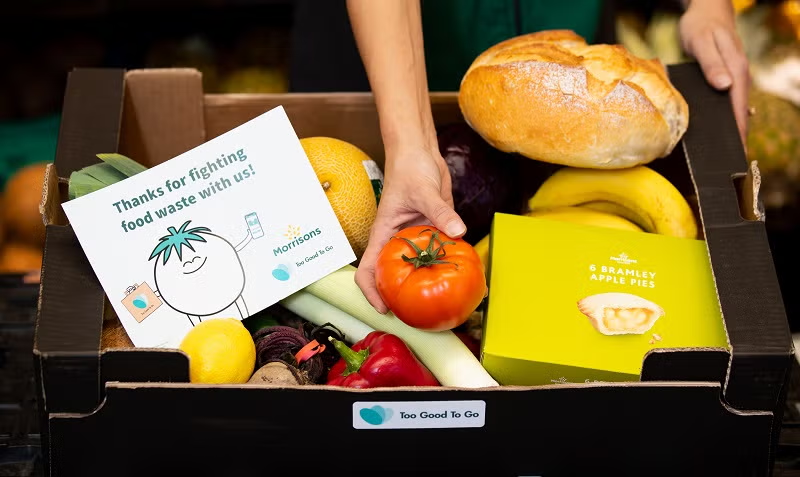
Chilled Surprise Bags move surplus food beyond bakery and produce, creating a new opportunity for retailers to recover value from unsold stock.
Supermarkets have spent years trying to find better ways of managing products approaching their sell-by dates. Yet much of the industry’s attention has traditionally focused on bakery, fruit and vegetables. Morrisons is now taking a further step by extending its surplus-food strategy into chilled categories.
The retailer has expanded its partnership with Too Good To Go through new Chilled Surprise Bags, containing a selection of dairy, deli, meat and seafood products.
The bags, with an indicated retail value of around £12, are being offered for approximately £4 through the app and have been rolled out across 495 Morrisons stores.
The development is significant because chilled products present a different challenge from bakery goods. They require careful temperature control, strict handling procedures and effective stock management. Their commercial value can also be considerably higher.
Waste reduction becomes a retail proposition
The partnership between Morrisons and Too Good To Go began in 2019 and has now prevented more than four million meals from being wasted.
But there is another dimension to the arrangement. Morrisons says around half of customers purchasing its Surprise Bags subsequently make an additional purchase in store. The retailer has reported £3 million in additional basket spending this year.
This makes the initiative particularly interesting from a commercial perspective.
Instead of treating surplus food purely as a cost to be managed, supermarkets can use it to attract shoppers, introduce customers to products and generate additional visits.
For consumers facing persistent pressure on household budgets, the opportunity to purchase quality food at a substantial discount is equally attractive.
The next stage of surplus retailing
The challenge will be maintaining customer confidence. Shoppers need clear information about products, storage, collection times and use-by dates. Retailers must also ensure that discounted food is handled with the same safety standards as full-price merchandise.
The wider question is whether more supermarkets will follow this approach.
If chilled surplus bags prove commercially successful, they could become a more permanent feature of the grocery business.
For Morrisons, the experiment is about more than saving food. It is another attempt to make the economics of the supermarket work harder, even after the traditional selling window has passed.