
Fewer than half of surveyed retailers say they feel prepared, raising questions about whether the industry has enough time to adapt.
The UK’s planned Deposit Return Scheme is intended to change the way consumers recycle drinks containers. But before the first eligible bottle or can is returned, the programme is already facing an important challenge: retailers may not be sufficiently prepared for its arrival.
A survey conducted by Exchange for Change, the scheme’s administrator, found that just 43% of retailers felt fairly or very prepared for the launch, scheduled for October 2027.
Although 68% said they were aware of the scheme, awareness does not necessarily mean that businesses understand what they will need to do when it becomes operational.
The distinction is particularly important for smaller retailers, which may have limited space, staffing and financial resources.
The problem behind the recycling machine
Much of the public discussion around deposit return schemes focuses on consumers returning bottles and receiving their deposits.
For retailers, however, the practical arrangements are considerably more complicated.
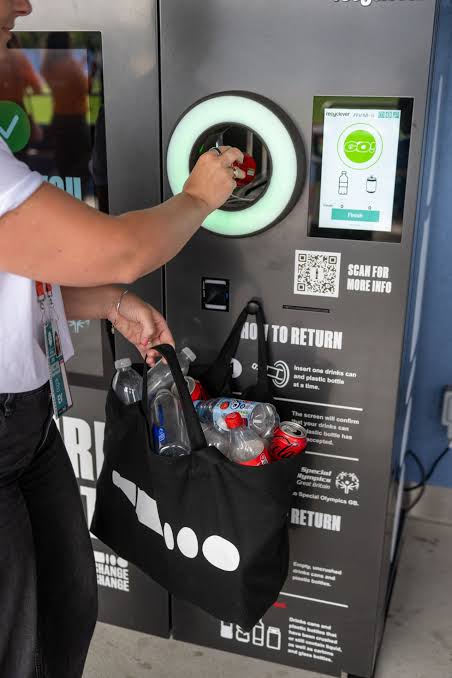
Stores may need to accommodate reverse vending machines, organise manual collection, store returned containers and manage additional handling requirements.
For a large supermarket, these arrangements may be incorporated into existing infrastructure. For a small convenience store, finding space for thousands of empty containers could become a significant operational problem.
The Association of Convenience Stores has already raised concerns about the physical limitations facing smaller businesses.
A question of implementation
The industry is not necessarily opposed to the environmental objectives. The difficulty is making the system workable across businesses of very different sizes.
Retailers need clear guidance on collection arrangements, exemptions, storage requirements and the responsibilities of participating businesses.
Without that information, investment decisions become difficult. Businesses cannot confidently redesign their premises or purchase equipment when important operational details remain uncertain.
The real test will be the first year
The October 2027 deadline may appear distant, but retailers need time to prepare, train employees and adapt their premises.
The scheme’s success will depend not only on how many containers consumers return, but also on whether the retail network can handle the additional work efficiently.
The environmental ambition is clear. The commercial and operational preparation now needs to catch up.
For the UK grocery industry, the next eleven months will be an important test of whether a national recycling policy can work equally well fo