

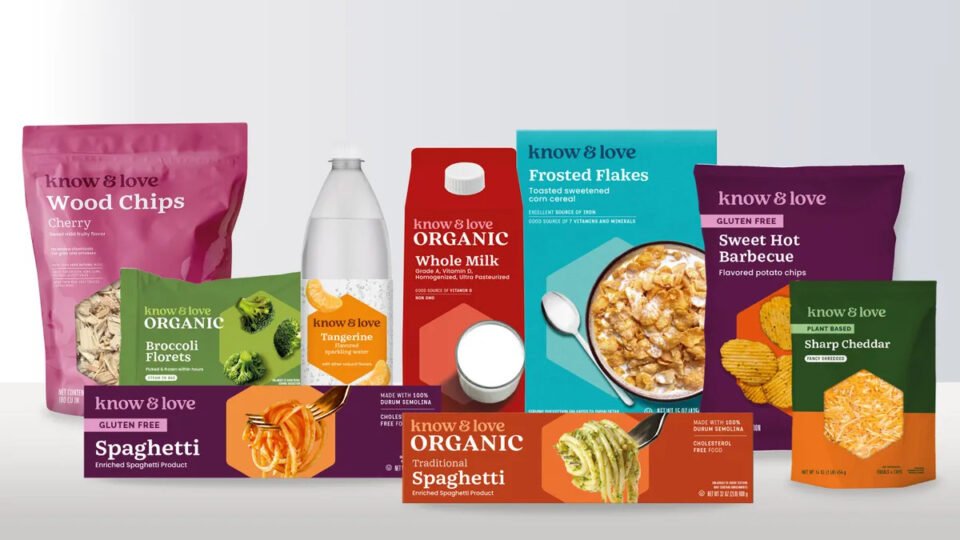
Private Label Is the New Battleground for Big Brands — Ignore at Your Peril
International Supermarket News – ISN Reveal
In 2026, private label has ceased to be a defensive shelf strategy for supermarkets. It has become a strategic imperative for the world’s biggest consumer brands, reshaping supply chains, category dynamics and commercial power in grocery retail. What was once a threat from discount stores has become a defining arena in which global brand giants can — and must — compete.
Across Europe and North America, manufacturers long associated with premium global portfolios are expanding, investing in and championing private label production. These are companies that once viewed supermarket-owned brands as commodity lines to be tolerated or undercut. Today, they treat private label as a core component of revenue, margin management and long-term market positioning.
This shift marks one of the most significant disruptions in modern grocery retail. The drivers are varied — cost inflation, supply chain risk, consumer behaviour changes and competitive pressure from discounters — but the outcome is the same: big brands can no longer afford not to produce private label. Those that fail to embrace this reality risk retreating from the mainstream grocery conversation entirely.
The Forces Reshaping the Grocery Brand Landscape
To understand why private label has moved from peripheral to pivotal, it’s essential to examine the forces disrupting traditional brand economics.
1. Rising Input Costs and Margin Compression
Producers face a relentless squeeze on margins:
-
Energy costs push up factory operation expenses.
-
Fertiliser and feed prices increase costs for dairy, meat and crop‑based ingredients.
-
Logistics volatility inflates delivery and warehousing costs.
For manufacturers, premium branded lines cannot absorb these pressures without passing costs to consumers — a risky strategy in a market where household budgets remain tight.
Private label contracts, by contrast, offer predictable revenue and volume, often with longer‑duration agreements and fewer promotional demands. For brands, the economics are not just stable; they are profitable.
2. Discounters Set the Price Benchmark
Aldi and Lidl have spent decades proving that value does not need to mean low quality. Their success has recalibrated shopper expectations. Consumers now approach private label with less scepticism, seeing it as a credible alternative to national brands.
This shift in perception has profound implications:
-
Traditional brands no longer command premium pricing by default.
-
Retailers are willing to invest in stronger own‑brand quality credentials.
-
Shopper loyalty is less tied to heritage brands and more tied to perceived value and performance.
In this environment, national brands must adapt or risk losing shelf relevance.
3. Retailers Gain Clout Through Data and Scale
Supermarkets today operate with unprecedented data visibility into shopper behaviour. They know which products perform, where private label succeeds and how price influences choice at a SKU level.
Brands that partner with retailers on private label benefit from:
-
Advanced category insights
-
Tailored product development based on real–time purchasing trends
-
Enhanced shelf positioning through exclusive ranges
This symbiosis shifts negotiation power. Retailers increasingly view private label as a tool to drive loyalty, basket size and differentiation — and brands that refuse to engage risk being marginalised.
4. Global Supply Chain Fragility
Recent shocks — from pandemic disruption to geopolitical tensions and extreme weather events — have exposed vulnerabilities in global supply. Brands that rely solely on their own labelled portfolios without diversified revenue streams have found themselves more exposed.
Private label contracts, often structured with supply predictability and retailer support, help brands spread risk and leverage manufacturing capacity more effectively across fluctuating demand.
Brands That Have Successfully Pivoted to Private Label
Several major manufacturers have already embraced private label with strategic intent, turning what was once a low‑margin sideline into a purposeful growth engine. The following companies illustrate how private label is now central to brand strategy:
Nestlé — Beyond Branded Behemoth to Contract Manufacturer
Nestlé, a global powerhouse with iconic brands in coffee, confectionery, dairy and pet care, has quietly built one of the most formidable private label portfolios in the world.
-
Cereals and breakfast categories: Produced for multiple European supermarket groups.
-
Confectionery lines: Contract manufactured under own‑brand retail labels.
-
Frozen and prepared foods: Shelf‑ready solutions tailored to retailer quality specifications.
Nestlé’s move is not defensive — it is offensive. By producing private label, they secure volume, optimise plant utilisation and reduce dependence on cyclical branded sales.
PepsiCo — From Brand Marketing to Retail Production Expertise
PepsiCo’s presence in private label might surprise those who still view it solely as a branded snack and beverage titan. Yet:
-
Chips and savoury snacks regularly feature in supermarket own‑brand ranges.
-
Soft drink contract lines leverage PepsiCo’s distribution strength.
PepsiCo’s strategy is nuanced: offer private label solutions that maintain quality fidelity while protecting brand equity in premium segments.
Unilever — Owning the Middle of the Shelf
Unilever, a stalwart in spreads, sauces and frozen foods, has evolved its private label approach:
-
Own‑brand spreads and condiments manufactured to retailer specifications.
-
Frozen vegetable and ready‑meal production adapted exclusively for supermarket brands.
The result: Unilever secures supply contracts, reduces excess capacity risk and strengthens category influence, all while maintaining branded innovation separately.
Danone — Dairy and Plant‑Based Private Label Expansion
Danone’s capability in dairy and plant‑based categories has translated into significant private label output:
-
Yoghurts and cultured dairy under retailer branding.
-
Plant‑based alternatives tailored to supermarket customers.
This dual focus allows Danone to compete in value segments without undercutting its premium brand positioning.
General Mills — Rewriting the Cereal Case
Cereals have long been a battleground between brands and private label. General Mills responded strategically by offering production services for supermarket own‑brand cereals.
This approach retains revenue within the company, even as branded cereal sales flatten or decline in certain markets.
What This Means for Supermarkets and Category Strategy
The shift of big brands into private label production is not simply a commercial curiosity — it is transforming grocery retail economics.
Private Label No Longer a Cost Cut — It’s Value Addition
Supermarkets used to position private label as budget alternatives. Now, it’s a category enhancer:
-
Strengthens basket value perception
-
Increases shopper loyalty through exclusivity
-
Enables differentiation in crowded markets
The presence of familiar manufacturers on private label elevates quality perception and reduces risk for retailers investing in own‑brand innovation.
Brands as Partners, Not Competitors
The old paradigm — brands versus private label — has collapsed. Today, the smartest brand partners are:
-
Co‑developers of retailer exclusives
-
Strategic collaborators on innovation
-
Shared custodians of category growth
The retailer‑brand relationship is no longer zero‑sum. It is a negotiated partnership with mutual commercial upside.
Pricing Power Shifts, But Value Retains Leverage
With private label now commonly sourced from respected manufacturers, price premium justification becomes more complex. Retailers can stack:
-
Branded premium lines
-
Enhanced private label tiers (e.g., “Artisan” or “Craft” ranges)
-
Value price‑led lines
This tiered approach allows supermarkets to capture a broader range of shopper preferences, securing volume without diluting brand or private label equity.
Category Case Studies: Private Label in Action
Dairy and Refrigerated
Dairy categories illustrate private label ascendancy. Supermarket brands now command significant share, often produced by major dairy manufacturers.
-
Yoghurt and cultured dairy
-
Butter and spreads
-
Cheese blocks and slices
Retailers benefit from production quality associated with national suppliers, while brands gain predictable contract revenue.
Bakery and Breads
Bread was once a category where branded lines dominated shelf space. Today, supermarket bakery brands account for the majority of volume in many markets. Contract baking by renowned manufacturers ensures consistency and quality that shoppers now expect.
Frozen Meals and Prepared Foods
Speed and simplicity have driven demand for frozen meals. Brands such as those discussed earlier now produce exclusive own‑brand ranges tailored to retailer demographics. This has accelerated acceptance of private label as “parity or better” in quality compared to branded counterparts.
Snacks and Confectionery
The snack aisle has historically been brand territory. Yet private label snacks — manufactured under licence by snack giants — are rapidly capturing share, challenging the assumption that only brands can lead these occasions.
Consumer Perception and Behaviour
One of the most remarkable shifts enabling private label growth is consumer sentiment. Shoppers increasingly view:
-
Private label as equivalent in quality to branded goods
-
Retailer exclusives as expression of modern food culture
-
Value as a core part of decision‑making, not a compromise
This perception shift has been driven by:
-
Discounters demonstrating quality at low prices
-
Retailers investing in product development
-
Brands producing private label to high standards
In many markets, private label products now outperform branded sales in key categories, particularly where quality perception no longer lags.
Challenges and Risks for Brand Adoption of Private Label
While the trend is powerful, it is not without tension.
Brand Equity Management
Some brands struggle to balance private label production with maintaining a distinct brand identity. If consumers cannot differentiate between brand and own‑brand quality, premium pricing becomes harder to justify.
Channel Conflict
Brands must navigate relationships with multiple retailers, balancing private label contracts in some markets with branded sales in others — a complex commercial negotiation.
Innovation Trade‑Offs
Allocating R&D resources between brand innovation and private label development poses strategic choices. Companies must decide where to invest to secure long‑term value.
The Future of Grocery: Co‑Creation, Collaboration and Commercial Convergence
In 2026, private label has emerged not just as a tactic, but as a strategic battleground where supermarkets and brands must collaborate or lose out.
The winners will be organisations that:
-
Embrace private label as a revenue stream, not a concession
-
Treat retailers and manufacturers as strategic partners
-
Innovate products that satisfy evolving consumer expectations
-
Balance brand identity with commercial pragmatism
Private label is no longer the underdog. It is the centre of gravity in grocery retail.
And for big brands that still see it as a compromise? The market is already moving on without them.
ISN Reveal