

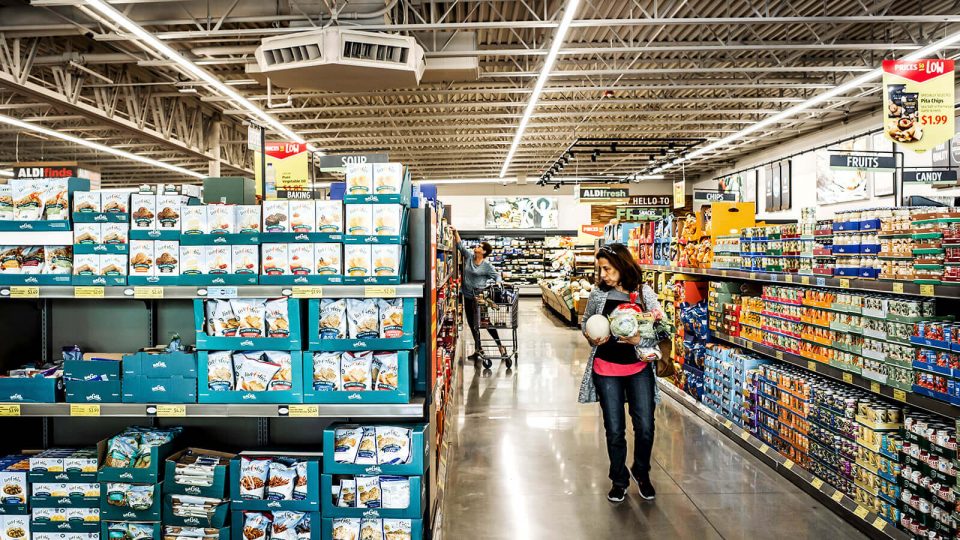
The rise of Aldi and Lidl is no longer just a success story driven by low prices — it represents a fundamental transformation of the global grocery industry.
These discount giants have become the fastest-growing retail format worldwide, reshaping the balance of power away from traditional supermarkets.
At the core of this shift lies a simple reality: consumer behaviour has changed.
🧠 A New Consumer Mindset: Value First
Today’s shoppers are no longer driven by brand loyalty in the way they once were. Instead, their decisions are increasingly shaped by:
- Pressure on household budgets
- The search for genuine value
- The need for efficiency and simplicity
Consumers are becoming more pragmatic. They are:
- Trading down from premium brands
- Accepting private label as credible and often equal in quality
- Focusing on essential purchases rather than impulse buying
This is not a temporary reaction — it is a long-term behavioural shift.
⚙️ The Smart Retail Model
What defines “smart retail” is not simply low pricing, but a highly optimised business model.
Aldi and Lidl operate on principles that maximise efficiency at every level:
1. Limited Range, Strong Impact
A significantly reduced product range allows:
- Faster decision-making for customers
- Lower operational complexity
- Better control over supply chains
2. Private Label Strength
With a heavy focus on own-brand products:
- Margins are protected
- Pricing remains competitive
- Dependency on global brands is reduced
3. Operational Discipline
- Smaller, more efficient stores
- Lean staffing models
- Streamlined logistics
4. Intelligent Use of Data
Retail decisions are increasingly driven by:
- Demand patterns
- Pricing optimisation
- Rapid adaptation to consumer trends
This is not discount retail in the traditional sense — it is precision retailing.
🌍 A Shift in Global Retail Power
The expansion of discount retailers is now influencing the entire supermarket sector.
Traditional players such as Tesco, Sainsbury’s, and Walmart are being forced to adapt by:
- Expanding their private label ranges
- Becoming more price competitive
- Simplifying store formats and assortments
The industry is moving toward a model where efficiency and value outweigh scale and variety.
📉 Rethinking the Supermarket Model
The traditional supermarket formula — large stores, extensive choice, and brand-heavy shelves — is under pressure.
Modern consumers increasingly prefer:
- Clear, curated product selections
- Consistent pricing
- Faster, more convenient shopping experiences
In this environment, less choice is no longer a limitation — it is becoming a strategic advantage.
🔮 Conclusion: The Future Is Smart Retail
The success of Aldi and Lidl highlights a broader industry evolution.
Retail is no longer about offering everything. It is about offering the right products, at the right price, through the most efficient system possible.
“Smart retail” reflects a new reality:
- Consumers are more informed
- Buying power is more constrained
- Expectations are clearer
The retailers that succeed will be those who understand this shift and adapt accordingly.
👉 The future of grocery retail will not be defined by size, but by efficiency, discipline, and value delivery.