
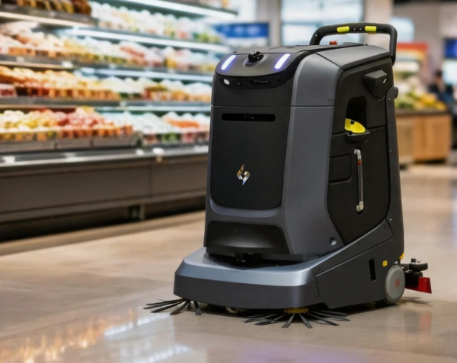
Tesco Bets on Robotics as 600 Express Stores Prepare for Automated Cleaning Revolution
LONDON — Britain’s largest supermarket chain is taking another step into the era of intelligent retail, with Tesco announcing the rollout of autonomous cleaning robots across 600 Express convenience stores nationwide.
The initiative, developed in partnership with cleaning technology specialist ICE (Industrial Cleaning Equipment), represents one of the largest deployments of autonomous cleaning technology in the UK convenience grocery sector. The robots will assume responsibility for routine floor-cleaning duties, allowing store employees to dedicate more time to customer service, stock replenishment, and day-to-day operations.
The move reflects a broader trend sweeping through retail, where automation is increasingly being introduced not as a replacement for workers but as a tool designed to improve efficiency and productivity. Tesco says the machines are intended to operate alongside staff rather than replace them, creating what industry observers describe as a “collaborative automation” model.
Unlike traditional cleaning equipment, the robots are equipped with data-monitoring capabilities that track performance and cleaning activity in real time. This allows store managers to verify cleaning standards and optimize maintenance schedules while ensuring a consistent shopping environment for customers.
The deployment arrives at a time when supermarkets are under mounting pressure to control operating costs while maintaining high service levels. Labor shortages, rising wage bills, and growing customer expectations have accelerated interest in automation technologies across the sector.
Tesco is not the first retailer to experiment with robotic cleaning systems. Competitors including Asda and Morrisons have previously tested similar technology in selected locations, while retailers across Europe have expanded robotics programs in both stores and distribution centers. However, the scale of Tesco’s rollout places it among the most ambitious retail automation projects currently underway in the UK convenience market.
Industry analysts view the project as another sign that automation is moving beyond warehouses and fulfillment centers into customer-facing retail environments. While self-checkout systems and electronic shelf labels have become commonplace, autonomous cleaning robots represent a new generation of in-store technology aimed at enhancing operational efficiency without disrupting the shopping experience.
For customers, the change may be subtle—a quiet machine gliding through store aisles after a spill or during quieter trading hours. For Tesco, however, it signals a larger transformation in how routine store operations are managed.
As supermarkets continue searching for ways to balance productivity, cost control, and customer satisfaction, robots may soon become as familiar a sight in convenience stores as shopping baskets and checkout tills.
Whether shoppers embrace their new robotic colleagues remains to be seen, but Tesco’s latest investment suggests that the future of retail will be increasingly shaped by machines working side by side with people.