
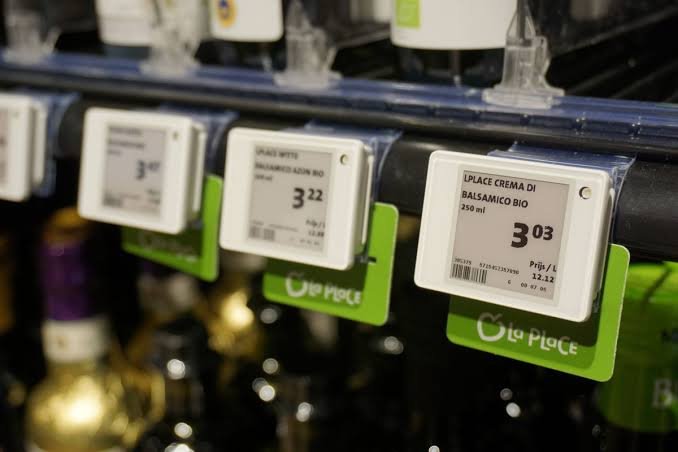
Tesco’s decision to deploy electronic shelf labels (ESLs) across approximately 3,000 UK stores marks one of the largest retail technology projects undertaken in Europe and could represent a contract worth hundreds of millions of pounds for Chinese retail technology provider Hanshow.
The supermarket giant recently confirmed plans to roll out digital shelf-edge labels throughout its estate following a series of successful trials. The technology replaces traditional paper price tags with electronic displays that can be updated centrally and in real time, reducing labour costs while improving pricing accuracy.
Although Tesco and Hanshow have not disclosed the financial terms of the agreement, industry estimates suggest the project could be valued between £250 million and £400 million when hardware, installation, software, network infrastructure, maintenance and support services are included.
A deployment of this scale is expected to require tens of millions of individual electronic labels. Large supermarket locations can contain more than 20,000 shelf labels, while smaller convenience stores require significantly fewer. Across Tesco’s nationwide network, analysts estimate the total number of labels could exceed 30 million units.
The move reflects a broader shift within global retail as supermarkets seek to automate store operations and improve efficiency. Electronic shelf labels allow retailers to update prices instantly across thousands of products, support dynamic promotions, and reduce the operational burden associated with manual price changes.
For Hanshow, the Tesco agreement represents a significant endorsement in one of Europe’s most competitive grocery markets. The company has become one of the world’s leading ESL suppliers, competing with established players including Pricer, SES-imagotag and SoluM.
Beyond operational efficiency, Tesco is expected to benefit from reduced paper consumption and improved compliance with pricing regulations. The technology may also provide a platform for future in-store digital initiatives, including enhanced product information, stock visibility and customer engagement tools.
While the exact value of the contract remains undisclosed, industry observers believe the rollout will rank among the largest ESL deployments globally and further accelerate adoption of digital shelf technology across the retail sector.
As the rollout progresses over the next two years, retailers across Europe will be watching closely to see whether Tesco’s investment delivers the productivity gains and operational benefits that proponents of ESL technology have long promised.