

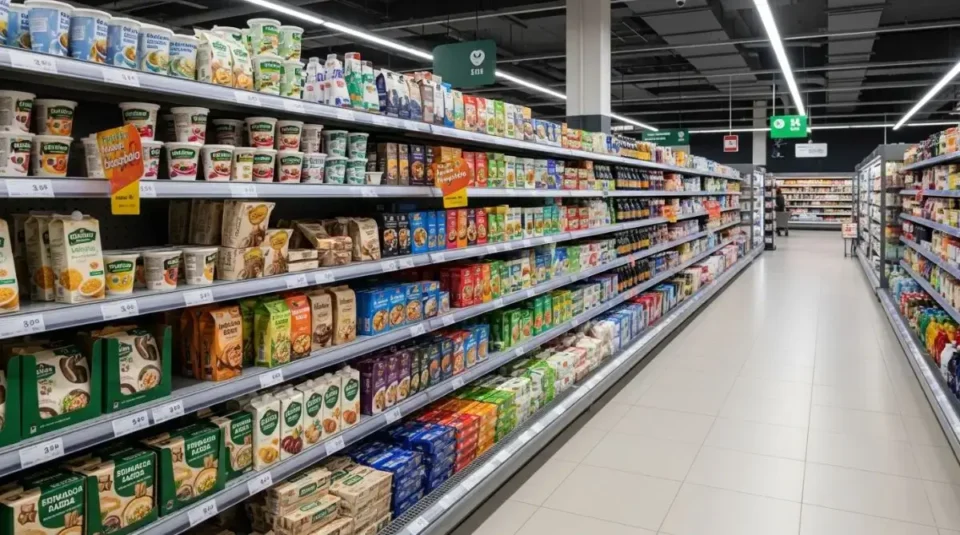
For decades, private label was treated as the budget alternative — the quiet, unglamorous sibling of national brands. That era is ending. A new phase is emerging in which private label no longer plays defence. Instead, it is becoming the core engine of supermarket power, identity and long-term survival.
The traditional view of private label focuses on price gaps and margin advantages. But the next chapter is something entirely different: supermarkets transforming themselves into brand houses, with portfolios that rival consumer-goods giants.
This shift is not being driven by discounts or economic pressure alone. It is rooted in a more profound structural change: retailers are moving from being distributors of other companies’ innovations to becoming creators of their own ecosystems.
1. Supermarkets Are Building Invisible FMCG Companies
Behind the scenes, the world’s largest retailers have built teams that look strikingly similar to those at global manufacturers.
Product developers, flavour engineers, sustainability officers and packaging designers now work not for multinational brands but inside retailer headquarters.
The outcome is powerful:
-
supermarkets own the brand,
-
control the recipe,
-
influence the narrative,
-
and keep the margin.
What appears on the shelf as “store’s own brand” is, in reality, a miniature FMCG empire — one that keeps expanding category by category.
2. Private Label Is Becoming a Tool of Influence
National brands spend billions shaping consumer behaviour. But supermarkets control something even more valuable: the moment of decision.
When a retailer places its private label on the middle shelf, highlights it in the digital algorithm, adds it into a meal basket or features it in a personalised promotion, it is not merely offering a cheaper choice — it is influencing taste, loyalty and habits.
This is why private label is becoming the ultimate strategic lever. It’s not about replacing brands; it’s about setting the direction of the market itself.
3. Premium Private Label Is the New Status Symbol
The next frontier for private label isn’t economy ranges — those are already established.
The future sits in premium, ultra-premium and speciality lifestyle ranges.
Retailers have discovered that shoppers now want:
-
regional authenticity,
-
chef-crafted recipes,
-
functional health foods,
-
ethical sourcing,
-
and indulgent “affordable luxury”.
These are no longer categories owned by national brands.
Supermarkets now position their own labels as aspirational and sophisticated, turning everyday food shops into curated product experiences.
In many markets, the most innovative items on the shelf no longer come from traditional FMCG companies — they come from retailers.
4. Data Gives Private Label an Unfair Advantage
National brands must guess what consumers want next.
Retailers don’t guess — they know.
Every transaction, every online search, every substitution, every basket combination feeds directly into product development.
This creates a future in which private label is not just reactive but predictive.
Retailers can launch products designed from the very start to fit consumer behaviour, not the other way around.
This makes private label inherently faster, more precise and more adaptable than legacy brands.
5. The Real Disruption: Retailers Becoming Regional Manufacturers
As global supply chains fragment, supermarkets are increasingly investing in direct relationships with farmers, fisheries, bakeries and local factories. Some are even building their own production facilities.
The result is a future in which retailers become vertically integrated producers, reducing reliance on external suppliers and achieving:
-
lower volatility,
-
better traceability,
-
stronger sustainability credentials,
-
and total control over quality.
This is not a trend — it is a structural transformation of the food system.
6. In the Next Decade, Private Label Will Become the Default Choice
The rise of private label is no longer a theory; it is a trajectory.
By 2035, several major markets are expected to hit:
-
50% private label penetration as the norm,
-
60–70% in some categories,
-
and even 80% in fresh, chilled and bakery.
Supermarkets will not simply be selling food; they will be the dominant brand owners shaping the entire food culture of their regions.
National brands will still exist — but they will no longer dictate the market.
The Future Is Quietly Being Written on the Shelf
Private label has evolved from a margin strategy into a cultural and strategic revolution.
Supermarkets are no longer passive shelves.
They are becoming creators, manufacturers and brand storytellers in their own right.
The next decade will belong to retailers who understand that private label is not just another product line — it is the heart of their identity, the engine of their influence and the key to their long-term power.
The future of retail is not multi-brand.
The future is multi-private-label, with supermarkets at the centre of their own worlds.