
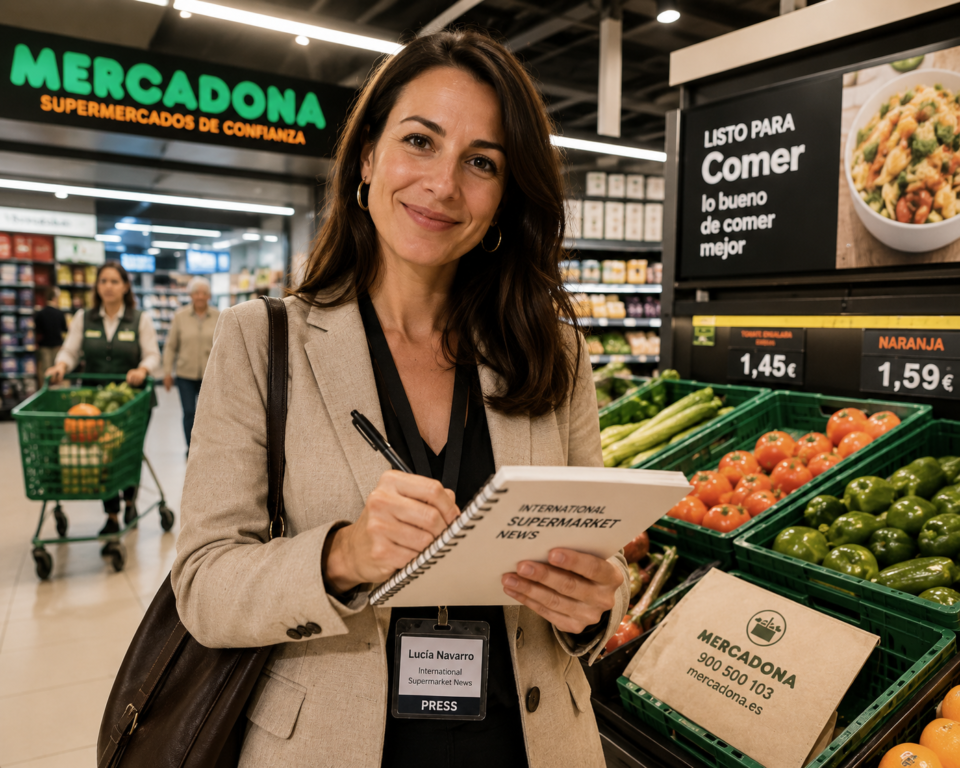
Across continents, supermarket retail is undergoing a transformation that is both visible in store aisles and invisible in supply chains, data centers, and logistics networks. What was once a relatively stable industry—built on predictable weekly shopping patterns, fixed store formats, and long-standing brand loyalty—has become one of the most dynamic and competitive sectors in global commerce.
From European hypermarket pioneers to American supermarket giants, the direction of change is remarkably consistent: smaller formats, stronger digital integration, heavier use of data, and a relentless focus on efficiency. Yet beneath these shared trends, each company adapts in its own way, shaped by local markets, consumer behavior, and historical identity.
One of the defining forces reshaping the industry is the shift in consumer behavior. Modern shoppers are no longer loyal to a single store or format. Instead, they move fluidly between discount retailers, premium supermarkets, convenience stores, and online platforms depending on need, time, and price sensitivity. A weekly supermarket trip has increasingly been replaced by a combination of smaller, more frequent purchases and digitally enabled ordering.
This behavioral shift has placed enormous pressure on traditional supermarket economics. Large stores designed for bulk weekly shopping are being reconfigured or complemented by smaller neighborhood formats. Convenience has become a decisive factor, often outweighing assortment size. Retailers are responding by pushing closer to consumers physically while simultaneously expanding their digital reach.
Technology now sits at the center of this transformation. Grocery retail generates vast amounts of data, from point-of-sale transactions to supply chain movements and online browsing behavior. This data is being used to refine forecasting, optimize inventory, and improve pricing strategies. Artificial intelligence systems increasingly play a role in predicting demand, particularly in categories such as fresh food where timing and waste management are critical.
Behind the scenes, supply chains have become as important as storefronts. The ability to move products efficiently from producers to consumers determines not only cost structure but also product availability and freshness. Global disruptions in recent years have highlighted vulnerabilities in these networks, prompting retailers to invest heavily in resilience, flexibility, and diversification of sourcing.
Private-label products have emerged as one of the most powerful strategic tools in modern grocery retail. Once seen as low-cost alternatives, they now span multiple tiers—from entry-level essentials to premium offerings that rival national brands. These products allow retailers to control pricing, protect margins, and differentiate their assortments in a highly competitive environment.
Sustainability has also moved from the periphery to the core of retail strategy. Environmental concerns are no longer optional considerations; they are embedded in procurement, logistics, packaging design, and store operations. Retailers are under pressure from consumers, regulators, and investors to reduce emissions, minimize waste, and improve energy efficiency. For large chains, even small operational changes can have significant environmental impact at scale.
Despite these common pressures, regional differences remain important. In Europe, discounters and hypermarket transitions dominate the competitive narrative. In the United States, fragmentation and the rise of omnichannel grocery define the landscape. In Southern Europe, efficiency-driven models and price sensitivity shape strategy. In each case, retailers must interpret global trends through local realities.
The role of physical stores is evolving rather than disappearing. Instead of serving only as points of sale, stores now function as hybrid spaces—part retail environment, part fulfillment center, and part data node. Many retailers are redesigning store layouts to accommodate online order picking, faster checkout systems, and improved navigation for time-conscious shoppers.
Digital channels have become inseparable from grocery retail. Online ordering, mobile apps, subscription services, and delivery platforms are no longer add-ons but core components of the customer experience. The most successful retailers are those that integrate digital and physical channels into a single seamless ecosystem rather than treating them as separate businesses.
Competition continues to intensify across all segments. Discount chains exert constant pressure on pricing. Premium and specialty retailers compete on quality and experience. E-commerce platforms challenge traditional logistics models. At the same time, convenience stores and quick-commerce services target immediate, small-scale consumption. The result is a highly fragmented and continuously shifting competitive landscape.
In this environment, scale alone is no longer sufficient. Operational efficiency, technological capability, and customer understanding have become equally important. Retailers must not only move products efficiently but also anticipate consumer needs with increasing precision.
Despite the challenges, the grocery sector remains one of the most resilient parts of global retail. Food and household essentials are non-discretionary purchases, providing a stable foundation even during economic uncertainty. However, the way consumers access and purchase these essentials is changing rapidly, forcing retailers to continuously adapt.
The future of grocery retail is unlikely to be defined by a single dominant format. Instead, it will likely consist of a layered ecosystem where large supermarkets, convenience stores, discount outlets, and digital platforms coexist and interact. Each serves different needs within a broader system of consumption.
What connects all of these models is the increasing importance of flexibility. Retailers that can adapt quickly—whether through store redesign, digital integration, or supply chain optimization—are better positioned to succeed in an environment where consumer expectations evolve constantly.
Ultimately, the industry is moving toward a model where retail is less about individual stores and more about interconnected systems. Products flow through networks of suppliers, distribution centers, stores, and digital platforms, all coordinated by data and technology. The supermarket of the future is not a single place, but a system designed to meet consumers wherever and however they choose to shop.
In that sense, the transformation underway is not just about supermarkets. It is about the reinvention of everyday commerce itself.