

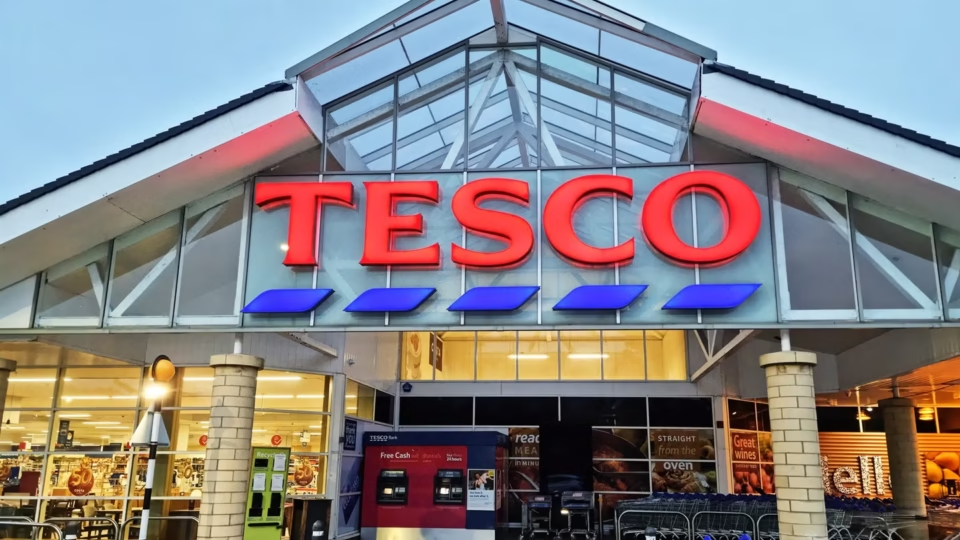
For decades, Tesco has led the UK grocery market, but that leadership is now being tested from every direction.
The company faces growing pressure from Aldi, Lidl and Sainsbury’s, all targeting the same value-driven customer. Competition is no longer secondary; it is direct and aggressive.
The challenge for Tesco is clear: remain price competitive while maintaining quality, scale and brand trust. Its large store formats, wide product range and complex supply chain create higher operating costs, limiting flexibility against discounters.
In response, the retailer is adapting. Price matching and promotions are being intensified to retain customers. Private label ranges are expanding to compete on both value and quality. Investment in convenience stores reflects changing shopping habits, while digital platforms and loyalty programmes are being strengthened to maintain engagement.
Customer loyalty is no longer guaranteed. Shoppers are more price-sensitive, more informed and more willing to switch between retailers. Every visit has become a competitive moment.
Scale remains a major strength for Tesco, providing strong supplier relationships, national coverage and brand recognition. At the same time, size brings complexity, higher costs and slower adaptation compared to more agile competitors.
Tesco is not losing its position, but it is being forced to redefine it. The shift is clear: from dominance through scale to competitiveness through efficiency and adaptability.
The future will depend on balance — price, quality, convenience and operational discipline — in a market where the rules are rapidly changing.