
Few companies exert as much influence over global retail as Walmart. What began as a single discount store in rural America has evolved into one of the most powerful commercial enterprises in history, serving hundreds of millions of customers through an enormous network of stores, distribution centers, digital platforms, and supply chain operations. Its scale is so vast that shifts in Walmart’s strategy often ripple across entire industries, affecting manufacturers, logistics providers, technology firms, and competitors around the world.
Today, Walmart stands at a critical moment in its evolution. The company remains the world’s largest retailer by revenue, yet the environment in which it operates is changing more rapidly than at any time in recent memory. Consumer expectations are evolving, technology is transforming business models, and competition is emerging from both traditional rivals and digital-native challengers. The retailer’s response offers a glimpse into what the future of commerce may look like.
The modern retail landscape bears little resemblance to the environment that fueled Walmart’s rise during the late twentieth century. Consumers now shop across multiple channels, comparing prices instantly, researching products online, and expecting near-immediate fulfillment. The traditional distinction between physical and digital retail is fading, replaced by an integrated ecosystem where convenience and flexibility are paramount.
Walmart’s strategy reflects this reality. Rather than viewing e-commerce and physical stores as competing channels, the company increasingly treats them as complementary components of a unified retail platform. The objective is to meet customers wherever they choose to shop, whether in a supercenter, through a mobile application, or via home delivery services.
Physical stores remain at the center of this approach. Despite years of predictions that online commerce would replace traditional retail, Walmart’s vast store network continues to provide a significant competitive advantage. Thousands of locations place the company within close proximity of millions of consumers, creating opportunities that purely digital competitors struggle to replicate.
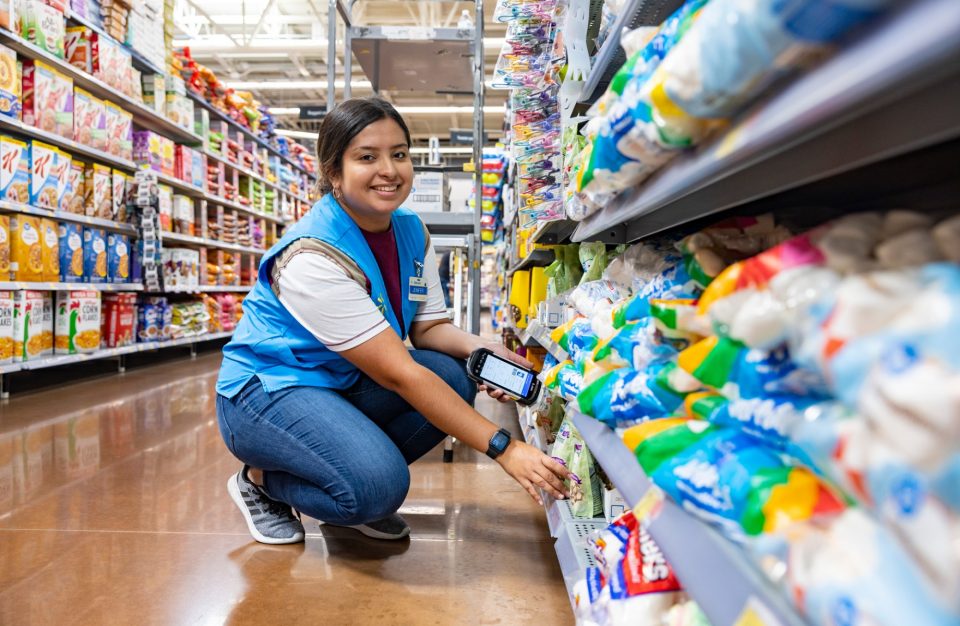
These stores are being transformed into multifunctional assets. Beyond serving as shopping destinations, they increasingly operate as fulfillment centers, pickup locations, and logistics hubs. This evolution allows Walmart to leverage its physical footprint to support faster delivery services while reducing transportation costs and improving efficiency.
Technology has become one of the company’s most important strategic priorities. Retail operations generate enormous amounts of information, from purchasing behavior and inventory levels to transportation data and supply chain performance. Walmart is investing heavily in systems designed to convert this information into actionable insights.
Artificial intelligence is playing a growing role throughout the organization. Advanced algorithms help forecast demand, optimize inventory, identify purchasing trends, and improve operational efficiency. By analyzing vast datasets, these systems enable faster decision-making and greater accuracy than traditional forecasting methods.
Automation is also reshaping the company’s logistics infrastructure. Distribution centers increasingly rely on sophisticated technologies that streamline the movement of goods through supply chains. Automated systems can sort products, manage inventory, and coordinate deliveries with remarkable speed and precision. These capabilities are particularly valuable in an industry where efficiency directly impacts profitability.
Supply chain excellence has long been one of Walmart’s defining strengths. The company’s ability to move products from manufacturers to consumers at scale remains a critical competitive advantage. Yet recent global disruptions have demonstrated the need for even greater resilience. Companies throughout the retail sector are reassessing sourcing strategies, inventory management practices, and transportation networks.
For Walmart, strengthening supply chain flexibility has become essential. The retailer is investing in technologies and processes designed to improve visibility across its global operations. Real-time information allows managers to respond more quickly to disruptions while maintaining product availability and controlling costs.
Another major area of focus is customer convenience. Modern consumers increasingly prioritize speed and simplicity. Whether purchasing groceries, electronics, clothing, or household essentials, shoppers expect frictionless experiences. Walmart is responding through investments in digital services, pickup options, subscription programs, and delivery capabilities.
The growth of grocery retailing remains particularly important. Food sales represent a substantial portion of Walmart’s business and serve as a key driver of customer traffic. Grocery shopping creates recurring interactions that strengthen customer relationships and provide opportunities for cross-category sales. As a result, maintaining leadership in food retailing remains a strategic priority.
Private-label products continue to play an expanding role within the company’s portfolio. By developing proprietary brands, Walmart gains greater control over pricing, quality, and product differentiation. These offerings allow the retailer to deliver value while improving margins and strengthening customer loyalty.
Membership-based services are also becoming increasingly significant. Across the retail industry, subscription models are generating recurring revenue streams while deepening consumer engagement. Walmart has expanded efforts to create benefits that encourage repeat interactions and strengthen long-term relationships with customers.
Sustainability is another area attracting significant attention. Environmental responsibility has become a central concern for consumers, investors, and policymakers alike. Walmart’s size means that even incremental improvements can have substantial impacts. The company has therefore pursued initiatives focused on reducing emissions, improving energy efficiency, minimizing waste, and supporting more sustainable sourcing practices.
The challenge is considerable. Managing environmental objectives across a global network involving thousands of suppliers and millions of products requires extraordinary coordination. Nevertheless, sustainability is increasingly viewed as both a business imperative and a competitive differentiator.
The retailer also faces growing competition from multiple directions. Traditional discount chains continue to battle aggressively for market share, while online marketplaces challenge established retail models. Specialty retailers, convenience operators, and emerging digital platforms are all competing for consumer attention and spending.
What distinguishes Walmart from many competitors is its ability to operate simultaneously at massive scale and increasingly sophisticated levels of technological capability. Historically, scale was primarily a source of purchasing power and logistical efficiency. Today, it is also a source of data, enabling the company to develop advanced analytical capabilities that smaller rivals may struggle to match.
The company’s international operations add another dimension to its strategy. While retail markets differ significantly across countries, common themes are emerging worldwide. Consumers increasingly value convenience, affordability, and digital integration. Walmart’s global presence provides opportunities to share innovations and best practices across markets while adapting to local conditions.
Perhaps the most remarkable aspect of Walmart’s transformation is how it balances continuity with change. The retailer’s core mission—helping customers save money—remains fundamentally unchanged. Yet the methods used to fulfill that mission are evolving rapidly. Technology, automation, data analytics, and digital commerce are becoming as important as traditional retail expertise.
Looking ahead, the future of Walmart will likely be shaped by its ability to integrate these capabilities into a cohesive customer experience. Success will depend not only on operational excellence but also on anticipating shifts in consumer behavior before they become mainstream.
The retail industry is entering a period where convenience, speed, personalization, and efficiency will increasingly define competitive advantage. Walmart’s investments suggest that the company intends to remain at the forefront of that transformation. Rather than defending a legacy business model, it is actively redesigning itself for the next generation of commerce.
In many ways, Walmart’s journey mirrors the evolution of retail itself. The company that once revolutionized discount shopping is now attempting to redefine what a modern retailer can be. Whether through advanced logistics, artificial intelligence, digital platforms, or sustainable operations, Walmart is positioning itself for a future in which retail is less about stores and more about interconnected ecosystems.
The outcome of that effort will influence not only Walmart’s future but also the broader direction of global commerce. As the world’s largest retailer adapts to a changing marketplace, the rest of the industry is watching closely.