
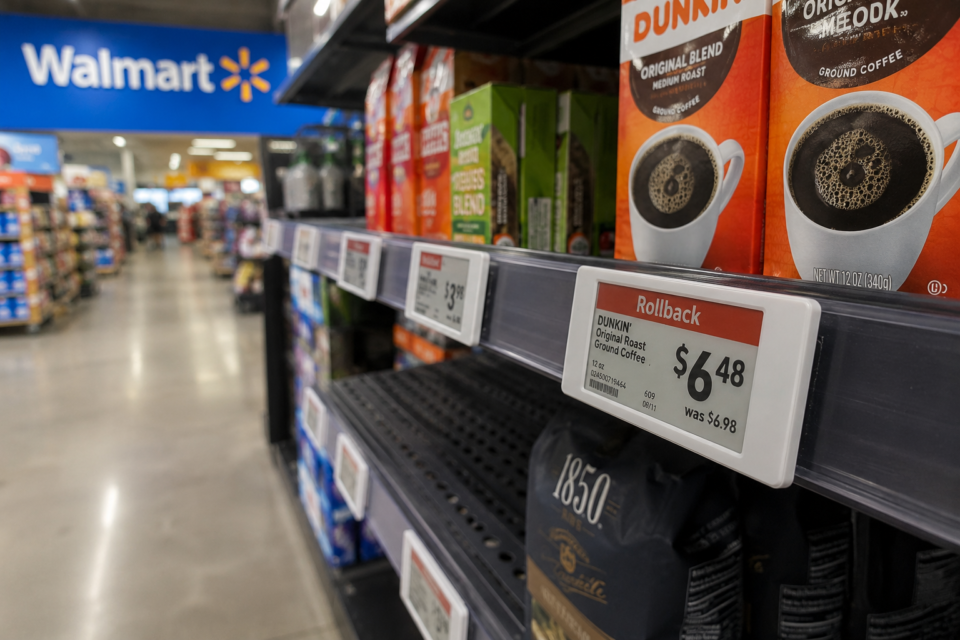
Walmart has confirmed that the rollout of electronic shelf labels (ESLs) across its supermarket network is expected to deliver a strong return on investment while significantly improving day-to-day store operations.
The retail giant is currently expanding digital price tags across thousands of stores in the United States as part of a broader modernization strategy. According to Walmart, the system allows real-time price updates across entire stores without the need for manual relabeling, reducing labor intensity and improving operational accuracy.
Company representatives say the investment is designed to streamline pricing management, minimize human error, and improve responsiveness to market changes. By enabling centralized control of pricing, Walmart expects to reduce operational costs over time while increasing efficiency in high-volume retail environments.
The technology is also being positioned as a tool to enhance inventory coordination and promotional execution, allowing stores to adjust pricing more dynamically during sales events or supply fluctuations.
However, the rollout has drawn mixed reactions. Supporters highlight improved efficiency and reduced waste in manual processes, while critics raise concerns about potential misuse, including dynamic pricing practices and workforce reductions.
Despite the debate, Walmart maintains that the long-term benefits outweigh the initial costs, framing electronic shelf labels as a key investment in the future of supermarket operations and retail automation.