

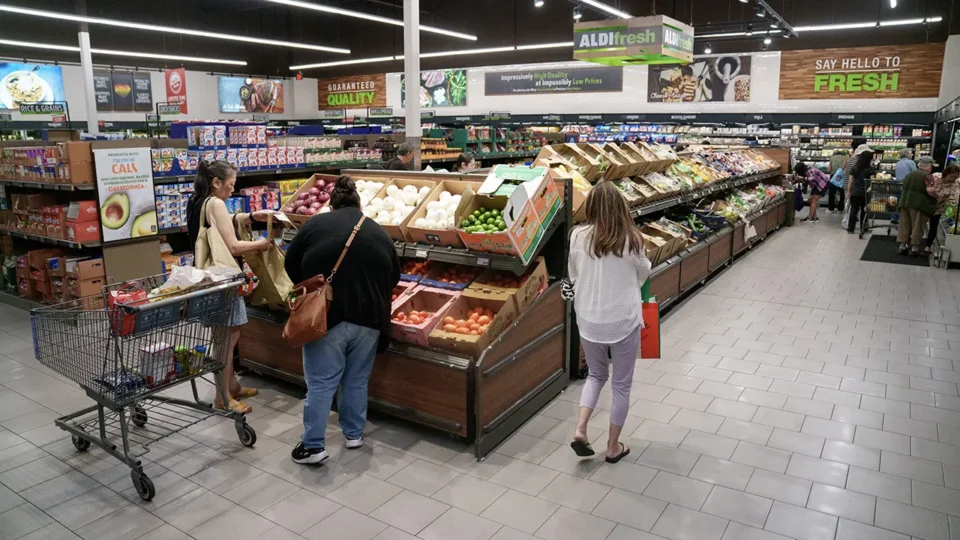

A striking divide exists among American grocery workers when it comes to artificial intelligence and robotics: employees see the potential of technology to make their jobs easier while simultaneously fearing that the same technology could reduce the number of people employed in stores.
A Grocery Doppio study of more than 700 grocery associates highlighted the contradiction. Some 87% of respondents said new technologies could help them perform their jobs better, yet the same proportion said they were worried that AI and robotics could lead to a reduction in the workforce.
The findings, originally published in 2023, remain highly relevant as retailers continue accelerating their technology strategies.
For supermarket employees, the concern is understandable.
AI can now assist with demand forecasting, ordering, inventory management and customer interaction. Robotics can move products, assist with fulfilment and perform repetitive physical tasks. Computer vision can monitor shelves and identify operational problems.
Each technology can remove work that previously required a human employee.
Yet the study also showed that grocery workers do not necessarily oppose technology. Many see clear benefits when digital tools are properly designed and implemented.
The problem is often the quality of the technology itself.
The research found that 63% of associates had experienced technology failures and 81% said those failures had affected their job performance. Some 69% believed their store technology lagged behind competitors.
This highlights an important issue for retailers. Automation is only useful when it works reliably.
Poorly implemented technology can increase pressure on employees rather than reduce it. A malfunctioning handheld system, unreliable connectivity or poorly designed software can create additional work for staff who must solve problems manually.
The research also identified a generational divide. Younger employees were particularly critical of the technology available to them, with 74% of Gen Z associates reporting dissatisfaction with their store technology.
The debate about AI in grocery retail therefore goes beyond the simple question of whether robots will replace workers.
The more immediate question may be how retailers redesign jobs around technology.
If automation removes repetitive tasks while allowing employees to concentrate on customers, merchandising and more complex responsibilities, productivity could improve without necessarily eliminating the human element.
But if automation becomes primarily a mechanism for reducing payroll, the consequences could be very different.
As American grocery retailers invest more heavily in AI and robotics, employees are likely to watch closely how those investments affect their jobs.
The technology revolution may have arrived in the supermarket — but the future of the supermarket workforce remains undecided.