
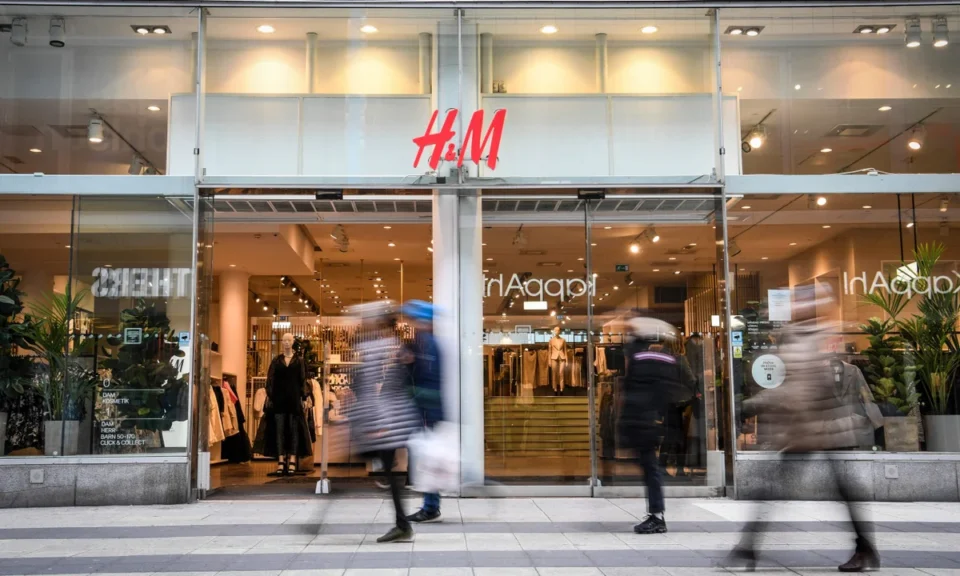
Around 250 employees could be affected as the Swedish fashion group reorganises its UK head-office operations
H&M is restructuring its UK business in a move that could affect around 250 employees, providing another indication of the pressure facing major fashion retailers as shopping habits and operating models continue to change.
The proposed job reductions are understood to form part of a wider reorganisation of H&M’s UK head-office operations.
The Swedish fashion group is one of the world’s best-known high-street clothing retailers, with a substantial presence across Britain. Its restructuring comes as fashion retailers continue to deal with changing consumer behaviour, rising operating costs and increasing competition from online and value-focused competitors.
The potential redundancies are concentrated on head-office roles rather than representing a broad closure programme across H&M’s UK stores.
That distinction is important.
Major retailers are increasingly reviewing the structure of their organisations as they attempt to operate more efficiently. Reducing administrative layers can allow companies to redirect resources towards stores, digital operations, logistics and other areas that have a more direct impact on customers.
However, job cuts at a major fashion retailer can also reflect the wider transformation of the British high street.
Consumers now have considerably more choice than they did a decade ago. Traditional fashion chains compete not only with established high-street rivals but also with online specialists, international fast-fashion platforms and discount retailers.
The growth of online shopping has also changed the economics of fashion retail.
Retailers need to manage physical stores while simultaneously investing in websites, mobile shopping, distribution centres, returns systems and digital marketing.
This creates a more complicated operating structure and puts pressure on companies to decide where employees and investment are most needed.
H&M has been working internationally to improve efficiency and adapt its business to changing customer expectations. The UK restructuring is therefore part of a much wider transformation taking place across fashion retail.
For employees, however, restructuring brings uncertainty.
Head-office positions can cover areas ranging from administration and finance to marketing, merchandising, technology and management. Reductions in these functions can affect employees even when a retailer continues operating a large network of stores.
For Britain’s high street, the development is another reminder that retail employment is changing.
The sector is not necessarily disappearing, but the types of jobs supporting major retailers are evolving. Technology, online sales, supply-chain efficiency and increasingly sophisticated data systems are changing how retailers organise their workforces.
H&M’s UK restructuring will therefore be watched beyond the fashion industry.
Other major retailers are facing similar questions about costs, productivity and the balance between physical and digital operations.
For consumers, the changes may not be immediately visible.
H&M stores can continue to operate while significant changes take place behind the scenes.
But for the hundreds of employees potentially affected, the restructuring represents a significant change — and another sign that Britain’s retail industry remains in the middle of a major transformation.
