

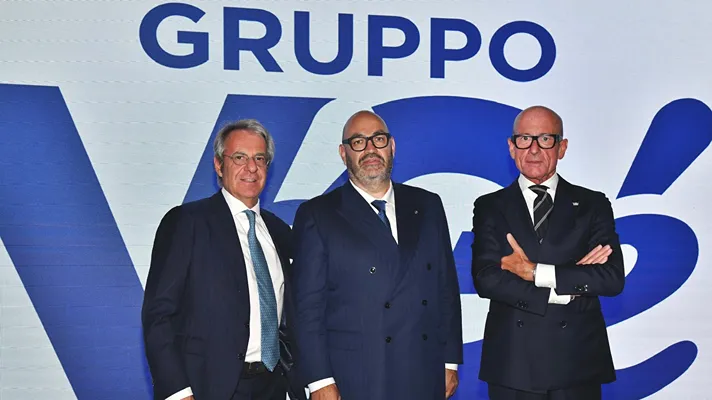
Italy’s grocery retail landscape is experiencing a quiet but decisive transformation, and at the centre of it stands Gruppo VéGé. Known as a consortium of independent supermarkets, VéGé has announced plans to open 65 new stores in 2026, alongside the creation of approximately 3,000 jobs, signalling confidence in the Italian market despite lingering economic uncertainty. This expansion highlights a broader trend in Europe: medium-sized retailers investing in both physical presence and workforce growth to secure long-term relevance.
Gruppo VéGé’s strategy combines several proven elements. Its member stores, including banners such as Famila, A&O and C+C, focus on fresh food, regional specialities and competitive pricing, allowing smaller operators to compete with national chains like Carrefour Italia, Coop, Conad and Esselunga. The consortium’s shared logistics, marketing, and procurement systems ensure economies of scale while maintaining a localised store identity, a dual advantage increasingly critical in a fragmented market.
The 2026 expansion is ambitious. Opening more than 60 stores in a single year requires careful coordination across suppliers, distribution centres, real estate acquisition, and staff recruitment. VéGé’s leadership emphasises that growth is selective, targeting urban and suburban areas with under-served demand, rather than pursuing saturation. By contrast, competitors such as Coop Italia and Conad have focused on consolidating existing networks and optimising store formats, which highlights VéGé’s bold approach in a cautious market.
Private-label ranges continue to play a central role. Famila, A&O and C+C stores feature a multi-tiered selection of store brands covering value, mid-range and premium categories. This mirrors strategies employed by Carrefour Italia and Esselunga, but VéGé’s model is distinguished by local sourcing and tight integration with regional suppliers, enhancing both quality and margin stability. Italian consumers increasingly value provenance and freshness, and VéGé has leveraged this preference to differentiate itself from larger, less flexible chains.
Employment generation is another pillar of VéGé’s expansion. By adding roughly 3,000 positions, the consortium is not only boosting its operational capacity but also reinforcing community ties, a strategy that resonates with Italian shoppers. In a labour market where supermarkets like Esselunga and Coop Italia compete for skilled employees in fresh departments, logistics, and customer service, VéGé’s hiring pledge enhances both reputation and practical capacity.
Technology and omnichannel services are also part of the growth plan. VéGé is implementing digital price labels, enhanced loyalty programmes, and integrated e-commerce platforms for online ordering and click-and-collect services. Competitors such as Carrefour Italia, Coop, and Iper are similarly investing, but VéGé’s approach aims to maintain operational simplicity, avoiding the over-complex systems that have hampered some large chains during peak demand periods.
Promotions and pricing remain carefully calibrated. VéGé is selective with discounting, focusing on key value items while maintaining everyday pricing on staples. This strategy mirrors the approach of Mercadona in Spain, where consistency and trust outweigh aggressive promotions. By contrast, Coop and Carrefour Italia often use larger-scale seasonal promotions, which can temporarily boost traffic but risk margin erosion.
The Italian consumer context also informs VéGé’s strategy. While overall grocery inflation has moderated compared with the peaks of 2022–2023, households remain price-conscious and loyalty has weakened. VéGé leverages product quality, local sourcing, and targeted promotions to maintain shopper confidence, while competitors such as Esselunga and Conad focus heavily on loyalty programmes and premium offerings to differentiate themselves.
Fresh food continues to anchor VéGé’s stores. Bakery, fruit and vegetables, meat, and ready-to-eat meals account for the majority of footfall-driving revenue. Member banners have invested in in-store expertise, ensuring that product presentation, availability, and freshness match consumer expectations. This level of attention positions VéGé favourably against Carrefour Italia and Coop, where the scale of operations sometimes challenges uniform quality across stores.
VéGé’s expansion demonstrates an important lesson for European retail: growth is not solely about size but about controlled, strategic deployment of resources. By combining new store openings with operational support, local sourcing, private-label development, and selective technology integration, VéGé is securing a competitive edge in a market increasingly defined by precision rather than volume.
Looking ahead, VéGé’s 2026 plan is likely to pressure larger chains to reassess urban and suburban strategy, particularly in regions where smaller, agile operators can outperform through tailored local experiences. Carrefour Italia, Coop, Esselunga and Iper may respond by consolidating stores, refining loyalty schemes, or enhancing fresh food offerings, but VéGé’s approach demonstrates that carefully coordinated expansion, coupled with operational excellence, can succeed even in a mature market.
In the evolving Italian supermarket sector, 2026 may well mark the year when strategic growth, rather than aggressive pricing alone, defines market leadership. VéGé is positioning itself not as the cheapest option, but as the most reliable, consistent, and community-oriented choice for Italian shoppers—a formula that may prove resilient in the years ahead