
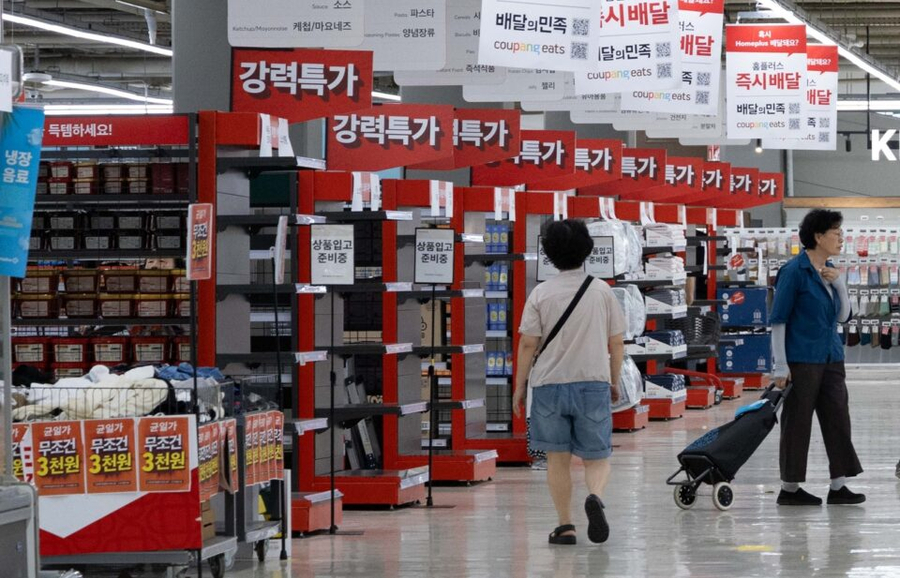
Homeplus is reopening 67 supermarkets in South Korea tomorrow after a dramatic month-long shutdown — but the retailer is far from out of danger.
The country’s second-largest hypermarket chain temporarily closed the 67 stores in July after running into a severe cash crisis and entering court-supervised rehabilitation. The stores have since undergone a soft reopening and final inspections, with normal operations scheduled to resume on 13 August.
The extraordinary situation has left Homeplus fighting on two fronts: getting its supermarkets properly stocked again and convincing suppliers, customers and the courts that the business can survive.
67 STORES BACK — BUT THE CRISIS IS NOT OVER
The reopening was made possible after Homeplus secured 200 billion won (about $142 million) in emergency debtor-in-possession financing from Meritz Financial Group, its largest creditor. The funding followed an agreement by MBK Partners chairman Kim Byung-ju to guarantee the financing.
Homeplus has now completed inspections at the 67 stores.
Online operations will also resume at 59 locations.
But the retailer’s problems run deeper than simply reopening the doors.
When the stores first began their soft reopening, some locations reportedly had shelves only around 30% stocked. Suppliers had been reluctant to resume deliveries because of Homeplus’ financial problems, while the company was also carrying major debts to food suppliers.
CUSTOMERS ARE BEING LURED BACK WITH HUGE DISCOUNTS
Homeplus knows that reopening the stores is only the first step.
The retailer is launching aggressive promotions to bring shoppers back.
From 13 August, My Homeplus members will receive discounts of up to 50% on Korean beef, while its popular fried chicken will be sold at around half price. Pork products will also be heavily discounted. The promotions are scheduled to run through the end of August.
It is a classic supermarket tactic — put the biggest bargains on the shelf and get customers through the doors.
But Homeplus needs more than a successful promotional weekend.
It needs sustainable sales.
PRIVATE EQUITY UNDER THE SPOTLIGHT
Homeplus is owned by private equity firm MBK Partners, which acquired the retailer in 2015.
The company’s financial problems have put the ownership structure and management strategy under intense scrutiny.
Homeplus has been under court-led rehabilitation since March 2025. In July, the Seoul Rehabilitation Court initially ordered the proceedings terminated after the company struggled to secure the funding required to continue its rehabilitation plan.
The decision was subsequently overturned after emergency financing was secured, giving Homeplus until 4 September to obtain approval for its rehabilitation plan.
That deadline is now critical.
SUPPLIERS ARE ALSO AT RISK
The crisis extends well beyond Homeplus employees.
The retailer reportedly owes around 200 billion won to food suppliers, including small and medium-sized businesses. Some suppliers have therefore remained cautious about restoring normal deliveries.
That creates a dangerous retail chain reaction.
No products mean empty shelves.
Empty shelves mean fewer customers.
Fewer customers mean weaker sales.
And weaker sales make it harder for a retailer in financial rehabilitation to convince creditors and suppliers that it has a viable future.
THE BIG TEST STARTS NOW
Homeplus has managed to reopen the stores.
But reopening is not the same as recovery.
The retailer must now rebuild inventory, restore supplier confidence, bring customers back and demonstrate that the business can generate enough cash to survive.
The September 4 deadline is therefore becoming the next major moment in the crisis.
For the wider retail industry, the Homeplus story is a stark warning.
A major supermarket chain can have hundreds of stores, thousands of employees and millions of customers — and still find itself fighting simply to keep the lights on.
Homeplus is back.
Now it has to prove it can stay open.
