
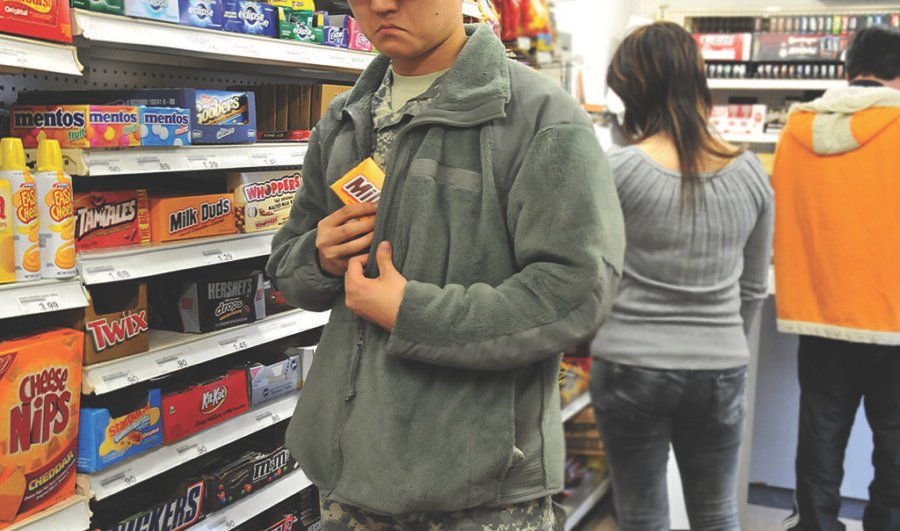
European retailers are dealing with a retail crime problem they can’t even see.
An estimated 98% of shoplifting incidents went undetected in Germany last year, according to the EHI Retail Institute report. However, based on what we do know, the price tag of retail crime was about €3.05 billion, and a third of that value was attributable to organised crime.
Meanwhile, Netherlands’ Scientific Research and Data Centre (WODC) released a report aptly titled ‘Out of Sight’, which found only 39,000 shoplifting incidents were reported to police in 2024, despite researchers estimating the real figure between 647,000 and over one million incidents that same year.
Then we see research from Sweden’s Svensk Handel which found about 60% of stores that experience theft in the past week don’t report it, and industry experts in Spain typically estimate about 85% of retail crime is ever reported.
None of this is a surprise to those who’ve been working in the retail sector for years. Rightly or wrongly, retailers have accepted shoplifting and crime as the cost of doing business for so long.
This means retailers must make decisions around risk, store security, employee welfare or police engagement without understanding the full scale and severity of retail crime impacting their stores.
The key to changing this is technology. You only need to look to the UK to see what retailers are achieving using tech tools like Auror to structure crime reporting in their stores to surface the full picture of offending across their network.
What these retailers now know is that the top 10% of offenders responsible for 70% of retail crime and repeat offenders are up to four times more likely to be violent.
This kind of information doesn’t just help retailers make better strategic security decisions around risk, but it makes the frontline teams feel more aware of repeat offenders and safer.
For European retailers, technology will allow them to do three important things that will pull the curtain back on the scourge of retail crime.
First, documenting a crime event can take a store manager the better part of an hour, and even longer if they choose to report this to police and physically share evidence and witness statements. The bottom line is that it’s a lot of effort and it’s little wonder why many store workers let incidents go unreported. However, Auror cuts that process down to minutes, and supports retailers in capturing higher quality evidence digitally. By cutting down time required to report and making it easier for colleagues, it removes the disincentive that has trained staff not to bother in the first place.
Then, by leaving behind complicated spreadsheets, sticky notes or posters on the shop window, and structuring crime reporting to be consistent across a retailers’ store network, it surfaces the top repeat and organised offenders. Currently, a single store manager has no way of knowing that the person who walked out with a shopping trolley full of meat did the same thing at four other stores across the city that same week. If stores are all reporting differently then nobody sees the full picture.
The effectiveness of this is perhaps best shown by the results from London which show police have used retailer reports of crime in Auror to quadruple their positive outcome rate for reports of retail crime, compared to alternative methods of reporting.
Finally, better intelligence leads to better decision making. Without intelligence, retailers are only guessing when it comes to managing risk, protecting staff and stores, and investing in security measures. If retailers can surface the problem to gain better insight into the rate of violence in each store or geography, products being targeted, top time of day for offending, and total loss from shoplifting, then they are able to make critical decisions around safety and security that actually make a difference.
Making stores safer cultivates a more welcoming environment for customers and colleagues. This is a major contributor in retaining staff for longer and ensuring their wellbeing. High turnover is costly to retailers – the UK’s Retail Trust estimates the cost to replace a team member that leaves to be about £5,195 – so keeping teams safe, happy and enjoying their work in retail is incredibly important.
Retailers are fierce competitors, except on this issue. Prolific and organised offenders are not brand or store-loyal. They go from one shop to the next, hoping each store shrugs it off as another one-off incident, thriving on anonymity. Now is the time for retailers to embrace the right tools and tech-based solutions to surface the scale of the problem, make sense of it, and then crack down on rising retail crime.

By Mark Gleeson, Auror General Manager, Europe
Auror is the leading global retail crime intelligence company that provides the world’s largest retailers with a software platform to securely and consistently record crime, connect the dots on organised offenders, and collaborate with law enforcement. Auror is used in more than 85,000 stores and in 3,500 law enforcement agencies globally.
