
Not every supermarket success story is built on headlines. Some are built aisle by aisle, customer by customer, year after year. That is perhaps the best way to describe Mercadona, the Spanish supermarket chain that has become one of Europe’s most admired food retailers through consistency rather than spectacle.
While many international retailers pursue rapid expansion across continents, Mercadona has followed a different path. Its philosophy has centred on perfecting its operations, listening carefully to customers, and improving every aspect of the shopping experience before taking the next step. The result is a business model that continues to attract attention from retailers around the world.
Across Spain and Portugal, Mercadona has earned a reputation for stores that are clean, well-organised and easy to shop. The retailer has deliberately avoided unnecessary complexity, focusing instead on offering a carefully selected assortment that meets the everyday needs of families.
This approach may appear simple, but behind it lies an exceptionally sophisticated operation. Product ranges are reviewed continuously, suppliers work closely with the company, and every decision is guided by efficiency and customer satisfaction.
One of Mercadona’s defining characteristics is its relationship with suppliers. Rather than changing manufacturers frequently, the company works with long-term partners to develop products specifically for its stores. This collaborative model has helped create a range of exclusive products that customers recognise for both quality and consistency.
Private-label brands are at the heart of Mercadona’s success. Whether shoppers are looking for fresh produce, frozen foods, household goods or personal care products, many choose Mercadona’s own brands with confidence. These products have become household names in Spain, demonstrating that supermarket brands can compete successfully with well-known manufacturers.
Fresh food has also become one of the retailer’s strongest assets. Modern fruit and vegetable departments, quality bakery sections, fresh meat counters and seafood displays have helped strengthen Mercadona’s reputation as a destination for everyday food shopping. Consumers increasingly expect supermarkets to deliver freshness alongside value, and Mercadona has made this balance a key priority.
Innovation at Mercadona often happens quietly. Instead of introducing dramatic changes, the retailer prefers gradual improvements that simplify shopping. Store layouts are refined, checkout processes become faster, and product packaging is redesigned to make items easier to use while reducing unnecessary materials.
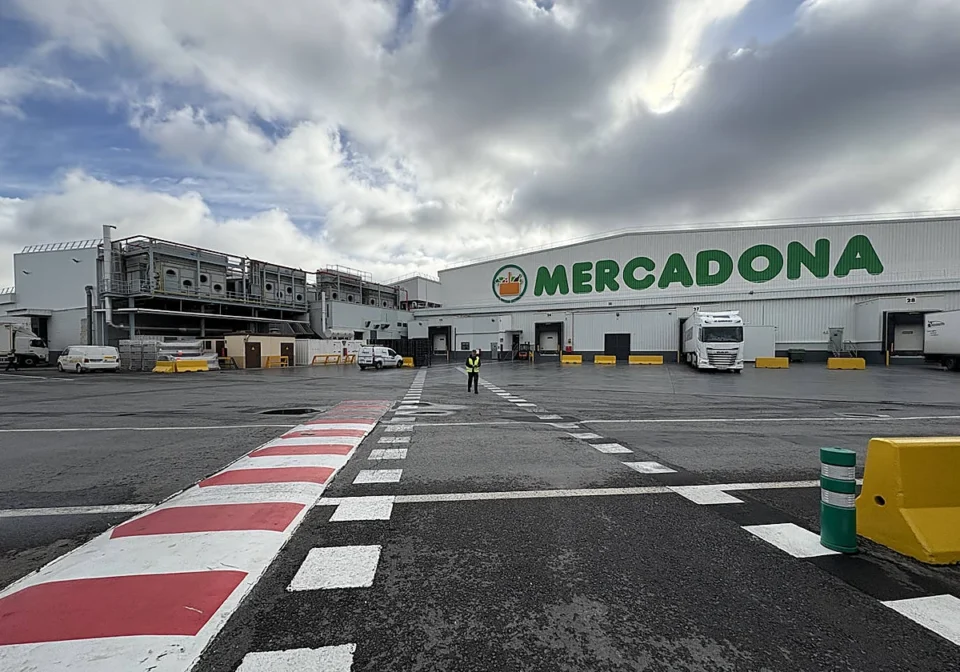
Technology supports much of this progress. Advanced logistics centres, automated distribution systems and sophisticated inventory management enable stores to receive products quickly and efficiently. These investments help reduce waste while ensuring shelves remain well stocked throughout the day.
The company has also embraced digital retailing at its own pace. Online grocery shopping has expanded steadily, supported by dedicated fulfilment centres designed specifically for e-commerce orders. Rather than adapting traditional stores for online picking, Mercadona invested in specialised facilities that improve efficiency and customer service.
Sustainability has become another important element of the retailer’s long-term strategy. Efforts to reduce plastic consumption, improve recyclable packaging, minimise food waste and increase energy efficiency reflect broader changes taking place throughout European food retail. Consumers increasingly expect supermarkets to operate responsibly, and Mercadona continues to develop initiatives that support environmental goals while maintaining operational efficiency.
Employee development has long distinguished the company from many competitors. Mercadona has consistently invested in staff training, career progression and workplace stability. Well-trained employees contribute directly to customer satisfaction, creating stores where service remains an important part of the shopping experience despite increasing automation.
The retailer also benefits from a clear understanding of local consumers. Product selections often reflect regional tastes and culinary traditions, allowing stores to maintain a close connection with the communities they serve. This local knowledge has helped Mercadona build remarkable customer loyalty over several decades.
Although international expansion has been measured, the company’s successful entry into Portugal demonstrated that its retail model can perform beyond its domestic market. Industry observers continue to watch carefully as Mercadona evaluates future opportunities while maintaining its disciplined approach to growth.
Today’s supermarket sector faces numerous challenges, including inflation, changing consumer behaviour, supply chain complexity and rapid technological development. Mercadona’s response has been to remain focused on operational excellence rather than short-term trends. Continuous improvement, efficient logistics and close supplier partnerships have enabled the company to navigate these challenges with confidence.
For retailers across Europe, Mercadona has become an interesting case study in sustainable growth. Its success illustrates that leadership is not always achieved through the largest international footprint or the highest number of stores. Instead, it can come from understanding customers better than anyone else and delivering a consistently reliable shopping experience.
As the grocery industry continues to evolve, Mercadona’s steady and disciplined strategy offers valuable lessons for the wider retail sector. By combining operational efficiency with customer-focused innovation, the company has established itself as one of Europe’s most respected supermarket operators—and one whose influence is likely to continue growing in the years ahead.