
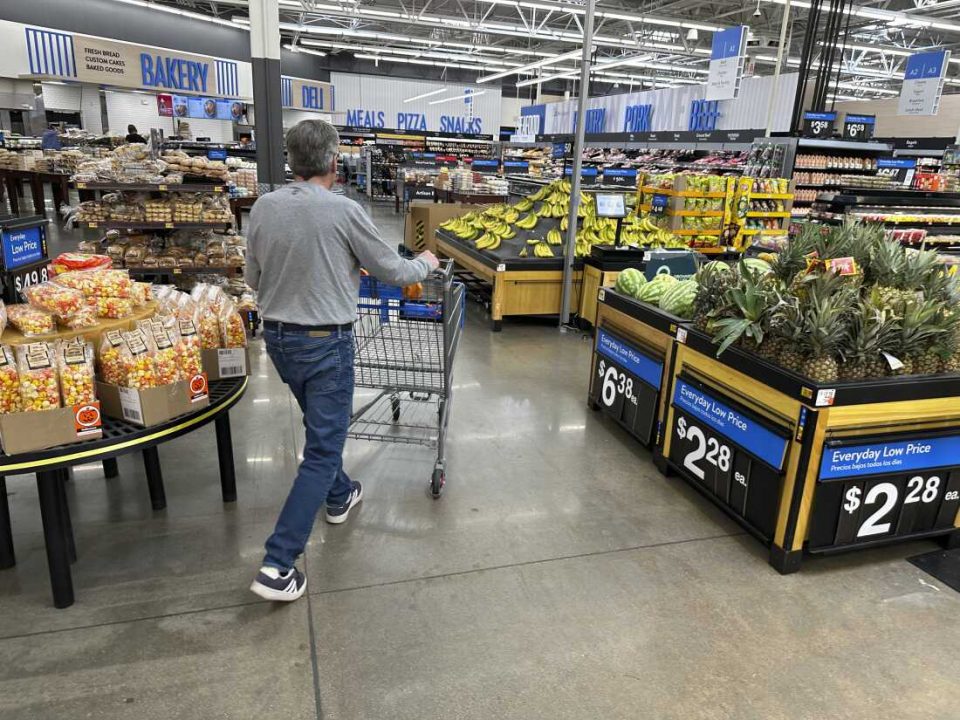
US consumers remain under pressure as new inflation figures put food prices and household spending back in focus.
The latest US Consumer Price Index for July is being closely watched by retailers, manufacturers and consumers as the figures provide a fresh indication of where prices are heading during the second half of 2026.
Economists had expected headline inflation to remain above the Federal Reserve’s 2% target, despite some moderation in price pressures.
For the retail industry, however, the overall inflation rate is only part of the story.
FOOD PRICES REMAIN A KEY CONCERN
Food continues to be one of the most important areas for consumers.
The latest available government figures showed food-at-home prices running higher than a year earlier, keeping pressure on household grocery budgets.
Some food categories have seen significantly stronger increases than the overall rate of inflation.
For supermarket shoppers, this means that even when headline inflation begins to moderate, the weekly grocery bill can continue to feel expensive.
A lower inflation rate does not necessarily mean lower prices.
It simply means prices are rising more slowly.
VALUE REMAINS THE BATTLEFIELD
This is creating a difficult environment for America’s supermarket industry.
Retailers are having to balance rising operating costs against consumers who are increasingly focused on value.
Promotions, loyalty schemes, private label and discounting have therefore become increasingly important weapons in the competition for shoppers.
The pressure is particularly significant for national supermarket chains competing against discount retailers and warehouse clubs.
Consumers have more information available to them than ever before and can compare prices quickly across retailers.
PRIVATE LABEL BENEFITS
One of the clearest consequences of prolonged price pressure has been the growing importance of private label.
When branded products become more expensive, consumers often have the option of moving to supermarket-owned alternatives.
For retailers, private label can offer a way to provide lower prices while maintaining greater control over the product and margin.
The trend is particularly important during periods of economic uncertainty, when consumers become more willing to experiment with different brands.
ENERGY COULD CREATE ANOTHER PROBLEM
The inflation outlook could also be affected by energy prices.
Changes in oil and fuel prices can eventually feed through into transportation, distribution and other operating costs across the retail supply chain.
For supermarkets, higher logistics costs can become another source of pressure at a time when retailers are already trying to keep prices competitive.
That makes the direction of energy prices an important issue for the grocery industry during the second half of the year.
CONSUMERS ARE STILL WATCHING EVERY DOLLAR
The US retail market remains heavily influenced by the financial confidence of consumers.
Households facing higher food, housing, energy and other essential costs have less flexibility for discretionary spending.
That can affect everything from supermarket product choices to spending on clothing, electronics, restaurants and other retail categories.
For grocery retailers, the battle for the consumer is therefore increasingly centred on one issue: demonstrating value.
SUPERMARKETS FACE A NEW PRICE BATTLE
The latest inflation figures will provide another important indicator of the direction of the US economy, but retailers will be watching the food components particularly closely.
If food inflation remains elevated, supermarket competition is likely to remain intense.
Retailers will need to balance competitive pricing with margins while continuing to invest in technology, supply chains and customer experience.
For American shoppers, meanwhile, the most important measure of inflation remains the amount they pay at the checkout.
The US inflation debate may be decided in economic reports, but its impact is ultimately felt in supermarket aisles across the country.
