
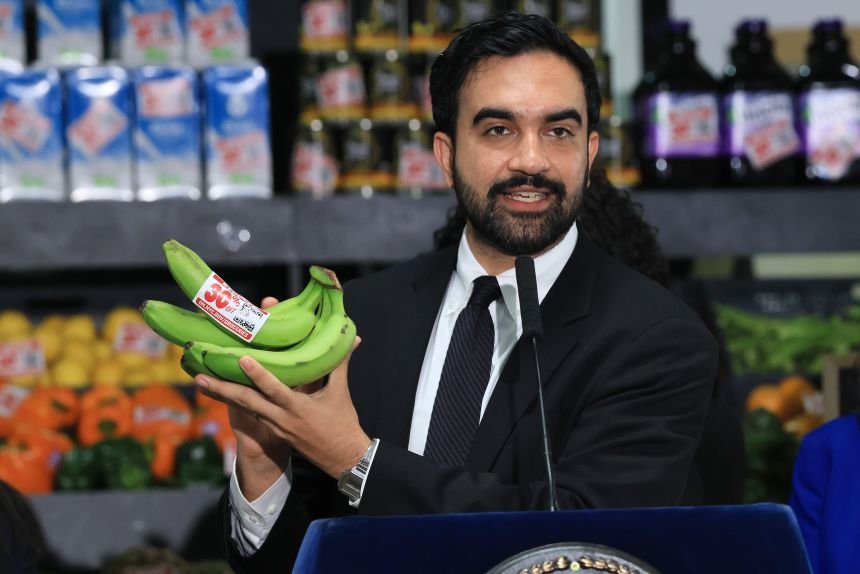
New York City’s increasingly heated debate over grocery prices has moved into the courts, with a coalition representing independent grocers and other local food retailers challenging Mayor Zohran Mamdani’s plan to establish five city-owned supermarkets.
The Multicultural Business Coalition, which represents hundreds of small grocery businesses and bodegas, filed two lawsuits in New York State Supreme Court seeking to halt the programme. The group argues that publicly supported supermarkets could create an uneven competitive environment for independent retailers, many of which already operate on narrow margins.
At the centre of the dispute is the city’s plan to offer a core selection of groceries at prices 30 per cent below typical retail levels. The proposed basket would include fresh produce, meat and seafood, as well as everyday products such as milk, bread, cheese, pasta, rice and beans. The administration estimates the programme could reduce grocery bills for participating shoppers by about $90 a month, or roughly $1,000 a year.
For independent retailers, however, the issue is not simply about competition. The coalition argues that city-backed stores would have advantages that ordinary neighbourhood supermarkets cannot easily match, including subsidised support and access to city-owned premises. The group claims that this could allow municipal stores to maintain significantly lower prices while private grocers continue to face rent, labour, energy and other operating costs.
The lawsuit has particular significance for immigrant- and minority-owned businesses. Many neighbourhood grocery stores in New York are small family-run operations that have served their communities for years. Their owners argue that a heavily supported municipal supermarket located nearby could divert customers and sales away from existing businesses, potentially threatening their ability to remain open.
The coalition is also challenging the process used to develop the programme, alleging that the city failed to undertake sufficient studies of the potential economic and land-use effects on existing retailers. One of the lawsuits also raises civil-rights arguments concerning the impact on minority-owned businesses.
Mamdani has strongly defended the initiative. His administration has presented municipal grocery stores as part of a broader affordability strategy designed to tackle the rising cost of food in New York. The city plans to establish one store in each borough, with the first location expected to open in the Bronx by the end of 2027. All five stores are targeted for completion by the end of the mayor’s first term.
Importantly, the supermarkets are not necessarily intended to be operated directly by city employees. New York City is seeking private companies or experienced grocery operators to manage the stores, with the city setting the broader framework for the programme. Proposals from potential operators are due in October.
This creates an unusual situation for the grocery industry: private retailers could potentially be recruited to operate stores that their fellow independent grocers regard as a threat. Critics say the model effectively introduces a subsidised competitor into neighbourhoods where private businesses have already invested heavily.
The dispute also raises a much wider question for the supermarket industry. Governments around the world are under pressure to respond to food inflation, but direct involvement in retail markets can create difficult consequences for existing businesses. A city-owned supermarket may provide lower prices for consumers, yet the long-term effect on competition could depend heavily on where stores are located, how they are financed and how much support they receive.
For shoppers, the attraction is obvious. Grocery prices remain one of the most visible household expenses, and a guaranteed discount on essential products could provide meaningful savings, particularly for families struggling with food costs.
For independent grocers, the concern is equally clear: competing with another supermarket is one thing, but competing with a supermarket supported by public resources is another.
The court battle could therefore become a defining test of New York’s experiment with municipal grocery retail. If the programme proceeds, it could become a model for other cities searching for ways to reduce food costs. If the independent grocers succeed, however, the case could establish important limits on how far local governments can go when entering a market already populated by private businesses.
For now, New York’s grocery debate has moved beyond prices and into a fundamental argument over the future of urban retail: whether government intervention can make food more affordable without undermining the small businesses that already serve local communities.
