
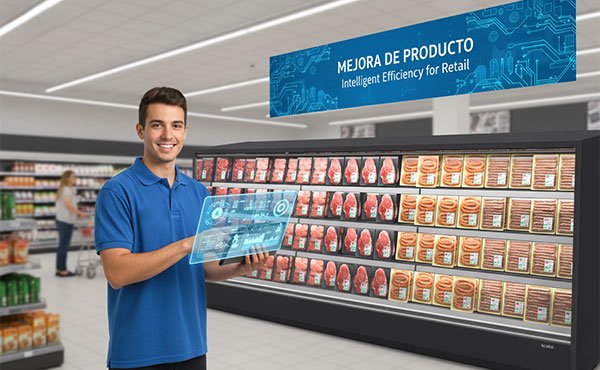
Across Europe and beyond, supermarkets are undergoing a new wave of refurbishment as retailers modernise stores to reduce energy consumption, improve refrigeration efficiency and meet increasingly ambitious environmental targets. While store redesigns often focus on the customer experience, many of the most significant changes are taking place behind the scenes.
Refrigeration remains the largest consumer of electricity in a typical supermarket, accounting for as much as 40–60% of total energy use. This makes refrigeration upgrades the starting point for many renovation projects. Retailers are replacing ageing HFC systems with natural CO₂ refrigeration, which not only has a far lower environmental impact but also delivers higher energy efficiency. Modern systems are capable of recovering waste heat from refrigeration packs and using it to provide space heating and hot water, reducing dependence on gas-fired boilers.
The shift towards sustainable refrigeration is also helping supermarkets improve food quality. More precise temperature control ensures greater product consistency across chilled foods, dairy, meat and in-store bakery ingredients, while advanced monitoring systems continuously optimise performance and identify maintenance issues before they become costly failures.
Lighting is another major focus. Traditional fluorescent fittings are rapidly disappearing in favour of LED technology combined with intelligent controls that automatically adjust brightness according to natural daylight and store occupancy. These systems not only lower electricity consumption but also reduce maintenance costs thanks to significantly longer operating life.
Air conditioning and ventilation are also being redesigned. Modern heat pumps, variable-speed fans and improved building management systems continuously monitor store conditions, ensuring that heating, cooling and ventilation operate only when required.
For supermarket bakeries, sustainability extends beyond refrigeration. Modern retarder provers, energy-efficient deck and rack ovens, improved insulation and heat recovery systems enable in-store bakeries to maintain high product quality while reducing energy consumption. Better control of fermentation and baking cycles also helps minimise food waste, supporting retailers’ environmental objectives.
Display refrigeration continues to evolve, with many retailers replacing open cabinets with glass-door units, electronically controlled fans and improved airflow management. These technologies significantly reduce energy consumption while maintaining excellent product visibility and stable temperatures.
Digital energy management is becoming equally important. Advanced monitoring platforms analyse refrigeration performance, electricity consumption and equipment health in real time, allowing predictive maintenance and helping supermarkets maximise efficiency throughout the store.
As retailers pursue ambitious net-zero strategies, supermarket renovation has become far more than a cosmetic exercise. Refrigeration is now at the centre of sustainable store design, supported by energy-efficient lighting, intelligent HVAC systems, renewable energy integration and modern bakery equipment. Together, these investments reduce emissions, improve food quality and lower operating costs, creating more sustainable supermarkets for the future.