
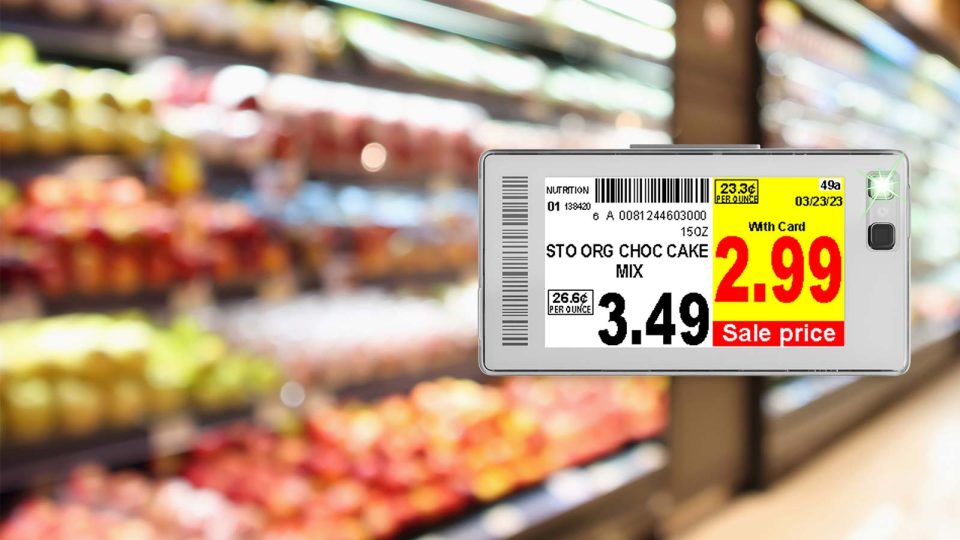
For years, the yellow sticker has been one of the most familiar signs of supermarket life in the UK. A product approaching its use-by date gets marked down, a member of staff puts the new label on the pack, and the customer decides whether the reduced price is worth buying.
It is a simple system, but the supermarket industry is becoming much less simple.
As retailers look for better ways to control waste and protect margins, technology is starting to change how markdowns are handled. Electronic shelf labels, connected stock systems and automated pricing tools are giving retailers the possibility of changing prices much faster, particularly on products with short shelf lives.
ISN Investigates: could the traditional yellow sticker eventually become less important as supermarkets move towards more data-driven markdowns?
The attraction for retailers is obvious. A loaf of bread, prepared meal or pack of fresh meat does not have the same commercial value at 8am as it does late in the afternoon when its expiry date is approaching. A fixed markdown routine cannot always react to those differences.
A more connected system can potentially take account of stock levels, sales speed, remaining shelf life and local demand before deciding when a reduction is needed.
That does not mean the end of promotions or the immediate disappearance of yellow labels. Tesco, Asda and other UK retailers still operate complex promotional programmes, and traditional markdowns remain an important part of supermarket operations.
But the economics are changing.
Riad Beladi, Editor and Chief Analyst at International Supermarket News, believes the interesting development is not simply the electronic shelf label itself, but what happens when pricing technology becomes connected to the retailer’s wider inventory operation.
“The real change comes when the shelf is no longer isolated from the data behind it. If a retailer knows what is selling, what is not selling and how much time is left on a product, it can make a much more informed decision about price.”
Fresh food could be where the technology has its biggest impact. The earlier a retailer can recognise that a product needs a reduction, the greater the opportunity to sell it rather than write it off as waste.
For suppliers, however, this creates another question. If pricing becomes increasingly responsive to demand and stock levels, the old promotional calendar may become less important. Brands may have to think more carefully about availability, pack formats and the real value they offer on the shelf.
The supermarket price tag is becoming more flexible.
The question for retailers is no longer simply how much should this product cost this week?
It is increasingly becoming what should it cost right now?