
By International Supermarket News Editorial Team
In today’s digital world, a single video can travel faster than any newspaper headline. A TikTok or Facebook post can reach millions of people within hours, influencing public opinion before experts, scientists or government authorities have had time to verify the facts.
That is exactly what happened in Algeria during the recent controversy surrounding watermelons.
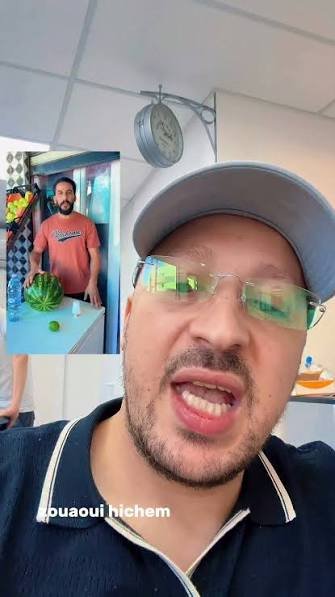
Videos and comments circulating on social media, including content shared by influencer Hichem Zouaoui (زواوي هشام), raised concerns that Algerian watermelons contained excessive pesticide residues and suggested that consumers were becoming ill after eating them. The videos spread rapidly across TikTok and Facebook, creating widespread fear among consumers.
Whether the intention was to protect public health or to raise awareness, the economic consequences were immediate.
One Video, Thousands of Victims
The first victims were not supermarkets or traders.
They were the farmers.
Growing watermelons is neither easy nor cheap. Farmers spend months preparing the soil, purchasing seeds, fertilisers, irrigation equipment and fuel. They employ seasonal workers, pay transport costs and face unpredictable weather.
For many producers, the watermelon harvest represents an entire year’s income.
When consumers suddenly stopped buying watermelons, prices collapsed. Markets that were usually full of customers became almost empty. Thousands of tonnes of perfectly edible fruit remained unsold while many growers faced severe financial losses.
Unlike manufactured goods, fresh produce cannot wait.
If a watermelon is not sold within days, it becomes worthless.
Not Every Farmer Farms the Same Way
One of the greatest dangers of social media is generalisation.
Agriculture is not identical from one farm to another.
Some farmers strictly follow agricultural regulations and respect the required waiting periods before harvest. Others may not follow best practices. Some use integrated pest management, while others rely more heavily on chemical products.
To suggest that every watermelon produced in Algeria is unsafe simply because some farms may misuse pesticides is unfair to thousands of honest growers.
Agriculture should be judged farm by farm—not by rumours.
The Difference Between Concern and Panic
Food safety must always be taken seriously.
If there is evidence that any producer has misused pesticides or violated food safety regulations, authorities should investigate quickly and take legal action.
However, there is an equally important responsibility: avoiding unnecessary panic.
Fear spreads much faster than facts.
Consumers rarely distinguish between one producer and another. Once confidence disappears, every farmer pays the price.
Government Response
Following the growing panic, Algeria’s Ministry of Internal Trade and National Market Regulation stated that it had received no official reports linking watermelon consumption to food poisoning. The ministry later announced that laboratory analyses carried out on watermelon samples from several production regions found no evidence that commercially available watermelons posed a health risk. Officials urged consumers to rely on verified information rather than unconfirmed social media claims.
A Real Issue Requires Real Solutions
This does not mean Algeria should ignore pesticide misuse.
Research has shown that some farmers do not always follow recommended agricultural practices when applying pesticides, creating risks for both the environment and human health. These findings underline the need for stronger training, monitoring and enforcement—not blanket condemnation of an entire agricultural sector.
The answer is better inspections, modern laboratory testing, education for farmers and strict penalties for those who break the rules.
The answer is not destroying consumer confidence in every grower.
The Power—and Responsibility—of Influencers
Influencers today have audiences larger than many television stations.
With that reach comes responsibility.
A journalist verifies information before publication. Scientists analyse samples. Government laboratories perform testing.
Influencers may raise legitimate questions, but when allegations concern an entire food sector, they should clearly distinguish between verified facts, personal opinions and suspicions. Otherwise, millions of consumers may assume every producer is guilty.
Protecting Farmers While Protecting Consumers
Consumers deserve safe food.
Farmers deserve fair treatment.
These two principles are not in conflict.
If one farmer violates the law, prosecute that farmer.
If one shipment fails laboratory tests, remove that shipment.
But it is unjust for thousands of honest agricultural families to lose their livelihoods because of generalised claims that create nationwide fear.
The Algerian watermelon controversy should become an important lesson—not only for Algeria but for every country.
In the age of TikTok and Facebook, information travels in seconds.
Unfortunately, the damage to farmers can last for years.