
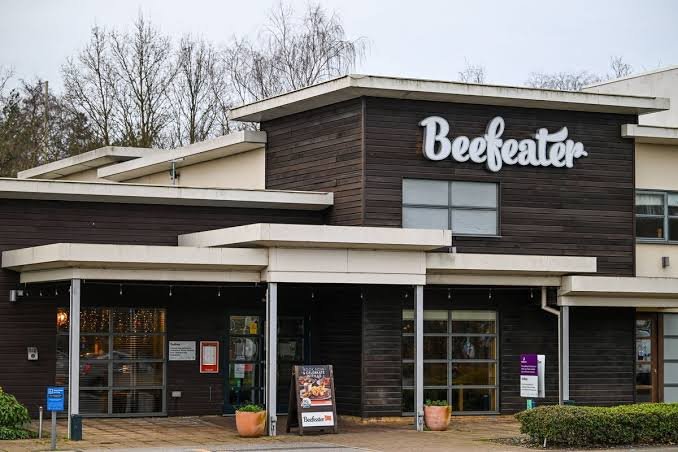
Scotland is facing a major wave of restaurant closures, with 18 Whitbread-operated sites scheduled to permanently shut as the hospitality giant radically reshapes its business. The closures will bring an end to a familiar part of the Scottish dining landscape, with Beefeater, Brewers Fayre and other Whitbread restaurant brands disappearing as the company places greater emphasis on its Premier Inn hotel operation.
The Scottish closures are part of a much larger programme covering Whitbread’s remaining branded restaurants across Britain. The company is closing 197 restaurants in total, including 106 Beefeater restaurants and 89 Brewers Fayre sites, alongside restaurants operating under other Whitbread brands. The final closures are scheduled for September, with Brewers Fayre sites due to finish trading on 7 September and Beefeater restaurants following on 10 September.
For Scotland, the impact is particularly significant. Eighteen venues are expected to disappear, including restaurants serving communities around Glasgow, Edinburgh, Dundee, Stirling and Aberdeen. The closures will remove hundreds of local dining opportunities and affect employees working in kitchens, restaurants, management and support roles.
The employment consequences extend far beyond Scotland. Whitbread expects the restructuring to reduce its UK and Ireland workforce by around 3,800 roles. The company employs approximately 30,000 people across the two markets, although it has indicated that some affected employees could be transferred into other positions rather than losing their jobs altogether.
Whitbread’s decision reflects a fundamental change in the economics of Britain’s hospitality industry. Rising labour costs, higher property-related expenses, inflation and pressure on household budgets have made traditional restaurant operations increasingly difficult to run profitably. Rather than continuing to operate a large standalone restaurant estate, Whitbread is concentrating investment on its hotel business and increasing food and drink provision within Premier Inn locations.
The company is also looking at its property portfolio as part of the transformation. Some former restaurant locations could eventually be converted into additional hotel accommodation, while other properties may be sold. The strategy is expected to generate substantial savings over the coming years and give Whitbread a more focused business model.
A warning for Britain’s hospitality economy
The Scottish closures are another indication of the pressure facing Britain’s hospitality sector. Restaurants and pubs have become particularly exposed to rising employment expenses at a time when consumers are also becoming more cautious about discretionary spending.
Hospitality is an important source of employment across Britain, particularly for younger workers and people entering the workforce. Consequently, the loss of thousands of positions from a major national operator has consequences beyond the individual businesses being closed.
There is also a wider impact on town centres and local economies. Restaurants generate spending for surrounding shops, transport businesses, suppliers and entertainment venues. When a large restaurant closes, the effect can therefore extend beyond the people directly employed at the site.
Whitbread’s restructuring demonstrates how Britain’s hospitality market is changing from a period when large restaurant chains could expand rapidly alongside hotels to an environment where companies are increasingly focused on fewer, more efficient operations.
For Scottish customers, however, the change will be immediate. Eighteen established restaurant locations will disappear within weeks, while employees face uncertainty over whether they will be redeployed or leave the business.
The scale of the Whitbread restructuring makes it one of the most significant restaurant closure programmes currently taking place in Britain. With around 3,800 roles potentially affected across the UK and Ireland, the move is another important warning that Britain’s hospitality industry remains under considerable financial pressure.
