

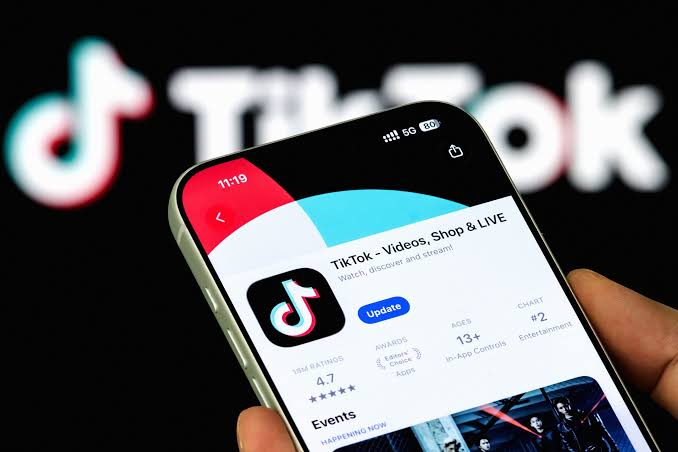

TikTok Shop is no longer simply a social-media experiment attached to a video platform. The service is becoming a significant retail channel in the United States, with online consumer spending reportedly moving ahead of major retailers including Target, Costco and Home Depot.
According to Consumer Edge data reported this week, TikTok Shop accounted for approximately 2% of US retail e-commerce spending in July 2026, up from around 1.2% a year earlier. That represents a substantial increase in just 12 months.
The figures are significant because TikTok Shop has achieved this position despite being a relatively new entrant to US e-commerce.
TikTok began developing its Shop operation in the United States in 2023. Since then, the platform has moved rapidly from social entertainment towards a model in which consumers can discover a product, watch it being demonstrated, receive recommendations and complete the purchase without leaving the platform.
That is changing the traditional relationship between social media and retail.
FROM ENTERTAINMENT TO SHOPPING
For decades, retailers built their online businesses around search.
A consumer wanted a product, searched for it on Google, Amazon or a retailer’s website and then compared prices before buying.
TikTok has introduced a different model.
The consumer may not be looking for anything at all.
A video appears in the user’s feed. A creator demonstrates a product. Other users comment on it. The algorithm identifies an interest in the product. The consumer clicks on the product and can purchase it immediately.
The shopping journey has effectively been built into entertainment.
This is one of the reasons TikTok Shop has grown so quickly.
THE 2% FIGURE MATTERS
Two per cent of US retail e-commerce may not sound enormous when compared with Amazon, which remains by far the dominant online retailer.
But the speed of growth is what is attracting attention.
TikTok Shop increased its estimated share from approximately 1.2% to 2% in one year.
It has therefore moved past several established retailers in online spending despite having a much shorter history as a shopping platform. Consumer Edge data indicates that TikTok Shop’s online spending in July exceeded that of Target, Costco and Home Depot individually.
TikTok is still a long way behind Amazon and Walmart.
Amazon’s share of US e-commerce is estimated at around 35%, while Walmart’s is around 7%. TikTok therefore remains a much smaller player.
But the direction of travel is attracting the attention of the entire retail industry.
TIKTOK IS BUILDING A NEW KIND OF MARKETPLACE
Traditional marketplaces depend heavily on search and product listings.
TikTok Shop depends heavily on discovery.
The difference is important.
Amazon waits for a consumer to search for a product.
TikTok can persuade the consumer that they want a product before they have searched for it.
Creators are a major part of this system.
A creator can demonstrate a beauty product, kitchen appliance, fashion item, food product or household product to an audience that already trusts their recommendations.
The product is then available immediately beneath or alongside the content.
Retail and marketing are therefore becoming part of the same transaction.
OLDER CONSUMERS ARE ALSO JOINING
One of the more important developments is that TikTok Shop is no longer relying entirely on younger consumers.
The latest data indicates that spending growth is being supported by older shoppers, including consumers over 35. Heavy users who make multiple purchases each quarter are also contributing significantly to the platform’s sales.
That matters because one of the original assumptions about TikTok was that it was primarily a Gen Z platform.
Retailers are now seeing evidence that the shopping audience is becoming much broader.
As more consumers become comfortable buying through social platforms, the potential market expands considerably.
BRANDS ARE FOLLOWING THE SHOPPERS
TikTok has also been working to make its platform more attractive to major brands.
Companies including Samsung, Disney and Ralph Lauren have joined the platform, giving TikTok Shop a much wider product range and helping move it beyond smaller sellers and viral products.
This is an important stage in the development of any marketplace.
Small sellers can create rapid growth, but major brands bring credibility, advertising budgets and established consumer demand.
The combination of creators, independent sellers and major brands gives TikTok a much broader retail proposition.
TIKTOK IS ALSO MOVING CLOSER TO AMAZON’S MODEL
TikTok is not simply relying on videos and creators.
The company has been investing in logistics, seller support and additional services designed to make the shopping experience more reliable.
It has also been testing a membership programme resembling Amazon Prime, aimed at providing benefits such as shipping and discounts.
The direction is clear.
TikTok wants consumers not only to discover products on its platform, but also to stay on the platform and complete more of their shopping there.
That represents a major strategic shift.
TikTok is moving from being a marketing channel that sends customers elsewhere towards becoming a retail destination in its own right.
THE IMPLICATIONS FOR SUPERMARKETS
The development should also concern traditional retailers.
A supermarket has historically controlled the customer’s shopping environment.
The retailer controls the store, the shelf, the promotions and increasingly the retailer’s own website and app.
TikTok introduces another layer.
A food brand can potentially reach consumers directly through creators and social content without relying entirely on the supermarket to introduce the product.
This does not mean TikTok is about to replace supermarkets.
Food remains a different category from fashion, beauty and many general merchandise products because consumers make frequent physical shopping trips and require fresh and chilled products.
But packaged food, snacks, drinks, kitchen products and household goods could increasingly become part of social commerce.
THE POWER OF THE CREATOR
The biggest change may not actually be TikTok itself.
It may be the rise of the creator as a retailer.
A traditional advertisement tells consumers why they should buy something.
A creator demonstrates how the product is used.
That can make the recommendation feel more like advice than advertising.
The creator can answer questions, demonstrate the product repeatedly and show how it fits into everyday life.
TikTok then connects that recommendation directly to the transaction.
The traditional separation between advertising and retail is therefore becoming increasingly blurred.
BLACK FRIDAY COULD BECOME ANOTHER TEST
TikTok Shop has already demonstrated its ability to generate large volumes of sales during major shopping periods.
The platform reportedly generated more than $500 million during the previous year’s Black Friday and Cyber Monday week.
The next major shopping season will provide another test of whether TikTok can convert its rapidly growing audience into sustained retail spending.
If the platform continues to grow through the Christmas and Black Friday periods, more retailers and brands are likely to increase their investment.
THE THREAT TO TRADITIONAL E-COMMERCE
The important point is not that TikTok Shop is bigger than Amazon.
It is not.
Nor is it about to replace Walmart.
The significance is that TikTok has created a new route to purchase.
Consumers no longer need to visit a retailer’s website first.
They can discover a product while watching entertainment.
That changes the economics of online retail.
The battle is no longer simply about having the best website or the lowest price.
It is increasingly about who controls product discovery.
RETAILERS CANNOT IGNORE SOCIAL COMMERCE
The growth of TikTok Shop sends a clear message to retailers.
E-commerce is no longer confined to websites and apps.
Shopping is spreading into social media, video, creator communities and digital entertainment.
For traditional retailers, this means that the next generation of competition will not necessarily come from another supermarket or department store.
It may come from a technology platform that does not operate a single physical shop.
TikTok Shop still has a long way to go before it can challenge Amazon or Walmart at the top of American e-commerce.
But overtaking individual established retailers in online spending is an important milestone.
TikTok has moved from being a place where retailers advertise to a place where consumers shop.
And that could prove to be one of the most important changes in retail during 2026.