
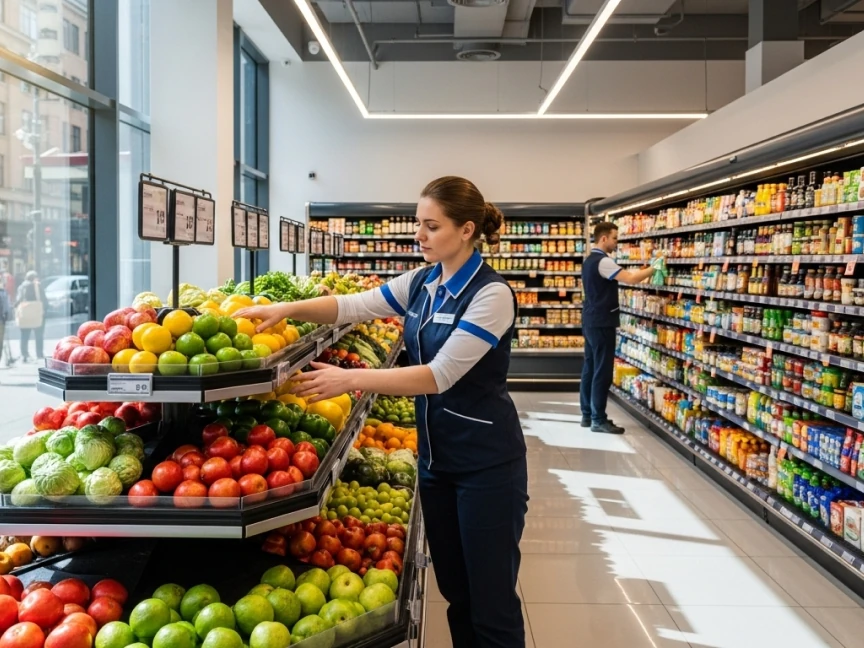
Grocery retail runs on small operational decisions repeated hundreds of times each day. Receiving delays, inaccurate inventory, slow shelf replenishment, inefficient picking, poor cleaning schedules, and badly planned deliveries can all reduce margins.
The most efficient stores treat these activities as connected processes. Inventory data should influence ordering, online orders should flow directly into fulfillment, and managers should be able to see problems before they affect customers.
Improve Inventory Accuracy at the Shelf Level
Inventory records are only useful when they reflect what is actually available.
A system may show ten units in stock even though several are damaged, misplaced, reserved for online orders, or sitting in the receiving area. That creates false availability and can lead to canceled ecommerce orders.
Use regular cycle counts rather than relying entirely on large periodic stocktakes. High-volume and high-value categories should be checked more frequently.
Staff should also record shrink, damaged products, and expired stock immediately instead of waiting until the end of the shift.
Connect Online Orders With Delivery Operations
Online grocery orders create extra pressure because inventory, picking, packing, and transportation need to work together.
Using last mile delivery software can help retailers organize delivery routes, driver assignments, customer information, and delivery progress in a more structured workflow.
This becomes particularly important when a store is managing multiple drivers and narrow customer delivery windows.
A route should account for stop sequence, driver capacity, service time, and delivery commitments rather than simply following the order in which purchases were received.
Make Replenishment More Responsive
Shelf replenishment should respond to actual demand instead of following the same routine throughout the day.
Use point-of-sale and inventory data to identify products that are selling faster than expected.
High-turnover products should receive priority because an empty shelf creates lost sales even when additional stock is sitting in the back room.
Prioritize Replenishment Using
- Current shelf quantity
- Rate of sale
- Back-room availability
- Promotional activity
- Time of day
- Expected customer traffic
- Product shelf life
This keeps staff focused on products where replenishment has the greatest commercial impact.
Tighten the Receiving Process
Poor receiving creates problems that continue throughout the store.
Deliveries should be checked against purchase orders when they arrive. Verify quantities, temperature-sensitive goods, packaging condition, expiration dates, and obvious substitutions before stock enters inventory.
Discrepancies should be recorded immediately.
If the system accepts the expected quantity instead of the quantity actually received, inventory records are already wrong before products reach the shelf.
Create defined receiving areas so incoming products do not interfere with picking or replenishment activity.
Reduce Food Waste With Better Rotation
Perishable inventory needs different controls from household products.
Use first-expiring, first-out rotation where appropriate so products with shorter remaining shelf life are sold before newer inventory.
Expiration data should also influence pricing and ordering.
If one category regularly reaches markdown status, the problem may be excessive order quantities rather than weak in-store execution.
Track waste by SKU and reason.
That makes it possible to distinguish forecasting errors from damaged goods, handling problems, refrigeration failures, or poor rotation.
Improve Online Order Picking
Online grocery fulfillment can consume significant labor if pick routes are poorly organized.
Group orders intelligently and sequence picks around the store layout.
Employees should not repeatedly cross the same aisles because orders are being picked independently in random sequence.
Separate ambient, chilled, and frozen handling where necessary.
Track Picking Performance Through
- Items picked per hour
- Substitution rate
- Missing-item rate
- Order accuracy
- Average picking time
- Orders completed before cutoff
Speed should not come at the expense of accuracy or food-handling requirements.
A fast picker who regularly chooses incorrect products creates additional customer-service work.
Manage Labor Around Store Demand
Static staffing patterns can create both overtime and service gaps.
Use historical sales, delivery schedules, online order volume, and customer traffic to estimate labor needs by time of day.
Receiving teams may need more coverage early in the morning, while checkout and fulfillment teams may experience different peaks.
Cross-training also improves flexibility.
