

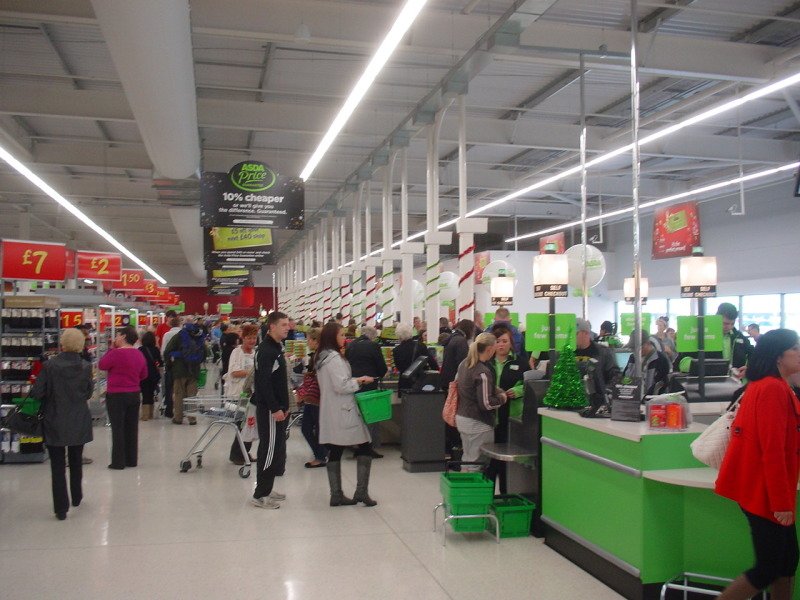

Asda has one major advantage that many struggling retailers do not: it already owns the assets needed for a successful turnaround. It has a powerful and recognisable brand, an extensive store network, strong locations, significant purchasing scale and millions of customers. The opportunity is not to build a new business, but to make these existing strengths work together more effectively.
For decades, Asda stood for value. That positioning remains relevant, but the definition of value has changed. Consumers today want more than a low price. They expect good quality, attractive products, convenience and a shopping experience that justifies their time and money. Asda can therefore move from simply being associated with low prices to being recognised for better value.
Its stores are a particularly important asset. Large supermarket locations are expensive and increasingly difficult to replicate. Asda already has the physical infrastructure, parking, distribution network and local customer relationships. Improving availability, fresh food, store standards and checkout efficiency could make those existing locations significantly more productive.
Private label is another opportunity. Modern retailers can control the formulation, packaging, quality specifications and pricing of their own products while working with specialist manufacturers. This gives Asda the ability to develop products specifically for its customers and offer strong quality at competitive prices. The success of premium own-label ranges at Sainsbury’s and Waitrose shows that private label can be about quality and innovation, not simply economy.
Asda also needs to strengthen the connection between its stores and digital channels. A stronger loyalty proposition, better use of customer data, personalised offers and improved online services could increase both customer frequency and basket size.
Asda does not need to become Tesco, Aldi or Sainsbury’s. Its opportunity is to become the strongest version of Asda: a trusted national brand combining scale, quality, convenience and genuine value.
The assets are already there. The real challenge is execution.
Asda does not need to start again. It needs to unlock the value of what it already owns.