

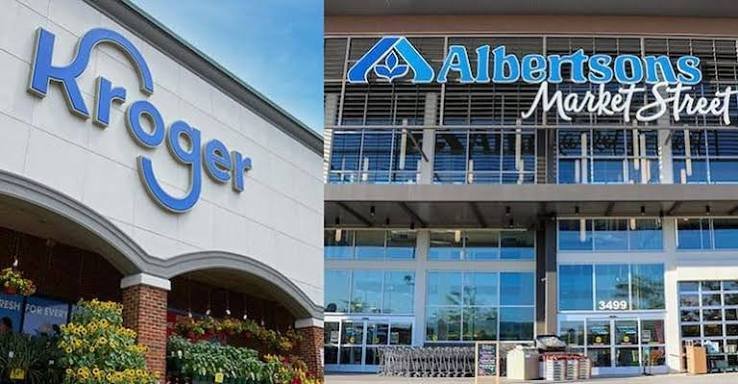

When a federal judge officially blocked the $24.6 billion mega-merger between Kroger and Albertsons, it didn’t just stop a corporate marriage—it completely reset the chessboard for the American grocery landscape.
For more than two years, both companies poured millions into legal battles, arguing that they needed to combine to survive against non-union retail titans like Walmart, Costco, and Amazon. Now that the deal has been completely abandoned, the survival clock is ticking.
Google’s AI can easily tell you what happened, but it can’t tell you what comes next. Shaking off the ghost of the failed deal, both corporations have seen dramatic leadership shakeups, billion-dollar cost-cutting measures, and even fierce countersuits against each other over the collapse of the contract.
Here is the real, unvarnished look at how the death of this merger is reshaping where you shop, how much you pay, the technology inside your local supermarket, and the lives of the workers who run them.
1. Regional Flashpoints: The West Coast and Rockies Breathe a Sigh of Relief
The Federal Trade Commission (FTC) fought hardest in areas where Kroger and Albertsons stores sat directly across the street from one another. Had the merger gone through, massive geographic clusters would have been upended.
- The Pacific Northwest & California: In Washington, Oregon, and California, the overlap between Kroger-owned banners (like Fred Meyer, QFC, and Ralphs) and Albertsons-owned banners (like Safeway, Vons, and Pavilions) was extreme. A Washington state judge heavily noted that competition between these specific stores was “fierce”, and blocking the merger saved local communities from becoming immediate “food and pharmacy deserts.”
- The Ghost of the Haggen Bankruptcy: Western states were particularly terrified of the proposed divestiture plan to sell nearly 600 stores to C&S Wholesale Grocers. Shoppers in these regions vividly remember the 2015 Albertsons-Safeway merger, where divested stores were handed to a smaller chain (Haggen) that went bankrupt within a year. By blocking the deal, communities avoided a repeat disaster that could have left hundreds of empty commercial storefronts in localized neighborhoods.
2. A Massive Victory for Grocery Union Workers
The frontline workforce was the emotional and legal heartbeat of the opposition. The Stop the Merger Coalition, led by multiple UFCW (United Food and Commercial Workers) locals, fiercely resisted the buyout from day one.
- Preserving Bargaining Leverage: Economists estimated that a combined monopoly would suppress grocery worker wages significantly across major metropolitan areas. When Kroger and Albertsons are separate, unions can use them against each other during contract negotiations—if one chain goes on strike, workers can tell customers to shop at the other. Merging them would have erased that leverage entirely.
- The Reality of “No Layoffs” Promises: While Kroger executives promised that “no frontline workers will be laid off”, unions knew corporate realities. Mergers always bring “synergies”—which usually mean consolidating distribution centers, closing overlapping pharmacies, and cutting hours. For now, unionized workers retain their contracts, their store transfers, and their bargaining power.
3. Albertsons Moves to Plan B: Restructuring and Severe Cost-Cutting
Of the two giants, Albertsons is in the most precarious position. The company was actively seeking a buyer, and its private equity backers have been looking for an exit strategy for years.
Following the collapse of the deal, Albertsons’ executive suite saw major shakeups, and the company immediately initiated an aggressive $1.5 billion cost-cutting plan to span the next three years. To appease investors without Kroger’s billions, Albertsons will likely begin selling off underperforming regional banners to smaller independent operators or closing lower-tier locations entirely.
4. Kroger Pivots to “Organic” Growth, Tech, and New Acquisitions
Kroger remains on firm financial footing, but it still faces a massive headache: How do you battle Walmart’s unstoppable 25%+ market share without buying Albertsons?
- Alternative Acquisitions: Shaking off the failed deal, Kroger shocked the industry by pivoting to other regional moves—including a massive $1.7 billion plan to acquire Giant Eagle to instantly scale its footprint in midwestern markets.
- The AI and Automation Boom: To squeeze profit out of existing stores, Kroger is doubling down on heavy in-store optimization. Expect an aggressive expansion of private-label store brands (like Simple Truth) to fight inflation, paired with accelerated rollouts of automated inventory tracking and smart-store technology to reduce labor overhead.
What This Means for Your Grocery Bill
The FTC argued that blocking the merger would protect consumers from skyrocketing prices. In the short term, overlapping markets will benefit from intense price wars as Kroger and Albertsons fight tooth and nail for the same budget-conscious shoppers.
However, because neither chain achieved the massive, unified “buying power” scale they wanted, they remain highly vulnerable to supply chain volatility. If inflation pressures rise, individual store prices will reflect that strain much faster than they would have under a massive, unified corporate shield.
The Bottom Line
The battle of the grocery giants didn’t end with a corporate handshake; it ended with a legal hammer. While local grocery store banners won’t change overnight, the ripple effects on digital tech investments, union labor power, and corporate survival strategies will shape how America eats for the next decade.
Infographic: The Post-Merger Landscape at a Glance
| 🏆 The Winners | ❌ The Losers & Those at Risk |
|---|---|
| Union Workers (UFCW) • Saved critical bargaining leverage. • Successfully blocked corporate “synergy” layoffs. | Albertsons Executives & Backers • Private equity is still stuck holding the company. • Forced into an immediate, severe $1.5B cost-cutting plan. |
| West Coast & Mountain Shoppers • Saved overlapping neighborhood Safeway/Kroger stores. • Prevented immediate food and pharmacy deserts. | C&S Wholesale Grocers • Lost the deal to instantly acquire 600 storefronts. • Left stranded at square one trying to scale nationwide. |
| Walmart & Amazon • Their traditional competitors remain fractured. • Retained their massive, untouchable market-share lead. | Traditional Supermarket Scale • Both chains lost the unified buying power they wanted. • Remain highly vulnerable to supply chain inflation. |
💡 Pro-Tip for Image Generation