

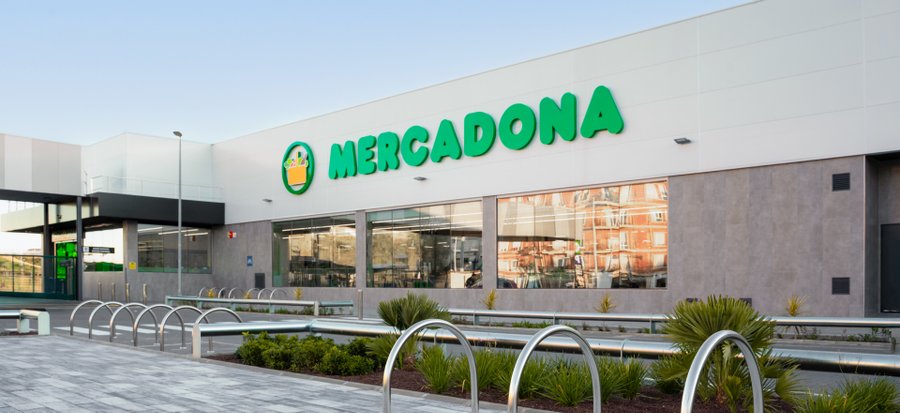
Mercadona remains by far the largest supermarket chain in Spain, but the latest market figures suggest that its dominance is facing a different kind of challenge. The issue is not that the retailer has suddenly lost its position at the top, but that Spanish shoppers are becoming more willing to divide their grocery spending between several chains, creating opportunities for Lidl, Dia and Consum.
According to Worldpanel by Numerator data covering the first eight months of 2026, Mercadona held a 27.4% share of the Spanish grocery market. That figure is broadly stable compared with a year earlier, but the retailer lost 0.8 percentage points in its share of shoppers. Lidl increased its market share by 0.4 percentage points to 7.3%, while Dia and Consum each added 0.3 percentage points, reaching 4.1% and 3.9% respectively.
The more important change may be happening in the way consumers shop. Spanish households are increasingly splitting their weekly purchases between different supermarkets instead of relying on one main store. Worldpanel data shows that 57.7% of purchases are now made outside the shopper’s main chain, reflecting a stronger focus on promotions, prices and individual product offers. For retailers with a smaller footprint or a clearly defined value proposition, this creates an opportunity to win additional visits without having to replace Mercadona as the customer’s main supermarket.
Lidl has been particularly successful in this environment. Its appeal is no longer limited to the traditional discount-shopping mission. The chain has been increasing its presence in larger baskets and fresh food, while strengthening its relationship with younger households and families with children. Dia is benefiting from a different proposition, with its proximity-store model helping it capture shoppers who want convenience as well as competitive prices.
Private label is another major part of the story. Own-brand products accounted for 47.3% of the Spanish FMCG market in the first eight months of 2026, up from 45.9% during the same period last year. The rise is particularly connected with short-assortment retailers, where own-brand products occupy a much larger role in the shopping basket.
For Mercadona, this creates an interesting situation. Its own brands already represent around 80% of its sales, so the retailer is not watching the private-label revolution from the outside. It helped build the model in Spain. The challenge now is that competitors are becoming increasingly effective at using the same consumer priorities — value, private label, promotions and convenience — to attract shoppers.
The Spanish grocery market is therefore becoming less about one supermarket winning customers permanently and more about retailers fighting for individual shopping trips. With household budgets still under pressure, consumers appear prepared to compare offers more closely and change where they buy different parts of their weekly basket.
Mercadona still has enormous scale and remains the clear market leader, but the latest figures show a retail market that is becoming more fragmented. Lidl, Dia and Consum do not need to overturn Mercadona’s position to gain ground; they simply need to persuade shoppers to make one more visit to their stores each week.