Ocado and nemlig: A New Test for the Future of Robotic Grocery Retail
The Danish online supermarket becomes Ocado’s latest European partner as automated fulfilment moves back into the spotlight
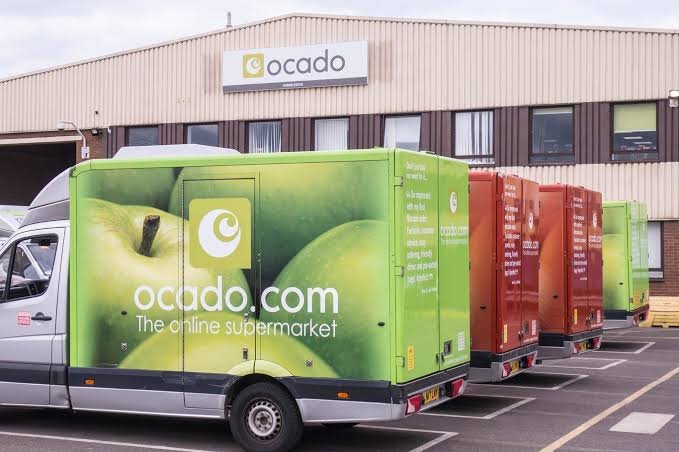
While the Kroger–Albertsons story highlights the risks involved in achieving growth through traditional supermarket consolidation, another part of the grocery industry is pursuing a very different route to expansion. Ocado has confirmed that Danish online supermarket nemlig will become its latest European partner, with the companies planning a new robotic Customer Fulfilment Centre near Copenhagen. The facility is expected to become operational in 2028 and will use Ocado’s automated technology to handle the fulfilment of online grocery orders. For Ocado, the agreement represents another important opportunity to demonstrate the potential of its technology in the highly competitive European grocery market.
Nemlig is Denmark’s largest pure-play online supermarket, and the partnership provides Ocado with access to a market where online grocery has already established a significant position. According to Ocado, nemlig recorded sales of approximately DKK 3.3 billion during its 2025/26 financial year. Under the new arrangement, nemlig will continue operating its existing customer-facing website and delivery network, while the new automated facility will transform the way orders are processed behind the scenes. For consumers, the experience may look largely unchanged, but the technology operating inside the fulfilment centre could significantly improve the speed and efficiency with which orders are picked and prepared.
The planned facility will use Ocado’s latest automated systems, including its 600 Series robots, automated picking technology and an automated freezer operation. This is an important development because the economics of online grocery have always been one of the biggest challenges facing retailers. Unlike a traditional supermarket, where customers do much of the work by walking through the store and selecting their own products, an online order requires somebody or something to pick those products, pack them and prepare them for delivery. Automation is therefore becoming increasingly important as retailers search for ways to reduce fulfilment costs while maintaining high levels of availability and service.
For Ocado, the agreement with nemlig also arrives at an important moment. The company has experienced setbacks in North America, where former partners have closed automated facilities amid questions about demand and the economics of large-scale automated grocery fulfilment. Those developments have created uncertainty around the speed at which highly automated online grocery models can be rolled out in every market. The Danish agreement therefore gives Ocado another opportunity to demonstrate that its technology can deliver commercially attractive results when it is deployed in a market with the right combination of online grocery demand, order volumes and operational conditions.
Ocado is continuing to build its international technology business, and the nemlig agreement forms part of a broader strategy to establish its automated fulfilment platform with grocery partners around the world. The company has also been developing relationships in other international markets, including South Korea, where it has announced plans involving Lotte. The strategy is based on a relatively simple proposition: retailers do not necessarily have to develop sophisticated robotic fulfilment technology themselves if they can partner with a specialist such as Ocado.
The bigger question is whether automation will ultimately become one of the defining competitive advantages of modern grocery retail. Supermarkets are increasingly competing on much more than store locations, product ranges and prices. Artificial intelligence, robotics, automated warehouses, inventory management, delivery systems and digital customer experiences are becoming increasingly important components of the supermarket business model. Retailers that can combine low prices with high product availability and efficient fulfilment may have a significant advantage, but the technology must also generate sufficient savings and additional sales to justify the substantial investment required.
The Ocado–nemlig partnership therefore represents more than another technology agreement. It is another test of whether robotic grocery fulfilment can become a commercially sustainable model across different European markets. The answer will depend on customer demand, order density, labour costs, delivery economics and the ability of automation to increase productivity without creating excessive capital costs. If the model works, the benefits could extend well beyond faster order picking, potentially changing the economics of online grocery and allowing retailers to serve substantially larger numbers of customers without simply increasing their workforce and warehouse footprint.
The contrast with Kroger and Albertsons is particularly interesting. One story is about retailers attempting to achieve scale through consolidation, while the other is about achieving greater efficiency and scale through technology. Both approaches involve substantial investment and significant risk, and both reflect the same fundamental challenge facing supermarket executives around the world: how to become bigger, more efficient and more competitive without creating new vulnerabilities. As the international grocery industry enters what could be a period of significant consolidation and technological change, the combination of M&A, automation and digital transformation is likely to shape the supermarket landscape for years to come.