

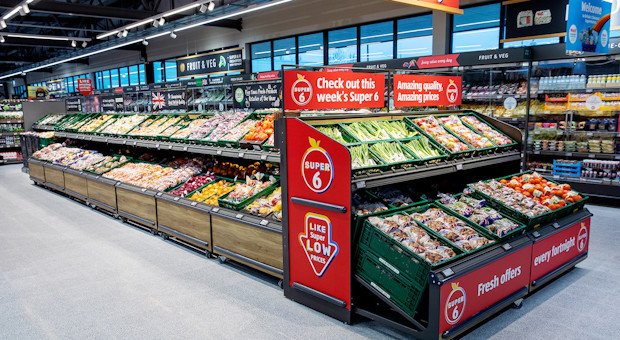

Aldi has retained its position as Britain’s cheapest supermarket in the latest Which? monthly comparison, while Sainsbury’s has significantly narrowed the price gap with Asda through its Nectar loyalty pricing.
Which? compared the cost of 92 everyday branded and own-label grocery products during August. Aldi’s basket cost an average of £159.36, putting it £1.74 below Lidl at £161.10.
Asda was third at £185.21, followed closely by Sainsbury’s when Nectar prices were included, at £185.55.
The result demonstrates the growing importance of supermarket loyalty schemes in the UK’s grocery price competition. Without Nectar prices, the same Sainsbury’s basket cost £195.33 — almost £10 more.
Tesco’s Clubcard price was £189.45, compared with £192.97 without the Clubcard discount. Morrisons averaged £194.11, while Ocado was £207.62.
Waitrose remained the most expensive supermarket in the comparison, with the basket costing £223.75.
Aldi’s latest result represents its eighth consecutive month at the top of the Which? comparison. The figures underline the continuing strength of discount retailers in the British grocery market.
However, the results also show that traditional supermarket groups are increasingly using loyalty pricing to compete with discounters. Sainsbury’s, Tesco and Morrisons have all developed pricing strategies designed to give customers lower prices on selected everyday products.
Which? recorded 45 loyalty discounts across its comparison during August, including 26 at Sainsbury’s and 19 at Tesco.
The wider grocery market is showing signs of easing price pressure. Grocery inflation fell to 2.1% in the four weeks to 9 August, according to Worldpanel by Numerator, while shoppers continued to make greater use of promotions.
For supermarkets, the challenge is now to convince consumers that their overall basket represents good value rather than simply competing on a small number of highly visible products.
Aldi’s continued leadership gives the discounter a strong position in the value debate, but Sainsbury’s narrowing gap with Asda demonstrates how loyalty schemes are changing the way supermarket prices are compared.
The British grocery market remains highly competitive, with retailers using price cuts, promotions, loyalty programmes and private-label products to protect market share and attract increasingly value-conscious shoppers.