

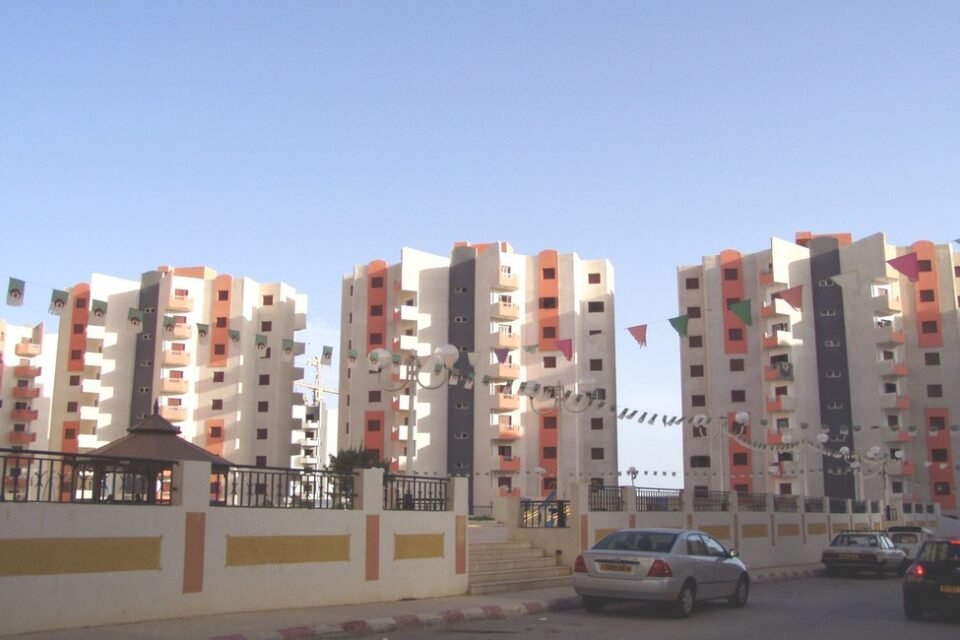
Algeria’s housing market is no longer merely dysfunctional—it has descended into a chaotic, disorganized system where confusion, opportunism, and lack of oversight define the experience of buyers. What should be a regulated sector grounded in transparency and fairness increasingly resembles an unstructured marketplace dominated by amateur practices and, in many cases, outright deception.
At the heart of this disorder is the rise of unregulated estate agents and intermediaries who flood social media with misleading advertisements. Listings frequently showcase properties that do not exist, are already sold, or bear little resemblance to reality. These tactics are not accidental; they are designed to attract attention, generate inquiries, and create artificial demand. For buyers, this means wasted time, false expectations, and a constant need for skepticism.
Equally troubling is the deliberate absence of price transparency. Properties are rarely advertised with a fixed price. Instead, buyers are forced to inquire directly—only to receive figures that can vary depending on who they are, how they present themselves, or how urgently they appear to need housing. This practice turns the market into a guessing game, undermining trust and encouraging manipulation.
Speculation has further distorted the market. Prices are no longer anchored in affordability or real economic value but inflated by opportunistic behavior. The result is a widening gap between property prices and the purchasing power of ordinary Algerians. For many, owning a home has become nearly impossible.
Even government-subsidized housing—intended to make homeownership accessible—has not escaped this cycle. In theory, these programs allow citizens to purchase housing at reduced prices thanks to state support. In practice, many beneficiaries quickly resell these properties at significantly higher market rates, effectively converting public subsidies into private profit. A system designed to provide social support is instead being used as a vehicle for speculation. The question that arises is simple: how can a subsidized home intended for affordability be flipped for double the price without meaningful oversight?
The role of developers adds another layer to the problem. Rather than relying on qualified professionals, many turn to social media influencers and untrained intermediaries to promote projects. Visibility replaces credibility. These promoters often lack even basic knowledge of real estate, legal obligations, or pricing structures, yet they shape public perception and influence buyer decisions.
Underlying all of this is a striking absence of effective government control. Regulations either lack enforcement or fail to address the realities of a market increasingly driven by informal digital channels. There are no consistent standards for advertising, no strict licensing requirements for agents, and no mechanisms ensuring price transparency. This vacuum allows misinformation, speculation, and exploitative practices to thrive.
For buyers, the consequences are clear: navigating the housing market requires constant vigilance. Every listing must be questioned, every claim verified, and every interaction approached with caution. Trust, once a basic expectation in such transactions, has become a luxury.
Algeria’s housing sector does not suffer from a single flaw but from a systemic breakdown. It is a market where public policy is undermined by private opportunism, where regulation exists more in theory than in practice, and where the line between professionalism and amateurism has all but disappeared. Without urgent reform—focused on transparency, accountability, and enforcement—this environment will continue to disadvantage the very people it is supposed to serve.