
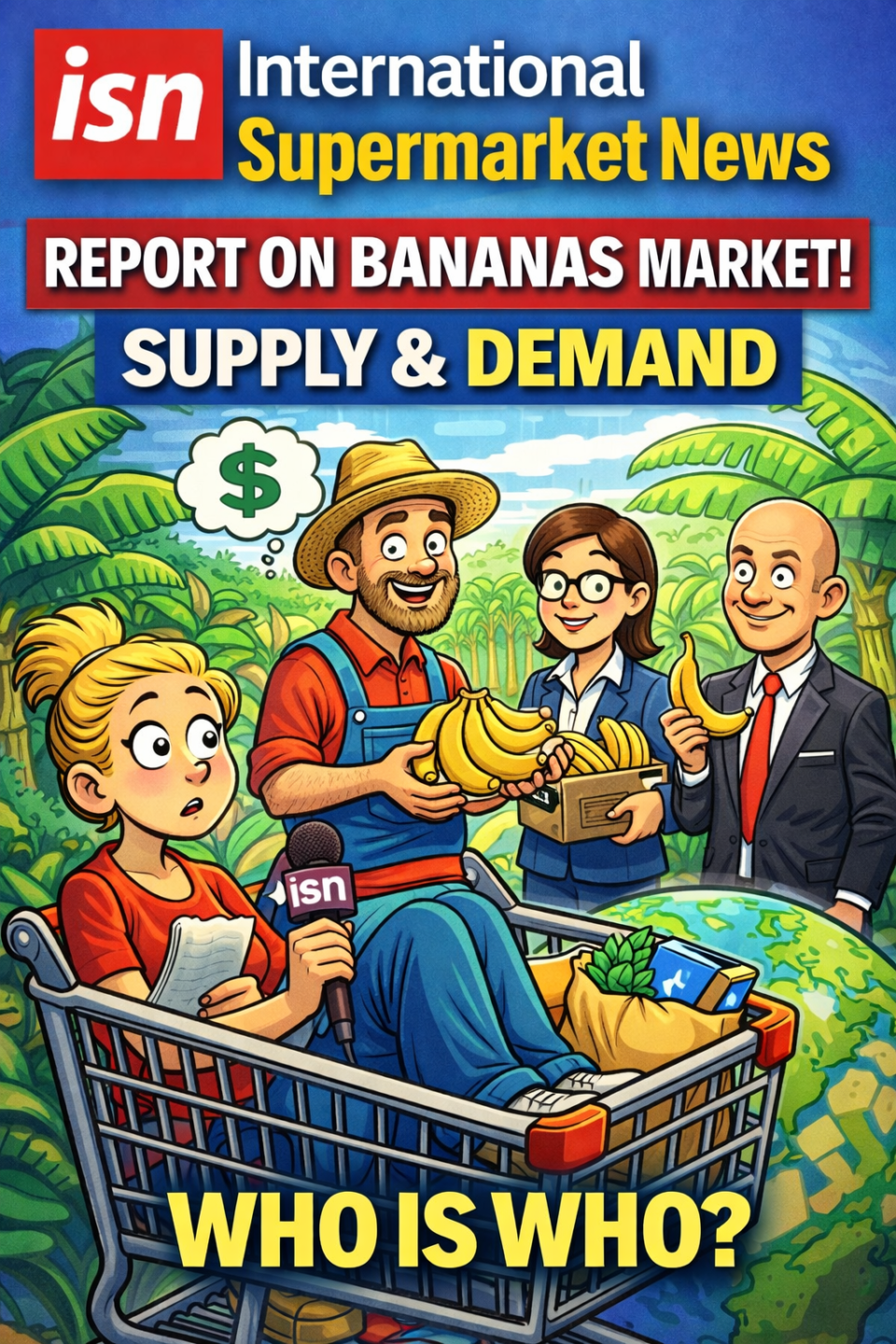
BANANA SALES REPORT: SUPPLY, DEMAND AND THE GEN Z SHIFT – NEXT ISSUE INSIGHT
Bananas remain one of the most traded fresh fruits globally, but the market is entering a subtle yet important phase of change. While volumes remain strong across Europe, North America, and parts of Asia, the dynamics behind consumption, sourcing, and branding are evolving rapidly.
Stable global supply, but pressure beneath the surface
On the supply side, production from Latin America continues to dominate, with Ecuador, Colombia, Costa Rica, and Guatemala maintaining their positions as key exporters. However, growers are facing increasing pressure from climate volatility, rising fertiliser costs, and stricter sustainability requirements from European retailers.
Logistics remain another challenge. Although shipping networks have stabilised compared to previous disruption years, freight costs and port delays still impact margins, particularly for low-price retail banana programmes.
Demand remains strong – but less traditional
Overall demand is stable, but the way bananas are purchased is shifting. Traditional bulk supermarket buying is still dominant, but there is visible growth in convenience formats, snack packs, and on-the-go consumption.
Retailers report that bananas continue to perform as a “reliable basket item”, often used as a price anchor in fruit aisles. However, the expectation from buyers is increasingly linked to traceability, ethical sourcing, and carbon footprint transparency.
The Gen Z effect: from commodity to lifestyle fruit
One of the most significant changes is being driven by Generation Z consumers. Unlike previous generations, Gen Z buyers are more influenced by:
- Sustainability credentials
- Brand transparency
- Social media food trends
- Convenience formats
Bananas are being repositioned in some markets as part of “functional snacking” rather than just basic fruit consumption. Smoothie culture, fitness nutrition, and plant-based diets have all reinforced this trend.
Retailers are also noticing increased engagement with exotic or premium banana varieties, though conventional Cavendish still dominates.
Retail and branding evolution
Supermarkets are slowly adapting banana merchandising strategies. Some are experimenting with:
- Origin storytelling in-store
- QR codes linking to farm data
- Reduced plastic packaging trials
- Premium organic and fair-trade segmentation
The challenge remains balancing price sensitivity with added value messaging.
Interview insights – buyers and suppliers
In upcoming interviews for the next issue, international buyers and category managers highlight a consistent theme: bananas are “simple but strategic”.
A European supermarket buyer noted that banana pricing remains one of the most competitive battlegrounds in fresh produce, while suppliers emphasise the growing difficulty of maintaining stable yields under climate stress.
Producers also stress the importance of long-term contracts with retailers to ensure investment in sustainability programmes.
Outlook
The banana category is not experiencing disruption in volume, but it is undergoing quiet structural change. Value creation is shifting from pure price competition to transparency, origin storytelling, and convenience innovation.
In the next issue, we will publish full interviews with category buyers, importers, and logistics specialists to explore how the banana trade is adapting to this new consumer landscape and what role Generation Z will play in shaping the next decade of demand.