
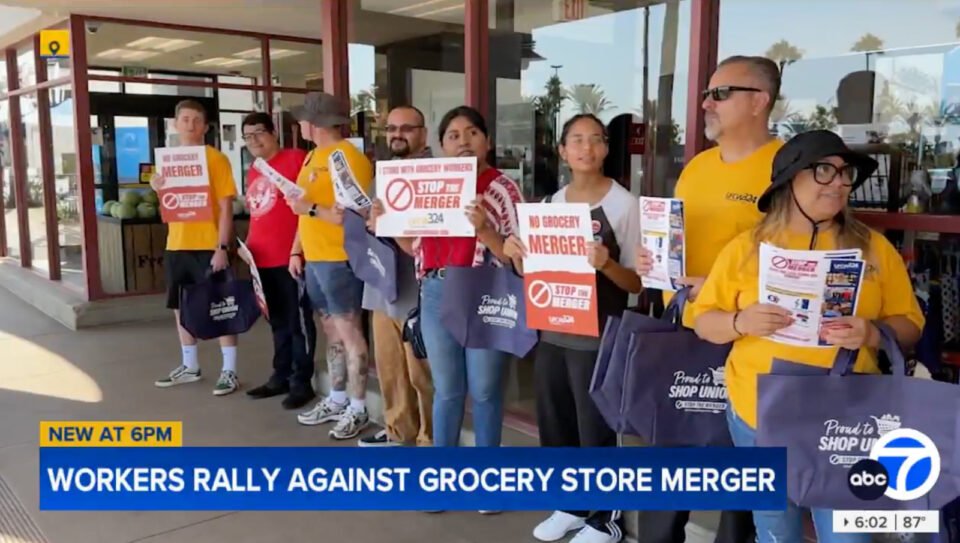
A renewed merger attempt between Kroger and Albertsons would no longer be a simple corporate restructuring exercise. It would represent a strategic response to a retail environment that has fundamentally changed, where scale, logistics, and technology now define competitiveness far more than store count alone.
The original merger proposal was blocked by the Federal Trade Commission over concerns that reduced competition could lead to higher prices and fewer consumer choices. At the time, the argument was rooted in traditional market definitions: supermarkets competing primarily with other supermarkets. That framework, however, is increasingly outdated.
Today, the grocery sector operates within a far broader competitive ecosystem. Walmart exerts enormous pressure through unmatched purchasing power and aggressive everyday low pricing strategies. Meanwhile, Amazon continues to reshape consumer expectations through rapid delivery, data-driven pricing, and a highly integrated online ecosystem. Against these forces, traditional grocery operators are no longer just competing with each other—they are competing with global retail and technology platforms.
In this context, the question of a merger becomes less about market concentration and more about survival. Operating independently, both Kroger and Albertsons face structural limitations in scale. Procurement power is fragmented, logistics networks are duplicated, and investment capacity in technology and automation is constrained. A combined entity would, in theory, create a stronger counterbalance capable of negotiating better supplier terms, reducing operational inefficiencies, and accelerating investment in digital retail infrastructure.
The modern consumer landscape intensifies this pressure. Shoppers increasingly expect lower prices, faster fulfilment, and seamless integration between physical and digital retail experiences. Delivering on these expectations requires significant capital investment. From supply chain automation to AI-driven inventory systems and expanded private label strategies, scale is no longer optional—it is essential. A merged Kroger-Albertsons group would be better positioned to fund these transformations than either company acting alone.
From a legal perspective, any renewed attempt would almost certainly face scrutiny once again from the FTC. However, the argument presented to regulators could evolve significantly. Rather than framing the merger solely as a horizontal consolidation within grocery retail, the companies could position it as a necessary response to a redefined competitive market that includes Walmart, Amazon, and emerging omnichannel players. This broader interpretation of competition may carry more weight in court than it did previously.
The central challenge for regulators would be determining how to define “relevant market” in an era where traditional boundaries between grocery, general merchandise, and e-commerce have effectively dissolved. If the court accepts that Kroger and Albertsons are competing in a globalised, multi-format retail environment, the case against consolidation becomes less straightforward.
Despite this, opposition would likely remain strong. The FTC has shown increasing willingness to challenge large-scale mergers across multiple industries, driven by concerns over market concentration and consumer pricing power. Any new proposal would therefore need to demonstrate not only theoretical efficiencies, but measurable benefits to consumers, including price stability, improved service levels, and expanded access.
Ultimately, the debate surrounding a potential merger between Kroger and Albertsons reflects a broader transformation in retail economics. The sector is moving towards consolidation not as a strategy of expansion, but as a mechanism of survival in an increasingly concentrated global market.
Whether regulators would permit such a move remains uncertain. What is clear, however, is that the competitive pressure from giants like Walmart and Amazon is not easing. In that environment, standing still may represent the greatest risk of all.