


Wesfarmers has delivered a strong financial performance for the year to 30 June 2026, reporting statutory net profit after tax of A$2.874 billion as its major retail businesses continued to benefit from a strong focus on value and disciplined cost management. Group revenue increased 3.4 per cent to A$47.27 billion, while underlying earnings, excluding significant items from the previous year, increased 8.3 per cent.
The results highlight how changing consumer behaviour is reshaping Australian retail. With household budgets still under pressure, shoppers have increasingly prioritised affordable products, promotions and everyday value. Wesfarmers responded by reducing prices across thousands of products, helping its retail businesses remain competitive while encouraging customers to continue spending.
Kmart Group was one of the standout performers. Revenue increased 2.8 per cent to approximately A$11.75 billion, while earnings rose 6 per cent to around A$1.1 billion. The group, which includes Kmart and Target, continued to benefit from its value-focused positioning, with customer numbers and transaction volumes increasing during the year. Prices were reduced on more than 2,500 products as the retailer sought to provide greater value to households facing higher living costs.
The performance demonstrates the growing importance of price perception in general merchandise retail. Rather than relying solely on promotional events, Kmart has continued to build its proposition around affordable everyday products, giving consumers an incentive to shop more frequently and across a broader range of categories.
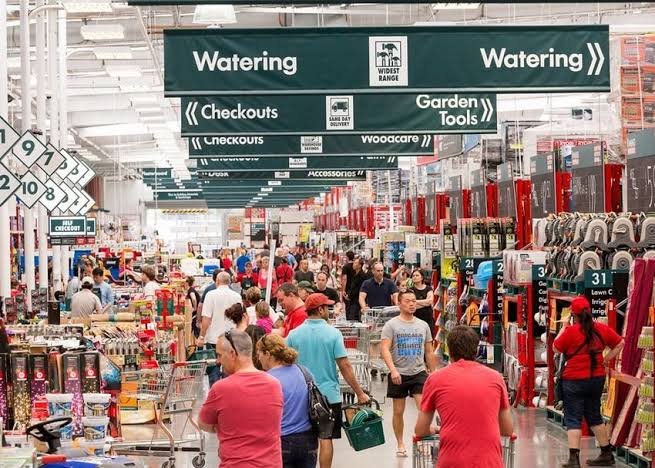
Bunnings also made a significant contribution to the group’s performance. Sales increased 4.1 per cent to A$20.4 billion, while earnings rose 5.1 per cent to approximately A$2.46 billion. Demand remained resilient across home improvement, tools, outdoor living and other categories, helping offset some of the pressures created by higher operating costs.
The wider results were more mixed. Officeworks increased sales but experienced a significant decline in earnings as the business continued its transformation programme. Wesfarmers’ diverse portfolio nevertheless provided a degree of protection, allowing stronger performances from its major retail divisions and other businesses to offset weaker areas.
For the supermarket and retail sector, Wesfarmers’ strategy offers an important indication of where competition is heading. Consumers are becoming increasingly selective, and retailers that can combine competitive pricing with reliable availability, convenient shopping and a strong private-label or value proposition are well positioned to capture market share.
Wesfarmers has also continued investing in technology and productivity, including artificial intelligence and digital capabilities designed to improve operations and customer service. The company expects cost pressures to remain a challenge, with labour, energy and supply-chain expenses continuing to affect retailers and businesses.
The message from the results is clear: value remains one of the most powerful drivers of consumer behaviour. Wesfarmers has demonstrated that lowering prices does not necessarily mean sacrificing profitability when supported by scale, productivity improvements, efficient sourcing and strong customer demand. Kmart’s performance in particular shows how a retailer can use affordability as a long-term competitive strategy rather than simply as a short-term promotional tool.
As Australian households continue to manage the cost of living, the battle for the consumer’s wallet is likely to remain intense. Wesfarmers’ latest results suggest that retailers capable of delivering convincing value while maintaining operational efficiency will have a significant advantage in the market ahead.