

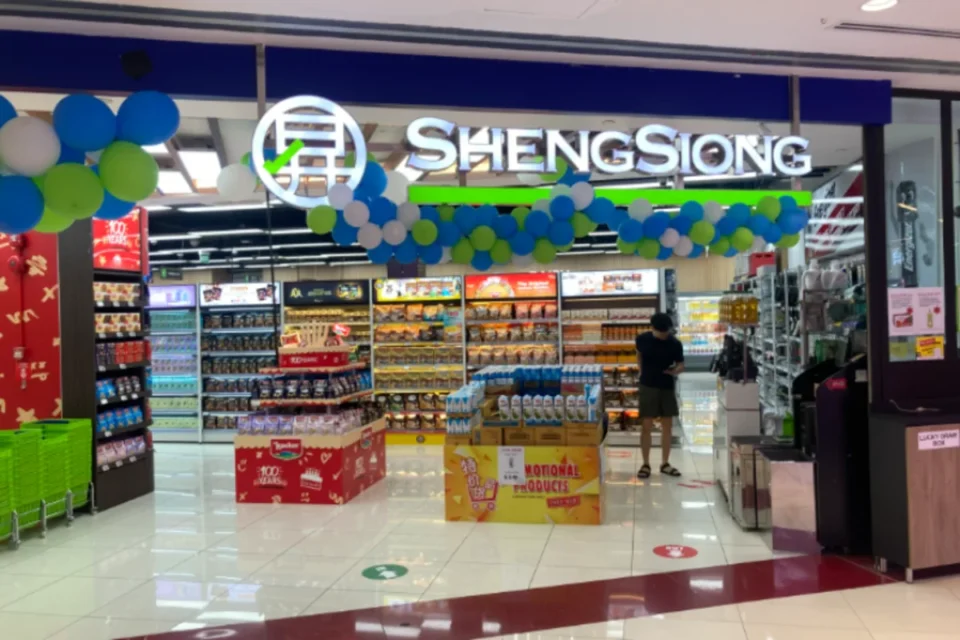

Sheng Siong has delivered another strong set of results, with Singapore’s supermarket sector continuing to benefit from consumers placing greater emphasis on affordability, promotions and everyday value. The supermarket operator reported net profit of S$81.0 million for the first half of FY2026, an increase of 11.9 per cent compared with the same period last year.
The performance was supported by equally strong revenue growth. Sales reached S$855.4 million for the six months to 30 June 2026, up from S$764.7 million a year earlier. Sheng Siong attributed the increase largely to contributions from new stores, stronger comparable-store sales and continued customer demand supported by promotions and Singapore’s Community Development Council vouchers.
The retailer’s expanding store network has become an important engine of growth. Sheng Siong added four stores during the first half, taking its Singapore network to 90 outlets, while three additional locations are expected to open during the third quarter. The continuing expansion gives the supermarket group opportunities to reach more neighbourhood shoppers and build sales in areas where it has previously had a smaller presence.
Profitability also improved, with gross profit rising 15.6 per cent to S$272.4 million. Gross margin increased from 30.8 per cent to 31.8 per cent, helped by a more favourable sales mix and efforts to manage rising operating expenses. At the same time, staff, distribution and administrative costs increased as the company invested in its larger store network and higher employee costs.
The results underline the importance of Sheng Siong’s value-for-money positioning at a time when grocery shoppers remain cautious about household spending. Competitive pricing, promotions and a broad range of everyday necessities have helped the retailer maintain its appeal while consumers continue to look closely at prices.
Sheng Siong is also investing heavily in the infrastructure behind its supermarket operation. Construction has begun on a new S$520 million distribution centre at Sungei Kadut. The facility is planned to incorporate automated storage and retrieval systems, robotics, intelligent warehouse management and multi-temperature storage areas, with the long-term objective of supporting a network of more than 120 supermarkets.
Technology and automation are becoming increasingly important for supermarket operators as labour, transport and other operating costs rise. For Sheng Siong, investment in logistics could eventually improve productivity while allowing the company to handle a larger store network without a proportional increase in operating complexity.
The retailer is also strengthening its online proposition. A partnership with Foodpanda began in June, giving Sheng Siong another route to reach consumers who prefer ordering groceries digitally and having them delivered to their homes.
Shareholders are also benefiting from the stronger performance. The board declared an interim dividend of 3.75 Singapore cents per share, compared with 3.20 cents a year earlier, with payment scheduled for 28 August 2026.
Looking ahead, competition in Singapore’s grocery market is unlikely to ease. Sheng Siong expects to continue expanding its store footprint while improving efficiency, refining its product mix and investing in technology. The planned opening of the Johor Bahru–Singapore Rapid Transit System in 2027 could also introduce new competitive dynamics for selected grocery categories, although its eventual effect on shopping behaviour remains uncertain.
Sheng Siong’s latest figures demonstrate how a supermarket business can continue growing by combining expansion with a strong value proposition. With sales increasing, margins improving and investment being directed towards stores, digital retail and automated distribution, the company is positioning itself for further growth in Singapore’s highly competitive grocery market.