

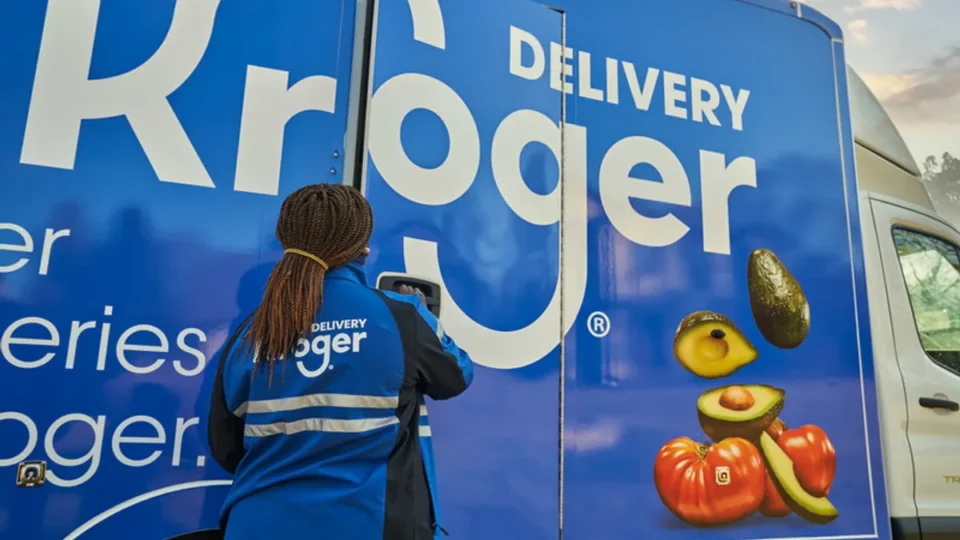

The collapse of the proposed Kroger-Albertsons merger left behind a question that reaches far beyond one supermarket deal: can regulators protect consumers from excessive supermarket consolidation without creating new problems for the retailers and workers they are trying to protect?
The US Federal Trade Commission (FTC) fought the $25 billion Kroger-Albertsons transaction on the grounds that the combination would reduce competition in the grocery market. Regulators argued that fewer major supermarket operators could mean higher prices, less choice for shoppers and weaker competition for workers. The FTC also rejected the argument that the proposed sale of hundreds of stores to another operator would adequately preserve competition.
From the consumer perspective, the argument was straightforward. Americans were already facing years of elevated food prices, and allowing two of the country’s largest supermarket groups to merge could potentially give the combined company greater pricing power. At a time when grocery bills had become a major political issue, the FTC’s intervention was therefore seen by supporters as an important defence of shoppers.
But there was another side to the story.
Kroger and Albertsons maintained that the merger would have created a stronger competitor capable of challenging the extraordinary scale of Walmart, Costco and Amazon. The companies argued that greater scale could generate efficiencies, support investment in stores and technology and allow them to compete more aggressively on price.
The dispute consequently exposed a fundamental problem in American grocery retail. The supermarket industry is highly competitive, but the biggest competitors are becoming enormous. Traditional supermarket operators face pressure from Walmart’s scale, Costco’s membership model, Amazon’s technology and logistics, and the rapid expansion of discount retailers.
For Kroger and Albertsons, combining two established supermarket businesses was presented as one way to respond to that pressure. For regulators, however, allowing the merger would have removed an important competitor from an already concentrated market.
The political dimension cannot simply be ignored.
The FTC under Lina Khan adopted a much more aggressive approach towards large corporate mergers, particularly transactions involving major consumer-facing companies. Grocery prices had simultaneously become one of the most politically sensitive economic issues in the United States. The Kroger-Albertsons case therefore became part of a much broader debate about corporate power, inflation and the role of government in the American economy.
Yet describing the decision as purely political would oversimplify what happened. State authorities from both sides of the political spectrum also challenged the transaction, and a federal judge ultimately blocked the merger. The opposition therefore extended beyond the White House or the FTC and into the wider US legal and regulatory system.
The bigger question for the supermarket industry is what happens next.
A merger can be stopped, but the competitive pressures facing the two companies do not disappear. Kroger still has to compete for increasingly price-conscious consumers, while Albertsons continues to face the same pressure from discount supermarkets and the country’s largest retailers.
There is also a human dimension that deserves greater attention.
When a supermarket group is under pressure to improve productivity, reduce costs or close underperforming locations, employees can ultimately feel the consequences. Store closures, distribution-centre restructuring, automation and reductions in corporate spending can all affect jobs, even without a merger taking place.
That creates an uncomfortable paradox. Regulators can prevent a merger in order to protect consumers and workers, while the individual companies may subsequently be forced to restructure in order to remain competitive.
The issue is not whether the FTC was right or wrong. The more important question is whether America’s current approach to supermarket competition is capable of dealing with the reality of modern retail.
Consumers want lower prices. Workers want secure jobs and good wages. Independent supermarkets want a level playing field. Large retailers want the scale necessary to compete. Investors want businesses capable of generating sustainable returns.
Those objectives do not always point in the same direction.
The Kroger-Albertsons battle therefore deserves to be remembered as more than a failed supermarket merger. It represents a much larger debate over who should decide how America’s grocery industry evolves — corporate executives, consumers, investors or government regulators.
And perhaps the most difficult question of all is this: if protecting competition ultimately makes American supermarket companies weaker against global retail giants, has the regulator protected the consumer today while creating a bigger problem for tomorrow?