
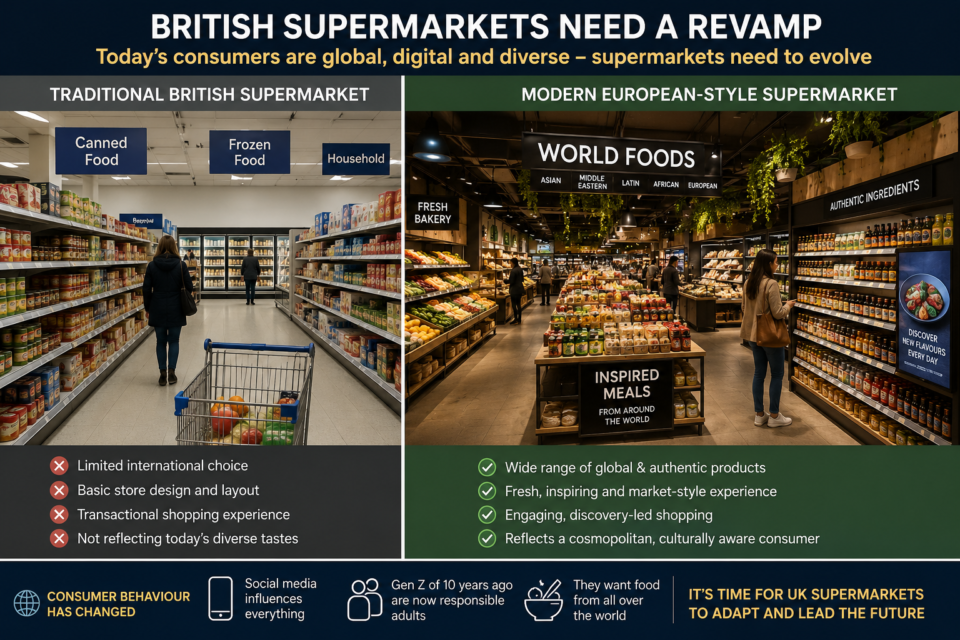
British supermarkets have long been recognised for their convenience and strong private-label ranges, but consumer expectations have changed dramatically over the past decade. The traditional supermarket model is being challenged by a generation of shoppers who are more connected, more informed, and more adventurous than ever before.
Social media has transformed the way people discover food. Platforms such as TikTok, Instagram and YouTube expose consumers to cuisines, ingredients and cooking techniques from around the world every day. Foods that were once considered niche—from Korean and Japanese products to Mexican, Middle Eastern and Eastern European specialties—have become part of everyday shopping lists.
The generation that was known as Generation Z ten years ago has grown up. Many are now working professionals, homeowners and parents, making purchasing decisions for their households. Their shopping habits differ significantly from previous generations. They expect authenticity, variety, sustainability, convenience and products that reflect an increasingly multicultural society.
As a result, Britain’s supermarket sector faces a new challenge: adapting to a customer base whose tastes are no longer defined by traditional British grocery shopping.
Across continental Europe, many supermarkets place greater emphasis on fresh produce, regional specialties, artisan bakeries, ready-to-cook meals, international ingredients and market-style shopping experiences. Stores often create an atmosphere that encourages customers to explore new flavours rather than simply complete a weekly shopping trip.
British retailers have made progress by expanding international food aisles, but many stores still separate world foods into a single section instead of integrating global products throughout the supermarket. Today’s consumers increasingly expect a wider selection of authentic products, fresher prepared meals, and a shopping experience that reflects how people actually eat in modern Britain.
Retailers also need to recognise that food trends now spread globally within days. A recipe that becomes popular on social media can generate immediate demand for ingredients that shoppers expect to find on supermarket shelves. The ability to respond quickly to changing tastes is becoming a competitive advantage.
The future of British supermarkets may not lie in becoming larger, but in becoming more dynamic. Stores that embrace global cuisines, invest in fresh food experiences, expand premium and international ranges, and create engaging shopping environments are likely to appeal to the next generation of consumers.
The British shopper has changed. They are more cosmopolitan, more culturally curious and more digitally connected than ever before. The supermarkets that evolve alongside these changing expectations will be best positioned to thrive in the years ahead.