
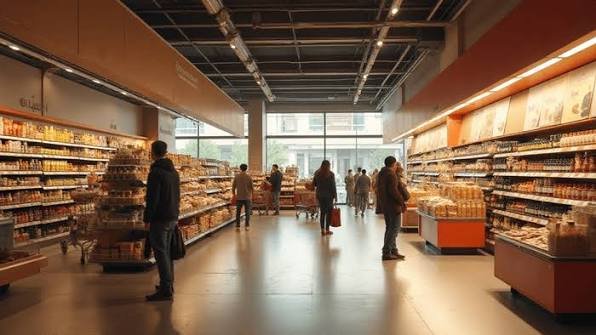
Mercadona has built one of Europe’s most successful supermarket businesses by following a strategy that differs from many of its competitors. While other retailers continue to balance national brands with own-label products, the Spanish supermarket giant has made private label the cornerstone of its business model, creating a level of customer loyalty that many retailers are now trying to emulate.
Brands such as Hacendado, Deliplus, Bosque Verde and Compy have become household names in Spain. For many shoppers, these brands are no longer viewed as low-cost alternatives but as products chosen for their quality, consistency and value. This change in consumer perception represents one of Mercadona’s greatest achievements.
The retailer works closely with a network of long-term suppliers, known as “interproveedores”, to develop products exclusively for its stores. This collaborative approach enables Mercadona to focus on product improvement, quality control and innovation while reducing unnecessary costs throughout the supply chain. Instead of constantly introducing new products, the company concentrates on refining existing lines based on customer feedback.
Mercadona’s success demonstrates that private label is no longer simply a pricing strategy. It has become a branding strategy. By investing in research, packaging and product development, the retailer has created brands that customers actively seek out rather than purchase solely because they are cheaper.
This model is attracting attention across Europe. Supermarket groups in the UK, Germany, France and the Netherlands are all expanding premium own-brand ranges in an effort to increase margins and strengthen customer loyalty. As inflation continues to influence purchasing decisions, retailers see private label as a way to offer value without compromising quality.
However, Mercadona’s strategy also raises important questions for the future of grocery retail. As private label continues to grow, shelf space for international brands may become increasingly limited. Manufacturers will need to work harder to justify premium prices through innovation, marketing and product differentiation.
The success of Mercadona suggests that the balance of power in the grocery industry is gradually shifting. Retailers are becoming brand owners in their own right, reducing their dependence on multinational manufacturers and gaining greater control over pricing, product development and customer relationships.
For the European supermarket industry, Mercadona’s approach may offer a glimpse of the future—one where the retailer’s own brands become the primary reason customers choose where to shop.