
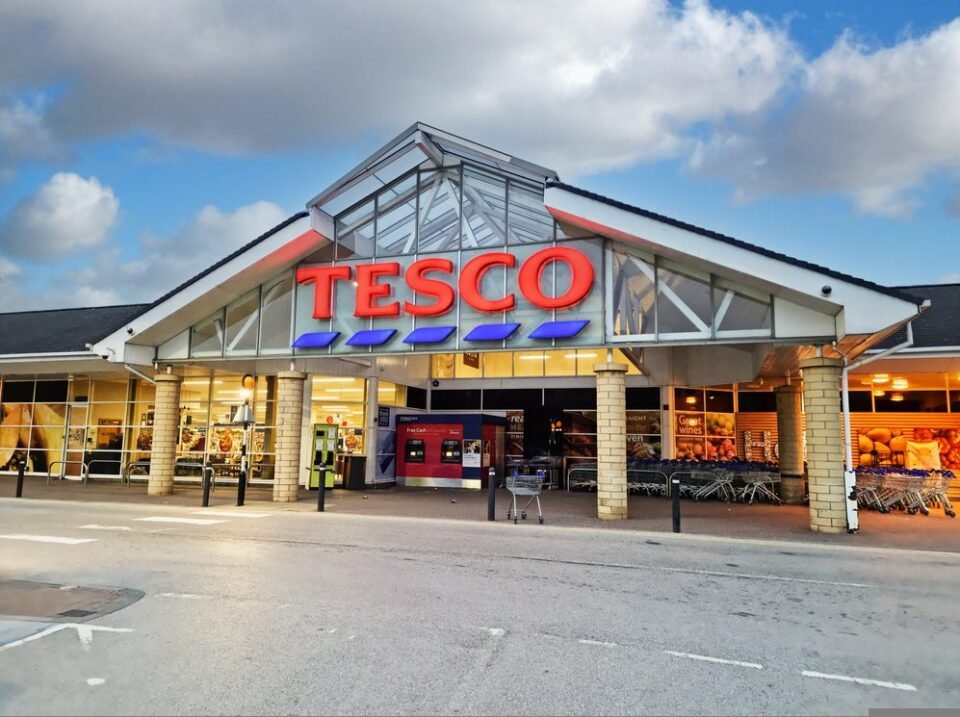
Tesco continues to reinforce its position as the UK’s leading grocery chain after reporting a significant rise in market share and renewed scrutiny over executive pay, highlighting both its commercial strength and the ongoing debate around corporate compensation in the retail sector.
The company has benefited from a period of steady growth driven by strong customer demand, improved pricing strategies, and continued investment in its stores and online services. Tesco has been focusing heavily on maintaining competitiveness against discount rivals while also protecting its core customer base through loyalty schemes and targeted promotions.
According to recent company updates, Tesco has reached its highest grocery market share in more than a decade, strengthening its lead over competitors such as Sainsbury’s, Asda, Aldi, and Lidl. Analysts suggest this performance reflects a combination of stable pricing, improved product availability, and the strength of its Clubcard loyalty ecosystem, which continues to play a key role in customer retention.
At the centre of the latest corporate discussion is chief executive Ken Murphy, whose remuneration package has drawn attention following the company’s strong financial results. His pay reflects a combination of base salary, performance-related bonuses, and long-term share awards linked directly to Tesco’s profitability and shareholder returns.
The rise in executive compensation comes during a period when Tesco has also reported improved overall financial performance. The retailer has seen growth in both revenue and operating profit, supported by increased sales volumes and a resilient grocery market despite broader economic pressures on household budgets.
Tesco’s leadership has attributed the company’s success to a strategy focused on balancing affordability with product quality. This includes continued expansion of price-match initiatives aimed at competing with discount supermarkets, alongside improvements in store experience and digital shopping platforms.
However, the increase in executive pay has sparked renewed debate about fairness in corporate reward structures, particularly at a time when many consumers remain sensitive to food prices and cost-of-living pressures. Critics argue that large pay packages risk widening perceptions of inequality, while supporters maintain that strong performance should be rewarded, especially when companies deliver sustained growth and market leadership.
Alongside executive compensation discussions, Tesco has also emphasised its commitment to employees through staff bonus schemes and wage investments. The company has stated that frontline workers played a crucial role in delivering strong results, particularly during periods of high demand and operational pressure across its store network.
Industry analysts note that Tesco’s performance stands out in a highly competitive UK grocery market. While discount chains continue to grow their presence, Tesco has managed to defend its position by combining value-focused messaging with a broad product range that appeals to a wide customer base.
The retailer’s ability to adapt to changing consumer behaviour has also been a key factor in its success. Increased online shopping, rapid delivery services, and expanded convenience store formats have helped Tesco capture demand across multiple shopping channels, reinforcing its dominance in both urban and suburban areas.
Looking ahead, Tesco is expected to continue investing in pricing strategies and operational efficiency to maintain its competitive edge. At the same time, it faces ongoing pressure from rivals who are aggressively expanding their own discount offerings and store networks.
Despite these challenges, Tesco remains firmly positioned as the UK’s largest supermarket group. Its latest performance highlights both the strength of its business model and the growing expectations placed on major retailers to balance profitability with social responsibility in an increasingly competitive and cost-sensitive market.