
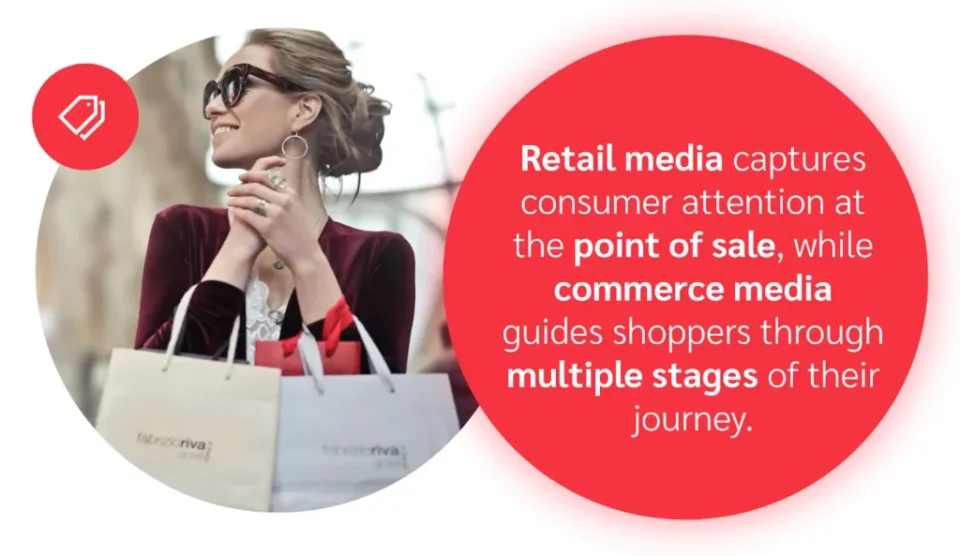
Retail media has become one of the fastest-growing parts of modern commerce. Supermarkets, online marketplaces, and major retail chains are no longer just places to buy products—they are also advertising platforms. Through websites, apps, loyalty programs, and even in-store screens, retailers now sell access to shoppers’ attention and data. The rise of this model has created a serious moral question: is it right for retailers to monetise their customers in this way?
At the centre of the system are large retailers such as Amazon, Walmart, and others that have built powerful advertising ecosystems. These companies sit on vast amounts of behavioural data: what people search for, what they buy, how often they shop, and sometimes even household-level patterns of consumption. This information allows brands to place highly targeted advertising directly in front of likely buyers at the exact moment of purchase.
From a business perspective, the logic is straightforward. Traditional retail operates on very thin margins. Selling advertising space creates a high-profit revenue stream that does not depend on physical inventory. In this sense, retail media is often presented as a natural evolution of advertising. Instead of random billboards or television ads, brands can reach consumers at the point where decisions are actually made. Supporters argue that this improves relevance, reduces wasted advertising, and can even help shoppers discover products they genuinely want.
However, the ethical concerns arise from the imbalance of knowledge and power embedded in the system. Most customers do not fully realise how extensively their behaviour is tracked. Even when data is technically collected with consent, that consent is often buried in lengthy terms and conditions that few people read in detail. As a result, shoppers may not clearly understand that their purchases are being analysed, segmented, and sold as advertising opportunities.
This raises a deeper moral issue about autonomy. When a retailer uses detailed behavioural data to shape what ads a person sees, it can move beyond simple marketing into subtle behavioural influence. The concern is not just that people are being advertised to, but that they are being guided—sometimes invisibly—towards certain choices. For vulnerable consumers, including those under financial pressure or with impulse-control difficulties, this targeting can be especially powerful.
Another concern is whether retail spaces are becoming less neutral. Traditionally, a supermarket or shop was a physical environment focused on goods and prices. With retail media, that space becomes layered with commercial persuasion. Shelves, search results, and even checkout screens can be influenced by paid placement rather than purely relevance or quality. Critics argue that this shifts the retailer’s role from neutral provider to active participant in shaping consumption.
At the same time, it is difficult to argue that all retail media is inherently unethical. Advertising has always been part of commerce, and personalised recommendations can genuinely improve convenience. A customer who regularly buys certain products may benefit from relevant offers rather than irrelevant mass advertising. In this sense, the technology itself is neutral; the ethical question lies in how it is governed.
The strongest moral dividing line appears to be transparency and control. If customers clearly understand what data is collected, how it is used, and have real choices about participation, the system can be defended as a legitimate extension of marketing. When data practices are opaque, overly broad, or effectively unavoidable for participation in modern retail life, the ethical concerns become much stronger.
Regulation is increasingly trying to address this tension, particularly in regions like the European Union, where data protection rules require clearer consent and limits on profiling. Yet enforcement struggles to keep pace with the rapid expansion of retail media systems.
Ultimately, retail media forces a broader question about the future of commerce. Retailers are no longer just selling products; they are selling attention, prediction, and influence. Whether that is morally acceptable depends less on the existence of advertising itself and more on how transparently and fairly the power over consumer data is exercised.