
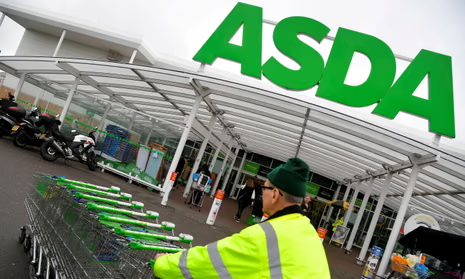
Asda has long been known as one of the most price-focused supermarket chains in the United Kingdom. Its identity has traditionally been built around affordability, offering customers a wide range of products at competitive prices. However, in recent years, the company has faced increasing pressure from both discount retailers and established rivals. In 2026, Asda finds itself in a period of rebuilding, working to regain customer trust and strengthen its position in a highly competitive market.
One of the central challenges for Asda is the intensifying price war across the grocery sector. While low prices have always been part of its strategy, competitors have become more aggressive. Discount chains have expanded rapidly, attracting shoppers who are highly sensitive to cost. At the same time, other major supermarkets have introduced price-matching schemes and targeted promotions. This has made it harder for Asda to stand out purely on affordability.
To respond, Asda has renewed its focus on pricing. The company has invested heavily in reducing the cost of everyday essentials, aiming to reinforce its value-driven image. These price cuts are designed not only to attract new customers but also to bring back shoppers who may have moved to competitors. However, lowering prices comes with a clear risk: reduced profit margins. Asda must carefully balance its efforts to stay competitive with the need to maintain financial stability.
Beyond pricing, Asda is also working to improve the overall shopping experience. In the past, some customers have raised concerns about store standards, product availability, and service quality. Addressing these issues has become a priority. The company has been investing in store refurbishments, better stock management, and staff training. These improvements are intended to create a more reliable and consistent experience, which is essential for building long-term loyalty.
Another important area of development is Asda’s own-brand products. These items play a key role in its strategy, as they allow the company to offer lower prices while maintaining control over quality. By expanding and refining its private-label ranges, Asda aims to provide customers with affordable options that do not feel like a compromise. This is particularly important in a market where shoppers are increasingly selective about where they spend their money.
Convenience is also becoming more significant for Asda. While the company has traditionally focused on large supermarkets, it is now paying more attention to smaller store formats and flexible shopping options. Consumers are changing their habits, often preferring quick, local shopping trips rather than large weekly purchases. To keep up with this trend, Asda must adapt its store network and operations accordingly.
Online shopping presents both an opportunity and a challenge. Asda has been expanding its digital services, including home delivery and click-and-collect. These services are now an essential part of modern retail, but they require significant investment in technology and logistics. Ensuring that online orders are fulfilled efficiently and on time is crucial, as customers expect a smooth and reliable experience. At the same time, the company must manage the costs associated with these services, which can be high.
Supply chain management is another key focus. Like many retailers, Asda has been affected by global disruptions, including rising energy costs and logistical challenges. These factors can lead to delays and increased expenses, which in turn impact pricing and availability. To address this, Asda is working to strengthen its relationships with suppliers and improve its ability to respond to unexpected changes. A more resilient supply chain is essential for maintaining consistency in stores.
Despite these efforts, Asda still faces significant competition from all sides. Discount chains continue to attract budget-conscious shoppers, while other major supermarkets are improving their own value offerings. This creates a crowded and demanding market where standing still is not an option. Asda must continue to evolve if it wants to remain relevant.
However, the company does have important strengths. Its brand is strongly associated with low prices, which remains a key advantage. It also has a large network of stores and a broad customer base. If it can successfully combine affordability with improved quality and service, it has the potential to regain momentum.
Looking ahead, Asda’s future will depend on its ability to deliver consistent value without sacrificing customer experience. Price will always be central to its identity, but it cannot be the only focus. Shoppers expect clean stores, reliable stock, and convenient options, both in-store and online. Meeting these expectations is essential for rebuilding trust.
In many ways, Asda’s situation reflects the wider challenges facing the supermarket industry. Rising costs, changing habits, and intense competition are reshaping the market. For Asda, the path forward is clear but demanding: stay affordable, improve standards, and adapt quickly. Whether it can achieve all of this will determine its place in the next phase of grocery retail.